Play
Play
Play
Does old running shoes cause injuries?
If you do a fast Google search, its easy to get the impression that used running shoes will cause injuries. But is this correct?
As a starting point there are no surveys which investigate if there is an increased risk of injuries when you run in old running shoes instead of new running shoes.
There can be several reasons for that. Most importantly its difficult to do surveys on this subject because there are so many variables in reference to running and injuries. Therefore it can be hard to make solid conclusions and point to a specific factor leading to an increased risk of getting injuries.
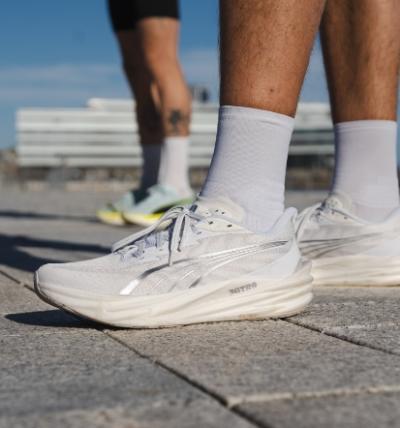
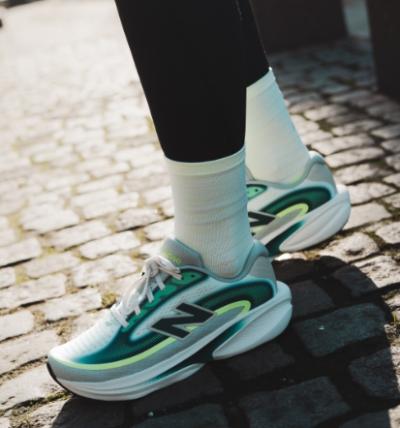
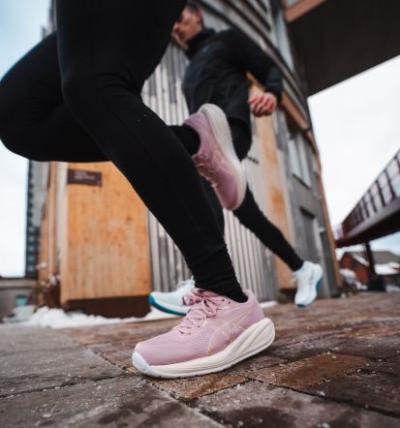
On the other hand, if your shoe has been worn so crookedly that it affects your running style, there will be an increased risk of sustaining injuries. The shoe shouldn´t affect our gait biomechanically and if it does, its certainly a good idea to replace it.
Although science can´t point to a direct correlation between mileage covered in your running shoes and injuries, then you should still pay attention to the fact that your shoe can potentially affect your gait. And if so, it could be an indication that its about time to replace your shoes.
Is there a loss of performance?

You have probably felt the enormous difference between a new shoe vs. an old shoe when you have changed your shoes in the past. The old shoe starts to feeel somewhat worn, like running on a memoryfoam-mattres. You get the feeling that the foam doesn´t bounce back but that you just sink into it. On the other hand, you feel like you are flying, free and effortless in a new pair of shoes. But it is just a sensation or is there actually a difference in terms of performance?
The best indicator available in reference to performance is running economics. Basically running economics is how much oxygen a runner uses at a given speed.
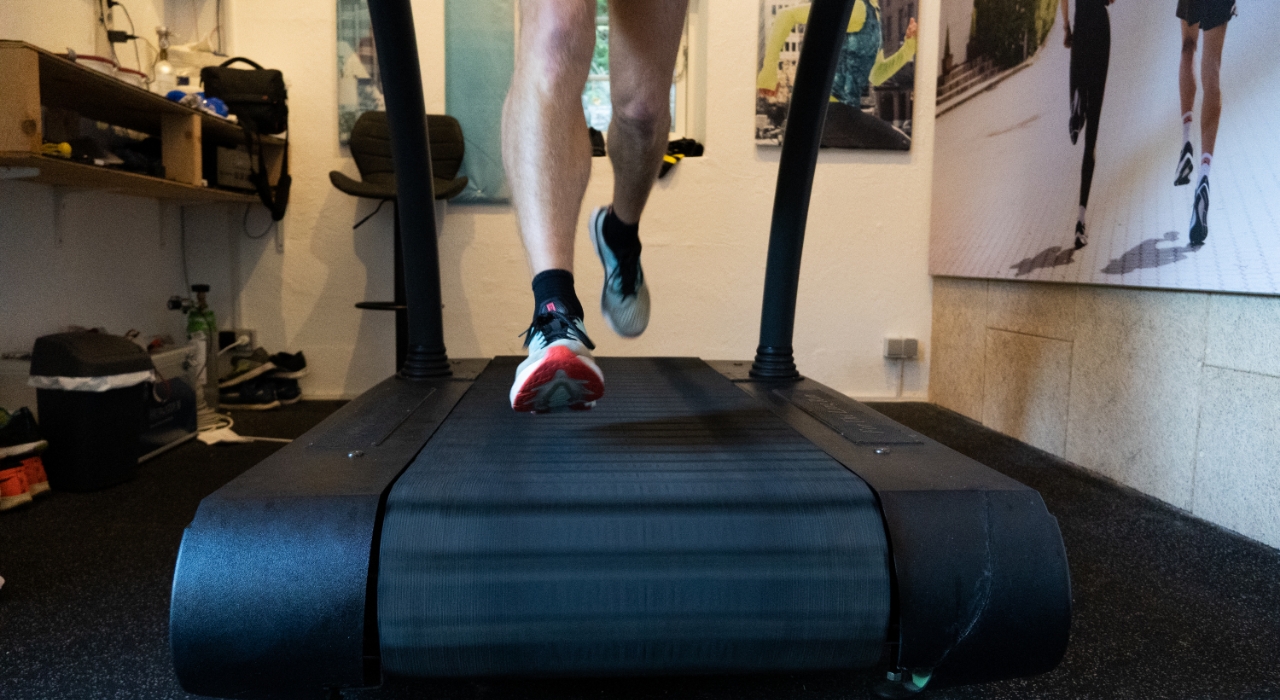
Consequently we took ASICS NovaBlast 2 which had done 700 kms and a brand new NovaBlast 2 and sent them to our Testlab to measure running economics in each of the two shoes.
Before the test we had a clear expectation that there would be a difference in oxygen uptake. So, we were quite astonished when we couldn´t see a a difference in oxygen uptake between the two shoes. Its worth mentioning that we have only tested two pairs of shoes on one test person. Therefore we can´t make any general conclusions but our test indicates that there isn´t a loss of performance.
Comfort
As earlier mentioned there is a huge difference in the feeling between a new and old shoe. I think most runners have experienced a loyal shoe fall apart. Regardless if its a hole in the upper, an outsole which is coming apart or a midsole with a dead feeling, the comfort and condition of the shoe is an important element in terms of if running is fun, nice and comfortable.
A study from 2022: ” Running Injury Paradigms and Their Influence on Footwear Design Features and Runner Assessment Methods: A Focused Review to Advance Evidence-Based Practice for Running Medicine Clinicians” recommends the following:
“The best general recommendation based on the evidence available and considering the least likelihood of harm is to recommend a shoe that is lightweight, comfortable, and has as minimal pronation control technology as possible.”
We can also use that recommendation when we need to decide if the running shoes should be replaced. When the shoes are no longer comfortable, is a good indication that its about time to replace them.
We buy a running shoe to fulfill a need. Perhaps its related to comfort, having fun or a third thing and the best time to replace a shoe is when the shoe no longer fulfills that need.
One last piece of advice
It can be an advantage not to wait until the last minute to replace your shoes. As it is mentioned in our article related to pronation, injuries mainly occur during overload. An observational study from 2015 ”Can parallel use of different running shoes decrease running-related injury risk?” concluded that running in different running shoes lowered the risk of injuries. If you run in the same pair of running shoes every time, your body adjusts to exactly the load which these shoes provide. If you suddenly change into a new shoe which affects your tissue differently, the risk of injuries will be higher.
So, please try out a new shoe before the old one is completely worn out. It makes the transition more gentle and lowers the risk of injuries.
If you want to know more about the study mentioned earlier, you can read more about in our article: Why you need to start rotating shoes
When should I replace my running shoes?
Thumb rules are great but to replace your running shoes after 700 kms is a very general answer to an individual question. Kms accumulated in your running shoes doesn´t have a direct impact on the risk of injuries nor performance because we all wear our shoes differently. Some people are able to do 1500 kms in their shoes while others do 500 kms.
Consequently our recommendation is to replace your running shoes when they are no longer comfortable. Listen to your body and feel if your shoes are still comfortable. Its better to replace a shoe sooner than later.
So thumb rules are fine bit in the end only you can make the judgment when your shoe need to be replaced.