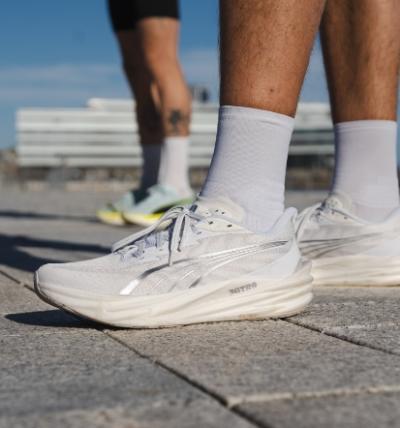
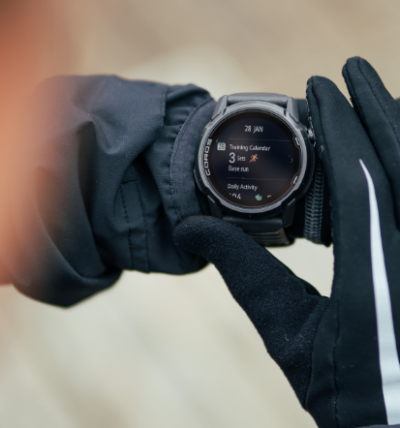
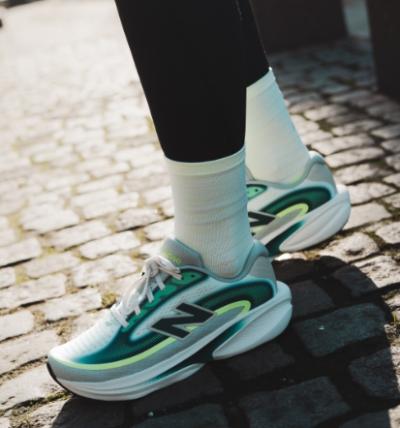
The period leading up to the marathon is about fine-tuning for me; keeping the engine running without overdoing anything. The rule of thumb is that you can almost only do too much, but people are very different and I think you need to find out what works for you. Each period is also unique, it's never the same lead-up to each race, and therefore I think it's important to be flexible in your preparations.
My period towards the Berlin Marathon was different than I would normally do it, affected by CPH Half 14 days before.

Saturday, 6 days after the race in Copenhagen and 8 days before the Berlin race I ran 4*4km. Had a simple workout on Thursday before, where there was still fatigue in the body, but I already felt fresher Saturday morning during the warm-up. I started at pace 3.05 for the first 4km and then the plan was to run progressively down to 3.02 (planned race pace). I had my coach, Henrik Gehlert, with me on a bike and we measured lactate, feeling (recorded by RPE) and pulse during each break to monitor that I was fresh enough and recovered from the half marathon, so this training wouldn't be too hard.
In other words, we tried to hit an appropriate stimulus: Keep the engine running, without overdoing anything. Not too high stimulus, not too low. After the first repetition, the feeling was good, a quick prick in the finger and the lactate showed 2.2mmol, if the lactate had been higher it would have been too hard. I knew it would be a good session and I could increase to 3.02. From there, the focus was on fueling (energy and fluid intake) and getting a good last session in the books.
The week up to the marathon
Sunday – 2 hours easy ride, fueling along the way. Very light intensity. Monday two easy rides and Tuesday last training session.
I ran in the morning 2*2km at marathon pace and 3*1km at hm pace. – That training, I always feel is bad. I feel heavy, unenthusiastic and think it will feel hard at that pace over the full distance. I just think you have to accept it. I like to run that training on gravel, it gives me a feeling that it will be different when I hit asphalt, as it is typically heavier running on gravel than asphalt.
Wednesday, Thursday, and Friday are totally easy 30-60min, only one trip per day and Thursday some 1min bursts just to keep the engine running. Otherwise, relaxation in between, eat well, relax well and sleep well.
After an early trip on Friday, I started my carboload and the journey to Berlin. We drove with frequent stops to stretch legs and took a walk upon arrival forto avoid stiff legs. Ate rice, white bread, pasta, and wasn't shy about loading up on snacks.
My first night at the elite motel, where I was staying, was as poor as many times before. Tossed and turned for the first 3-4 hours and woke up groggy with a sore neck. A classic. Not something to stress about, but annoying.
Marathon Weekend
I prefer to arrive in the city where I'm running well in advance. Arrive at least two days before an important race.
Saturday, a big breakfast and a quick (mandatory) elite meeting before a calm morning jog in Tiergarten. Legs felt good on the classic 'pre-race' run: 20-30min progressive jog, various drills (technique exercises), swings, and 3-5 faster runs of 20-30sec duration. I don't put much stock in the feeling the day before. I've felt both heavy and light before and have run both well and poorly. There's no correlation, analyzing too much about the body, sleep data, pulse, HRV, and anything else you can think of, I feel it only adds more stress than benefits.
I always try to disconnect from the running the day before, have a good lunch after the run, and head home to nap. 60 good minutes later and Henrik came by to check on my neck, which was extremely tense. I always feel my nervousness in my neck, so it was good to loosen it up a bit. Otherwise, I try to avoid treatment the day before a run, on Friday I might consider it if it fits.
The afternoon was spent relaxing with a trivial movie. Many hours in bed. I mix my bottles and get everything ready. My parents drop by around 5 pm and I meet them in the lobby for a short walk. They drop me off at the elite hotel, where I hit the dinner as one of the first along with the Japanese - scooping two-three servings of white rice - a single dessert and then back to the pillow. I continue with the trivial movie and turn off the light at 8:30 pm, we have to get up early.
I slept well the second night - maybe it was because of a bad first night. Maybe not. I don't think it matters too much the last few days up to, you can always have an extra cup of coffee in the morning.
Marathon Morning
Woke up early. Loaded up the last carbs; three sandwiches with the lightest bread with too much honey. Also coffee, preferably two-three cups. I always bring gear from home - including beans, so I know I can make a good cup. It's cozy and a nice little ritual to sit there in the dark in the room and brew your own cup.
The bathroom for the second time before heading to the race. I prefer to be at the starting area well in advance, at least 20-30min before warming up. If you're in the crowd and running more than 3 hours, I wouldn't think much about the warm-up. I would bring a pair of trousers and an extra shirtWith an energy drink (not Red Bull, Monster, or similar, but one with lots of carbs) in hand, entering the pen for some standing warm-up, tossing clothes to the right before the start and warming up by running.
I ran 10-12min, progressively harder. Then some drills, strides, and then changing clothes and shoes before the start, applying vaseline, and ensuring I was at the start 15min early as instructed. A bit of light jogging and some short 10-15sec sprints with good speed to keep warm. Also some light mobility work and trying to stay warm before the start. Additionally, I remember to look up and take it in, enjoying my spot, recalling the work I've done to be there, and trying to smile before the starting gun.