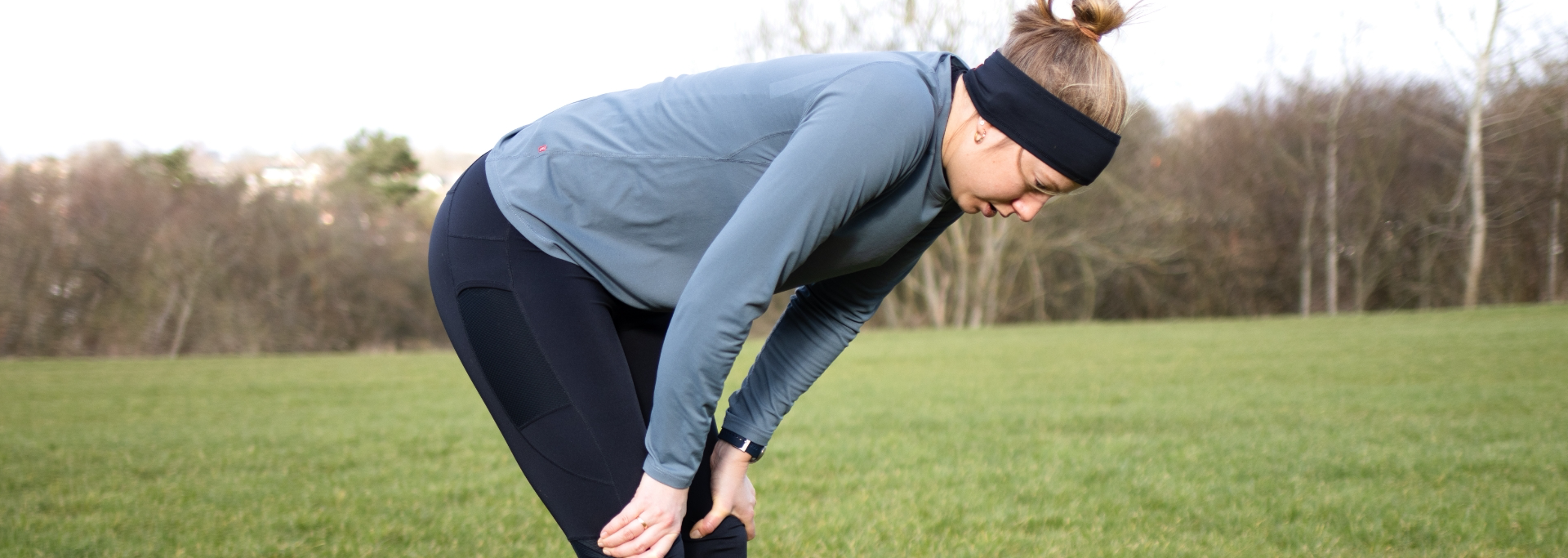

During times where more than 40.000 people have been diagnosed with COVID-19 on a daily basis, and where half of the Danish population have been infected (while I am also infected myself) its about time to discuss how you can get back to your running routine. The fact is that many people struggle to return to their workout routine after being infected. The choices you make during and immediately after the infection decides how successful your return to your running routine will be.
During the last three months where the Omikron version has really spread, I have (through my profession as a running coach) received a lot of e-mails from infected clients who wants to know how to go about their training. How early can they start training again, how much, how intensively and what do they need to pay attention to? If there is one thing I have learned during this process, its the fact that it pays off to be patient.
Your body is still working overtime after Covid-19
Even when the worst symptoms are gone, your body is still under pressure and working overtime. You feel more tired than usual and athletically you can´t perform at the same level. You need to listen to your body. If there is one thing that runners specialize in, its how to ignore what the body tells you. We usually think ”no pain, no gain” and that we can just sweat it out. However, this is not the right strategy for dealing with the late effect of corona - and other diseases.
Increased risk of late effects
There is a lot to suggest that the risk of complications and late effects increases if you ignore signs of fatigue and work out as ususal (1). If you get too unpatient in your rehabilitation, the risk of getting "long Covid”, a common term for the long-term effects after corona, increases. For the runner this will mostly manifest itself through overwhelming and long-term fatigue as well as a reduced performance ability. In rare cases the infection may even lead to inflammation of the heart muscle which can cause cardiac arrest if you put too much stress on the heart too early. Therefore its important to respect your body´s need for rest during and immediately after the infection.
Guide: 6 stages from disease to racing
As a guide for athletes, the Danish Sports Medicine Society published a guide for a safe return to sports (2). The guide promotes six different stages to go through in the process from the beginning of the infection to full-on racing. Please read this guide through carefully:
https://bjsm.bmj.com/content/54/19/1174
In case you have experienced a serious disease course with possible need for hospitalization, its recommended that you see a doctor before you start the programme.
Its always recommended that you should wait at least ten days from the beginning of the infection and that you should not have experienced any symptoms in at least seven days before you proceed from stage 1 to stage 2.
Remember to listen to your body
When you start training in stage 2, the intensity and the duration of the recommended training will be gradually increased from one stage to the next. It will take at least 17 days until you have recovered your performance level if everything goes according to plan. Its always crucial that you listen to your body and don´t force the training. If you feel your symptoms worsen during or after your workout, you should take a break and lessen the severity and intensity of the workout.
Its worth considering that the guide was published a year ago. Long before the Omikron-version arrived. Omikron rarely leads to serious disease courses and it primarily attacks the upper respiratory tract and to less extent the lungs. (3). This results in a less serious disease course and therefore its possible that you can return to your workout routine faster after the infection.
At the same time, the athletes training condition should also be considered. For a runner in great shape, a slow 30-minute jog will be less of a strain on the body than for a runner who is not in such great shape. So your form will also influence how fast you can resume your training routine.
However, the main message is clear: Be patient. If you proceed too fast, you risk symptoms to worsen and late effects to develop. Therefore allow yourself to be a little lazy. Its better to allow yourself one day off too many than too few and always respect the energy levels of your body.
References:
- O’Connor FG & Franzos MA, 2021, COVID-19: Return to play or strenuous activity following infection, UpToDate.com, Wolters Kluwer
https://www.uptodate.com/contents/covid-19-return-to-play-or-strenuous-activity-following-infection - Infographic. Graduated return to play guidance following COVID-19 infectionNiall Elliott, Rhodri Martin, Neil Heron, Jonathan Elliott, Dan Grimstead, Anita Biswas.Correspondence to Dr Niall Elliott, Sports Medicine, Sport Scotland Institute of Sport, Stirling
https://bjsm.bmj.com/content/54/19/1174 - Trapper J, 2022, New studies reinforce belief that Omicron is less likely to damage lungs, The Guardian
https://www.theguardian.com/world/2022/jan/02/new-studies-reinforce-belief-that-omicron-is-less-likely-to-damage-lungs