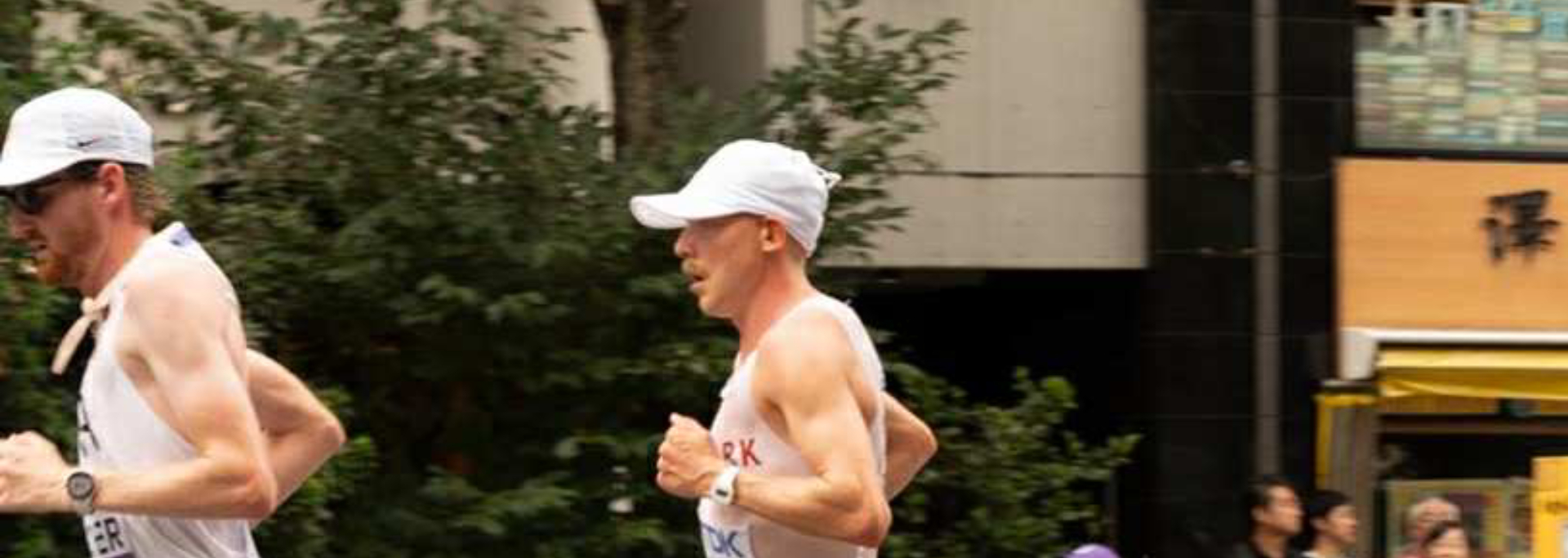

The gun goes off. We start quickly – but then the shot sounds again, and the commentator shouts about a restart. False start in a marathon – it never happens. I stop with the others, turn around, and walk calmly back to the start. This time, I position myself further back in the field to ensure a calmer opening and stick to the game plan.
From the speakers, it sounds to the Kenyan runner who false-started:
"What are you doing? It's a marathon, not a sprint."
The commentator is right – especially in these conditions. It's 7:30, the temperature is nearing 30 degrees, and the humidity is high.
I look up and remind myself of where I stand: at Japan's national stadium at the World Championship, among the world's best. And most importantly – at the starting line. Three months ago, I couldn't run at all.
Rehab and Preparation
I've previously talked about my journey back from a stress reaction in the femur – a rollercoaster of a process. Now, things are back on track, and the past 12 weeks, I've been able to build my training calmly.
70, 80, 95, 100 km – and finally two weeks with 150 km, spiced with intervals and longer runs. The last couple of weeks were a bit calmer with around 130 km due to travel and the pre-camp in Fukuoka.
As I stand at the starting line, I'm excited. Not just about what's ahead, but also about how my body will react. I feel well-prepared for the heat and conditions – but the training hasn't been close to normal for a marathon, where I typically hit 180 km/week in a 10-12 week block.
The perfect training block doesn't necessarily mean the perfect race – and vice versa. The form has felt promising, and otherwise, I would never have gone. A few races have given good signals, and mentally I've been ready to compete again.
The Race
I open calmly due to the heat and quickly find an American I know from a training camp in Boulder, Colorado. We've talked before, and we agree on the strategy: run conservatively and smart in the heat.
We let go of the ambition to go with the front group and instead focus on finding a rhythm we can maintain all the way. The front sets a pace I know I can't keep in these conditions without overheating – so we let them run.
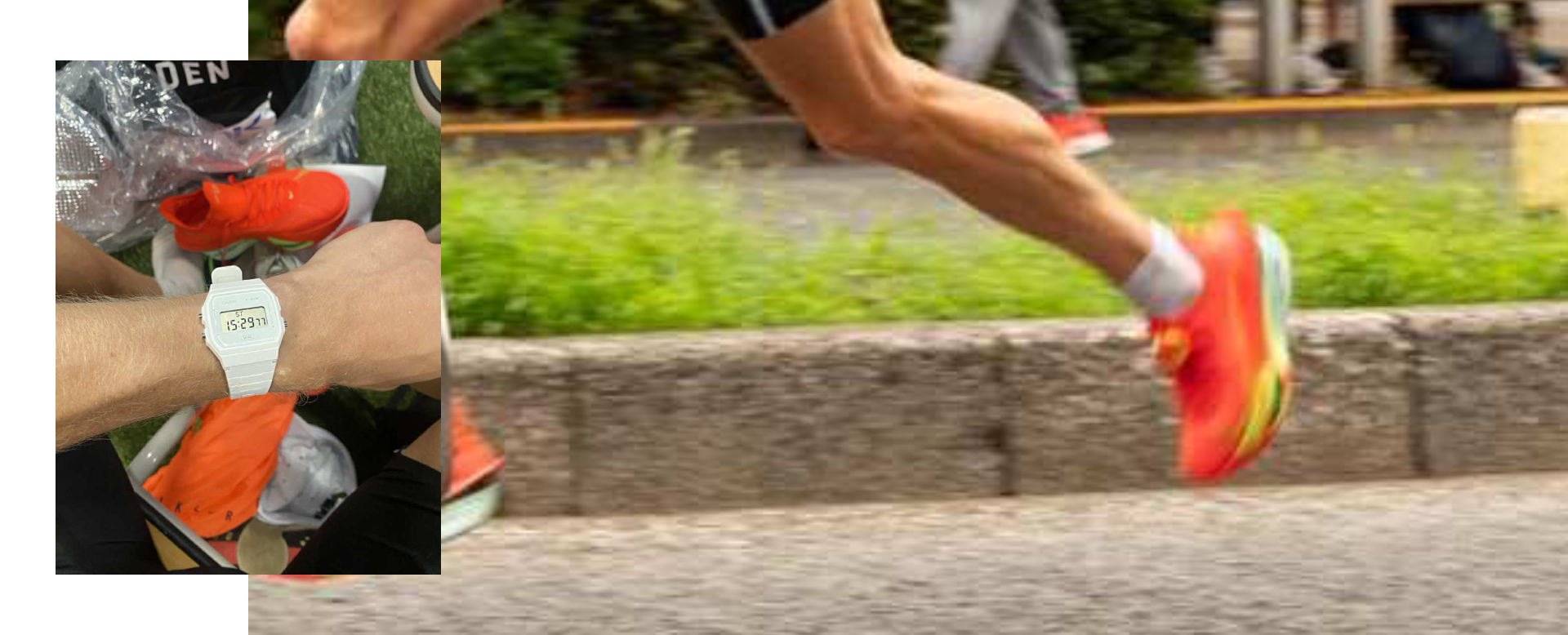
Still, it's a bit too fast in the beginning – 15:35 for the first 5 km (the plan was a maximum of 16:00). Halfway, we pass 1:07:00, and I feel the heat. On the other hand, we start catching many who opened too hard. From 30 km towards the finish, we take positions in bunches.
With 200 meters left, I snag another position and cross the finish line as number 29.
Aftermath
The goal was actually top-20. I had hoped to catch more by running smart and focusing on cooling. But others were just as well-prepared, and the field was strong. If you lack just a few percent, it shows in the placement.
Still, I'm satisfied. I slowed down a bit in the second half and ran 68:30 – a minute and a half slower than the first. Five minutes from the winner is acceptable in these conditions and with my prep.
The most important thing is that I'm back – and that the body responds positively.
This race isn't the culmination of a classic marathon block. It's the start of the next phase. I still need sharpness and continuity, but now I have something to build on. I'm already looking forward to the next marathon, just around the corner.
Now it's about recovery, learning – and continuing the build-up.
Interested in more?