
Marathon Blues. I don't really know it. When I hit the finish line, I'm in offseason. I've worked hard towards a marathon and made sacrifices along the way. My mindset shifts, so I'm no longer focused on performance, but more on 'coziness'. In other words, it's time to do things I couldn't during the lead-up.
The first 24 hours are special - if the run went well, you feel on cloud nine. Stress hormones, endorphins, etc., you might know the feeling. If the run wasn’t as expected, there can be disappointment and frustration. Both can be dangerous for the subsequent recovery. A good run can fill you with too much motivation, risking injuries or illness from starting too soon. Conversely, disappointment might also make you rush into things, risking injuries or illness.
Bottom line, rest is essential, both for the mind and definitely for the body. 42.2km at full speed is a major strain, and I believe it's vital to accept that and view each marathon as the end of a 'block'. The next block for me starts with a month of rebuilding, focusing on getting going again in the first three to four weeks.
It's important to dare to get out of shape and step back, so you can leap forward.
The First Two Weeks

The first week is filled with DOMS (delayed onset muscle soreness). It's about doing things you couldn't before the marathon, whatever that might be. For me, it's chores at home, especially at night (I have two small children) and enjoying more time with the family.
Also, I manage a few big outings with cold beers with friends. Training-wise, I jog a few times - typically 30min, cycle a bit, or similar, light training, purely for recovery. Between 20 and 40km, which is 10-20% of the training volume before the marathon.
Week 2 is basically the same; pleasure-driven with a focus on 'coziness', but the body is fresher - at least in terms of soreness. Still very calm training, just jogging with the club, family, or friends - I don't care about the pace, it's just about getting some movement and blood flow to the legs. I typically cover between 50 and 80km for the week (25-40% of the pre-marathon training volume). If it's summer and I feel like itmaybe some bike rides too. In week 2, I usually get a couple of treatments to make sure everything is fine and there are no persisting issues.
”One easy training day for each mile run”
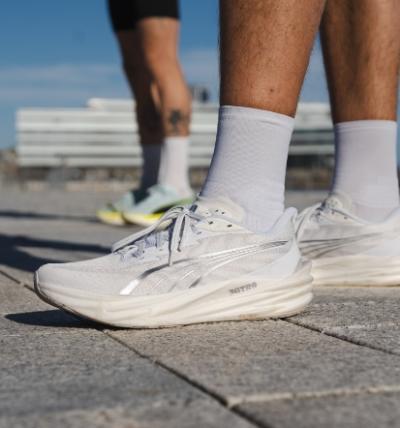
My old coach Dan Olesen had a rule for recovery after running ”one easy training day for each mile run”, i.e., 6 days of easy training for a 10km, 13 days for a half marathon, and 26 days for a marathon. I find it a bit conservative with the advent of carbon shoes, but it's a good guideline.
Overall, I think it's quite individual when one feels refreshed and it probably varies from run to run. It depends on many factors and therefore it's crucial to be aware.
The first faster trainings

In my 3rd week, I run some faster hill runs and 1-2 sessions at a moderate pace, volume increases to 80-110km per week (50-60% of pre-marathon training volume). The focus is still on recovery and rebuilding. More specific training for the next goal is further down the line. I think it's about getting fully refreshed and ready for the next training phase - both physically and mentally.
Week 4 follows the same recipe, faster hill runs, moderate pace, and gradually increased volume. Perhaps the first threshold workout, which is a bit tougher, comes around day 26 (the rule). My volume is about 100-120km/week. After that, I gradually increase volume and intensity tailored towards the next goal.
Recovery after a marathon is always special and I always find there are some minor issues with the body that I need to consider. These could be soreness, minor injuries, or sickness and during this period, I believe it's extremely important to be wise in adjusting the training. It requires patience, but I think it's crucial to give the body rest, and ”reset” before the next block. It's important to dare to fall out of shape and take a step back so you can take two steps forward.