
Overload injuries amongst runners are unfortunately not a rare sight. It's really frustrating to run into an injury, especially when you have an important goal in mind. But there is actually something you can do to avoid this type of injury - after all, they are not called overload injuries for fun.
What are the signs of an overload injury?
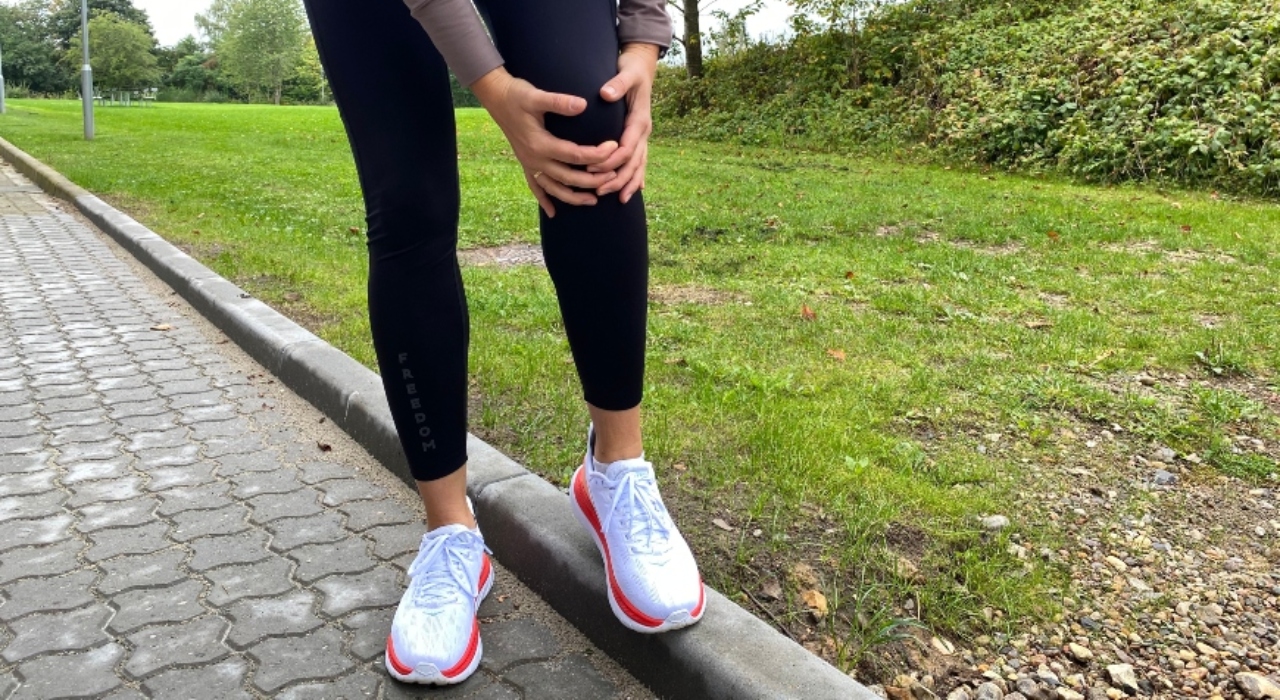
Soreness, fatigue and stiffness in the muscles in the morning the day after a workout can be a warning sign. Another warning sign is soreness that does not go away after warming up.
The cure is actually quite simple: take a break from running until the symptoms subside and jump onto your bike or in the swimming pool instead to help you to be able to resume running training faster. You can often nip such injuries in the bud, if you make sure to listen to your body's signals.
Do not increase the amount of exercise too fast
A very well-known concept in the running world is the 10 % rule, which is a good benchmark for not moving forward too fast. The rule, in all its simplicity, is that you should not not increase your amount of training week by week by more than 10 percent.
The body can generally handle very large loads. However, it must slowly get used to these loads - otherwise the risk of relapse is too great.
However, you need to be aware of what level you are at before you start to follow the 10 % rule. For some it is a lot, for others it is a little. Remember to listen to your body. In addition, you should also be aware that if you incorporate other forms of training as well, such as strength training, cycling or something else, then this is also part of the total load on your body.
The 10% rule - an example:
A runner has been running regularly for half a year and is currently running 5 km, 3 times a week. The weekly amount of training is thus 15 km.
He really wants to complete a half marathon and therefore wants to increase the amount of training without overloading his knee, which he has previously had problems with during longer running sessions.
How fast will he be able to expect to complete one of his runs without an increased risk of a knee injury?
In the first week leading up to the race, according to the 10 % rule, he should extend the maximum amount of training to 16.5 km. The following week, the total amount can be increased to approx. 18 km and the following week again to a maximum of 19.8 km. If the runner follows this simple rule, he will complete a half marathon at the earliest after 5-6 weeks, and it would no doubt be prudent to add on a few more weeks to be safe.
Thus, it will take approx. 2 months before he is ready for a half marathon!

Biomechanical factors that can cause running injuries
When noticing the first signs of an overload injury, it can make a lot of sense to examine the runner's resources and prerequisites. Some of the most relevant are:
Anatomical shape of the foot
If a runner is flat-footed or has a fallen forefoot, bunions etc., it may be relevant to investigate whether the runner needs treatment, insoles or a very special pair of running shoes.
Muscle strength above the feet, knees, hips, pelvis and back
When you run, you involve many different muscles, all of which must have the necessary strength to propel the body forward. The muscles should preferably "play together". Meant in that way that if some muscles are not strong enough, then other muscles will try to compensate, which may increase the risk of an overload injury.
Stability in the knees, feet, hips, pelvis and back
Coordination and stability are extremely important elements for a runner. If the individual muscle is not activated at the right time, the movement will be poorly coordinated and the body will be exposed to an uneven load. For example, if a knee joint is overloaded, your levels of control and stability are reduced, which in the long run can lead to injuries. The cause of the overload should therefore be identified and knee bandages with compression can, for example, counteract swelling and help to increase muscle control again.
Running style
Optimising the running style can also minimise the running loads on the body. By changing the technical style of running, some may be able to run more efficiently, thus helping to avoid injuries and at the same time getting better at running faster. Many physiotherapists specialise in running style analyses by using video - corrections are often made using insoles or other measures to improve your performance and reduce the risk of injury.
Running shoes
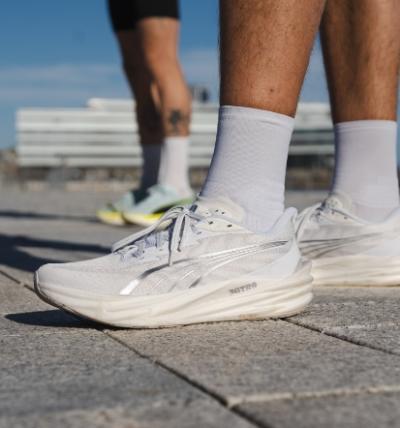
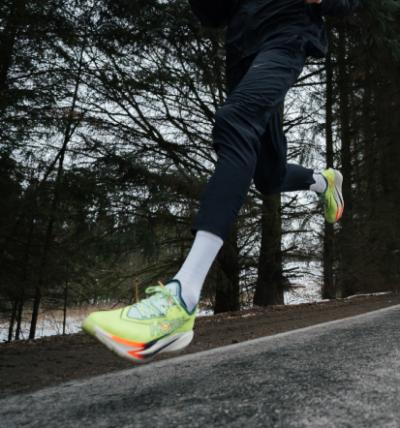
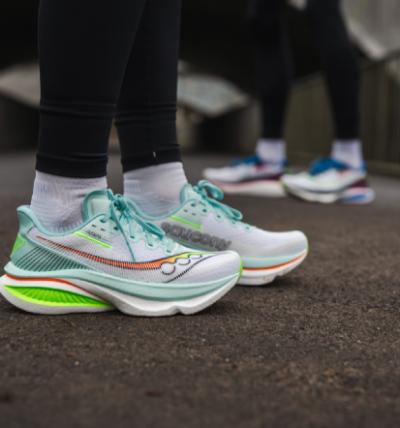
The choice of running shoes is an important and very individual element for each and every runner. Therefore, it may make sense to look at solutions in relation to the type of running shoes or adding insoles.
On the lookout for new running shoes?
See our whole selection of running shoes here: