The running season is now in full swing, and that means it's almost time for race day. Whether you're aiming to beat your colleague in a 5 km at DHL or have trained all winter and spring for a marathon or half marathon, there comes a time when you need to bank those last kilometers to be sharp and ready for your big race.
But how you train leading up to your race matters. In this article, we've gathered some good advice on how to get the most out of your final training so you can be fully prepared for your race.
The crucial weeks - Race-specific training and tapering
Training for your big day naturally starts several weeks before race day. Depending on your goals, experience, and the distance you're tackling, the specific training leading up to the race can last anywhere from 6-16 weeks. In this section, we'll focus on the last 2-3 weeks before the race.
During this period, you typically begin to adjust your training to be very specific towards race day. If you're running a marathon, this is also typically when tapering begins. But that doesn't mean training comes to a halt.
The approach to being as sharp as possible depends greatly on the distance you're competing in. For a marathon, the common method is a 2-3 week taper, but for a 5 km race, you might only need a week to freshen up.
Depending on how your training has gone and your mental makeup, some runners feel the need for a single workout that 100% indicates they're ready for the distance or time they've set. This can be quite useful, but timing is crucial. Again, the distance determines when it's a good idea to place such a workout. The longer the distance of the competition, the further from race day this workout should be. Typically, you'll see marathon runners doing this last long, specific session 3 weeks before, half marathon runners 2 weeks before, and 10-5 km runners 1 week before. From this training, it's about fine-tuning the engine.
Examples of these final workouts (described here as the total amount at specific pace – warm-up and cool-down are determined independently):
Marathon: 5 x 5 km at marathon pace
Half marathon: 4 x 3 km at half marathon pace
10 km: 7 x 1 km at 10 km pace with 1 min rest
5 km: 20 x 400 m at 5 km pace with 30 sec rest
Once this training is completed, it's about looking forward to the race. Now it's about getting fresh legs and mentally preparing for the big day.
But again, time should be used differently depending on the distance. Marathon runners still have 3 weeks to work with. In this case, you gradually reduce your volume by about 20% per week. If you normally run 10 km on Monday after a long run, you run 8 km, and the following week you're down to 6 km on Monday. You continue with the same intensity and quality in your workouts, but again reduce the volumes. If you're used to running a total volume of 15 km around marathon pace, it's now 10 km, and the following week 7 km. You should feel like you're training, but without getting tired.
Half marathon runners operate similarly to marathon runners. You just have one less week to freshen up, but your longest sessions haven't had the same volume. Again, the same variation of easy days and tempo days – you just trim the top off the volumes. Start with about 20% the first week.
10 km and 5 km runners have a steeper taper. You have a week to freshen up, so it's a bit simpler. Take a day off and keep the system running with short, easy jogs. Most high-level runners will usually place an "easier" workout in this week with a couple of kilometers around race pace, but with breaks. An example could be 10 x 400 m for the 10 km runner or 5 x 400 m for the 5 km runner.
A good rule of thumb is never to train too hard in the last couple of weeks before the race. Although it can be tempting to squeeze the last bit out of your body, the risk is too high at this point. It can give a false sense of security to run hard workouts too close to the race in the hope of hitting splits that calm the mind. Your peace should come from the training that precedes the last crucial weeks. Ensure you have easy days both before and after the mentioned workouts so your body has the best conditions to absorb the load.
Energy intake for your next race
There are many strategies for energy intake – especially for longer distances. If you're running 5 or 10 km, I would say you don't need gels or other energy during the route. But if you're running a half or full marathon, it's important to know what and how much to consume – and it's a good idea to figure this out well in advance. Some products can upset your stomach. Personally, there are some energy products that make me nauseous, and others that I find incredibly hard to swallow. So it's a really good idea to have tried some energy products on your long runs well in advance to test how they work for you.
Depending on how you're built and how trained your system is in absorbing carbohydrates, it's extremely important to get some carbs on board when you want to get the most out of your body. Especially when it comes to marathon running. A good tip is, as mentioned, to test it in training, the obvious choice would be the days when you have to run some marathon-specific workouts. Bring GELs and find out how much you can handle. I am personally a man of 185m, and aim for about 100g of carbohydrate per hour on the marathon distance.
Carbohydrate = Power = Speed = Good race = Happy runner
You can buy your energy products here
Race simulation
As you may have read above, it's largely about simulating the race where you need to perform. The more your body and mind are familiar with the distance and performance you have to go through, the easier it is to overcome. Therefore, it can also be a good idea to schedule some of your training sessions at the time when the race is. If you're running a half marathon on Sunday at 10:00, it's a good idea to try some long runs on Sundays at 10:00. Here it's a good idea to try to simulate race day. Get up at the time you plan to get up on race day, eat the breakfast you plan to eat on race day, etc. This way, you know how your body reacts to the energy you consume. You might find that you need to get up a bit earlier for your stomach to have digested the food before the race.
The shoes
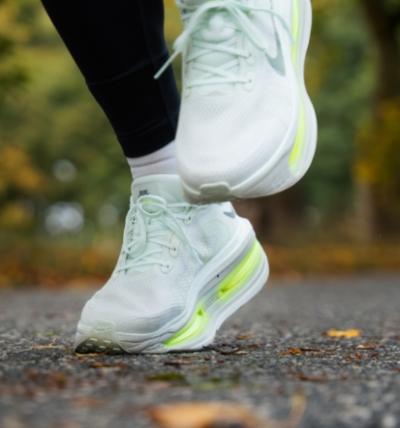
A final tip is about shoes. Your shoes are important. They're important for the race, but they're also important when you train. A good tip is to get a pair of race shoes. Whether you're running a 5 km DHL relay or a 42.195 km marathon, you can benefit greatly from a pair of race shoes. It's a common misconception among us recreational runners that carbon shoes and fast competition shoes are only for the elite. A competition shoe can give you extra speed and responsiveness when you need to perform. Even if you're not the fastest runner. It's a good idea to get the competition shoe in good time so you can run a few short runs in it, getting your body and feet used to the new shoe, and then take the shoe out on one of your longer training runs to get used to running long in it.
You can find a lot of fast competition shoes here
Additionally, it's also good to have a comfortable mileage training shoe that you can take out on the road and run a lot of kilometers in without it necessarily being very hard on your feet. There are a plethora of mileage training shoes and opinions on which shoes are most comfortable. Some prefer very soft mileage training shoes, while others prefer a somewhat firmer shoe.
You can find all our shoes for daily training here
We hope that with this guide you can be fully ready for your next big race.
Good luck!
More inspiration?
Find more articles in our inspiration universe right here: