What is included in running style?
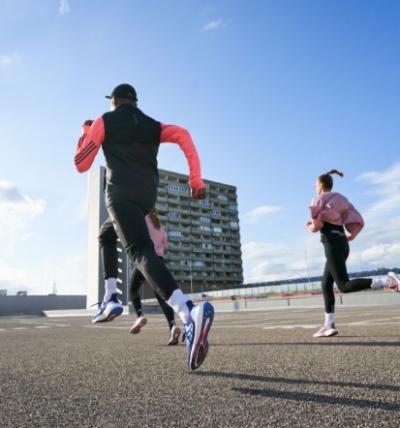
Basically, running style is the way you run. It includes everything from posture to the movement paths of your limbs while running. Since we are all built differently, there are countless different running styles – hence, it's interesting to explore if there's a particular running style that is advantageous.
In running, there are specific focus areas of running style that are relevant. We will go through them below, but first, let's give an overview of some of the most popular focus areas:
- Arm movements
- Hip movements
- Foot position at landing (forefoot, midfoot, or heel landing)
- Cadence and stride length
What is a good running style?
Before diving into specific areas, let's look closer at how to conclude whether something is a “good or bad” running style.
You can have many different reasons for running. Maybe you run just to stay healthy – or maybe you want to improve. Depending on your reason, there can be various reasons why running style might be interesting to look at.
If you run for enjoyment or just to maintain your health, you might be interested in whether a particular running style reduces the risk of injuries; you need to be injury-free to maintain training!
If you run to get better/faster, it would be interesting to see if a particular running style gives you better running economy – with better running economy, you simply use less oxygen at the same running pace, allowing you to run faster.
Running style and arm movements
Currently, there isn't an overwhelming amount of studies that have examined the relationship between arm movement and running.
The function of the arms is to “straighten the running movement” and counteract the rotation generated by the legs when you step forward.

With the limited knowledge available, it seems that the best movement pattern is “in a completely normal way,” without exaggerating the movement.
- If you swing your arms excessively towards the center or backward, your running economy will worsen
- If you completely refrain from swinging your arms, your running economy will also worsen! This is likely because you then have to rotate your entire upper body, which is more uneconomical
Regarding injury risks and arm movements, there isn't much knowledge found in studies.
Running style and hip movements
There is surprisingly little scientific knowledge about hip movement and running style.
In practice, this means that as a runner, you can either choose not to worry about the hips or look closer at the advice from prominent coaches and the like – naturally with the risk associated with following anecdotal and experience-based advice.
Intuitively, one might think that the hips are a very important focus area if you want an optimal running style – after all, it's a central point on the body! Therefore, one could imagine that “incorrect movements” around the hips will result in many “incorrect movements” further out in the movement chain – both in the upper and lower body.

One of the few things that have actually been shown is that you can benefit from having “adequate flexibility.” This means flexibility that allows you to run unhindered. If your flexibility limits your running movement, you might benefit from working on flexibility. Regarding the hips, this includes both the ability to move the leg sufficiently forward and backward.
Another study has shown that there may be a connection between how much you “collapse” sideways in the hip when landing and the risk of runner's knee – the more you give in at the hip, the greater the risk of runner's knee may be. However, it's unclear whether this is due to lack of hip/core strength, running style, or something entirely different.
Foot position at landing
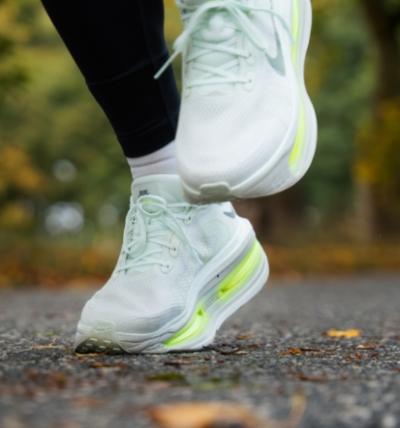
Heel landing or forefoot running? The foot's position at landing is one of the most debated focus areas when it comes to running style. As a result, there are also significantly more studies on this topic.

The conclusion of the many studies is quite straightforward: There is simply no evidence that you can benefit from changing running style one way or the other if the goal is to optimize your running economy.
Regarding running injuries, there might be a bit to consider.
- A forefoot runner has more load on, among others, the plantar fascia, Achilles tendon, and calf muscles
- A heel runner has more load on, among others, the shin muscles
You can't get more or less running load by running forefoot or midfoot, but you can shift some load from one area to another. If you're challenged by the load on certain areas, you might be able to shift some load away from this area by changing your foot's landing position.
Cadence and stride length
Cadence and stride length are two important parameters – together, they define the pace you run. Therefore, it also follows that you can maintain a given pace by, for example, increasing cadence and correspondingly decreasing stride length.
Cadence is measured in steps per minute – typically both legs are counted, which means the cadence usually ranges from about 160-200 steps per minute.
Stride length is measured in meters and is the distance from takeoff to landing; in other words, how far you float before landing and taking the next step. Stride length is highly dependent on both running style and pace, but typically ranges between 0.8 and 1.5 meters – shorter stride lengths are seen at low speeds, while stride length can exceed 2 meters at full sprint.
The optimal running cadence?
Since you can adjust cadence and stride length up and down, it's naturally tempting to see if there's an optimal cadence. For many years, many worked from the idea that the optimal cadence is 180 steps per minute. However, it has later been shown that there are some important nuances in this context that are important to keep in mind.

Much suggests that runners are significantly better at adjusting cadence and stride length than previously thought. 180 steps per minute is probably still a pretty good rule of thumb, but studies show that runners themselves adjust towards optimal cadence and stride length, and therefore it must “look really odd” before you can benefit from making adjustments to your natural cadence!
References
- Christopher J. Arellano, Rodger Kram; The metabolic cost of human running: is swinging the arms worth it? (2014)
- Saunders, P. U., Pyne, D. B., Telford, R. D., & Hawley, J. A. Factors Affecting Running Economy in Trained Distance Runners. Sports Medicine (2004)
- Louw M, Deary C. The biomechanical variables involved in the aetiology of iliotibial band syndrome in distance runners - A systematic review of the literature. (2014)
- Anderson LM, Bonanno DR, Hart HF, Barton CJ. What are the Benefits and Risks Associated with Changing Foot Strike Pattern During Running? A Systematic Review and Meta-analysis of Injury, Running Economy, and Biomechanics (2020)
- Moore IS. Is There an Economical Running Technique? A Review of Modifiable Biomechanical Factors Affecting Running Economy. Sports Med. (2016)
- van Oeveren BT, de Ruiter CJ, Beek PJ, van Dieën JH. Optimal stride frequencies in running at different speeds. (2017)
- de Ruiter CJ, Verdijk PW, Werker W, Zuidema MJ, de Haan A. Stride frequency in relation to oxygen consumption in experienced and novice runners. Eur J Sport Sci. (2014)
- Hunter I, Lee K, Ward J, Tracy J. Self-optimization of Stride Length Among Experienced and Inexperienced Runners. Int J Exerc Sci. (2017)