

You train, eat reasonably well, and sleep too. But your body isn't quite keeping up. Legs feel heavy, progress stalls, and you're tired in a way that doesn't go away with a day off. The issue isn't always the training itself. Often, it's what happens in between.
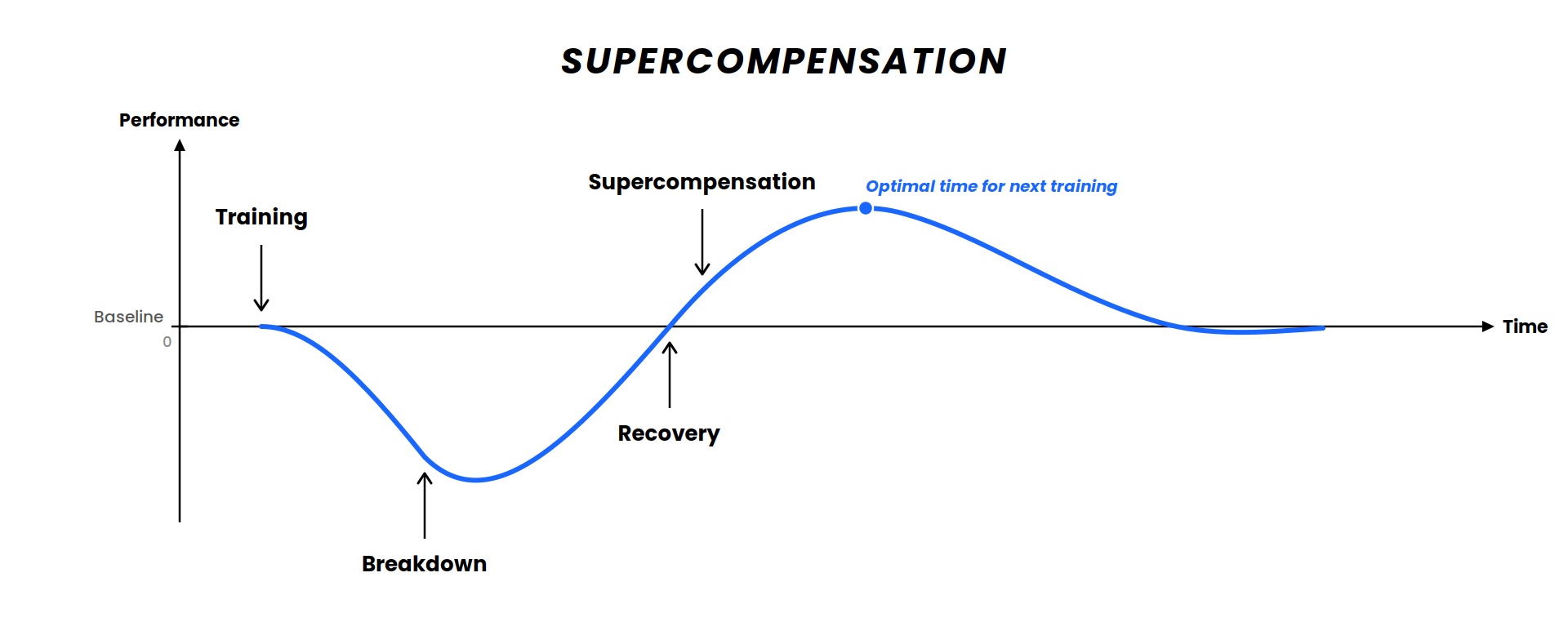
Recovery isn't passive rest. It's an active biological process where the body adapts to the stress you've put it through. Muscles rebuild, energy stores replenish, the nervous system regains capacity, and muscle tissue damage repairs. Without this process, training is just breakdown without building up. It's about supercompensation: the body builds a bit stronger than before when given the right stimulus and necessary time to rebuild. But only if you give it time and resources.
This article covers the key factors in recovery: sleep, nutrition, hydration, and active rest. Additionally, we touch on supplementary measures like massage, ice baths, and compression.
Sleep and Recovery: Why Sleep is the Foundation of Your Training
Sleep is perhaps the most underrated recovery strategy. Not a reward after a good training week, but the prerequisite for training to work.
In the deep phases of sleep, the body releases growth hormone, crucial for muscle repair and tissue building (Halson & Juliff 2017). Meanwhile, the brain processes the movements and running patterns you've practiced during the day. That's why many runners find a new pace or technical change feels more natural the next day.
Research shows that dropping below 6 hours of sleep per night has direct consequences: slower reaction times, higher injury risk, and reduced ability to regulate effort during training (Fullagar et al. 2015). It's not just about feeling rested. Sleep regulates hormone balance, the immune system, and the nervous system's ability to rebuild after stress.
For most active adults, 7 to 9 hours of sleep is the range that best supports performance and recovery (Vitale et al. 2019).
The practical advice is: ensure a dark and cool room, consistent bedtimes, and limit screens within an hour before bed. It sounds simple, but it's the most effective thing you can do for your recovery.
Many runners use their sports watch to track sleep. It can provide useful insights into patterns over time, but use the numbers as a guide rather than a verdict. Too much focus on sleep data can paradoxically make it harder to sleep.
| Sleep Checklist | |
|---|---|
| ✔Dark room – use blackout curtains or a sleep mask | |
| ✔Consistent bedtime – go to bed and wake up at the same time every day | |
| ✔Cool bedroom – ideally 16–18°C | |
| ✔No screens 1 hour before bed – avoid phone, tablet, and TV | |
| ✔Avoid caffeine after 2 PM – coffee, tea, and energy drinks count | |
| ✔Calm evening routine – e.g., stretching, breathing, or reading for 10–15 min | |
What to Eat After Running? Nutrition and Recovery
The body doesn't rebuild muscle tissue from nothing. No matter how well-planned your training is, it's futile if the diet doesn't provide the necessary building blocks. The recommendations below are based on general sports physiology research and serve as a guideline for adult, active runners. Your individual needs may vary depending on age, weight, training volume, any illnesses, and personal goals. If you have specific dietary needs or health concerns, consult a dietitian or doctor.
Protein
Protein is the most studied nutrient in relation to muscle recovery. After intense training, the body is in a catabolic state, and protein intake initiates muscle protein synthesis, the process that repairs and builds muscle tissue.
Research recommends 0.25 to 0.4 grams of protein per kg body weight per meal. For a 70 kg runner, this equates to 18 to 28 grams of protein per meal (Morton et al. 2018).
Protein is found in many everyday foods: meat, fish, eggs, dairy products, and legumes meet the needs for most. In a busy day where a proper meal isn't always within reach,
can be a practical solution to reach the recommended level.
Research talks about an "anabolic window" post-training, where the body is particularly receptive to protein. Recent research nuances this: total daily protein intake is likely more important than precise timing. That said, a protein-rich meal within a couple of hours after intense training is a good habit that rarely harms.
Carbohydrate
Carbohydrate replenishes the body's glycogen stores. It's especially important after long runs or high-intensity training, where stores can be fully or partially depleted.
Research recommends 1.0 to 1.2 grams of carbohydrate per kg body weight in the first hours post-training for optimal glycogen replenishment (Beelen et al. 2010). For a 70 kg runner, this equates to 70 to 84 grams of carbohydrate, equivalent to a portion of pasta, rice, or potatoes with sides.
A normal meal with carbohydrate and protein meets the needs for most. If you have a busy schedule or want to simplify recovery nutrition, there are recovery products with a combined carbohydrate and protein profile designed for this purpose.
Timing and the Big Picture
Nutrient timing is relevant but rarely decisive on its own. A normal, varied meal within 1 to 2 hours post-training covers most needs. It's the daily dietary pattern and total intake of energy and protein that determine your recovery capacity over time (Thomas et al. 2016).
If you train a lot and are also trying to lose weight, be aware that a large energy deficit directly delays recovery and increases injury risk. It's not the time to cut calories too hard.
Fluid and Hydration After Running: More Important Than You Think
Hydration is one of the most overlooked parts of recovery. Even a fluid loss of 1 to 2 percent of body weight measurably reduces performance, and for many runners, this happens during a normal training session.
During running, you lose fluid and electrolytes, and it's important to replenish both. Plain water suffices for daily use, but after long or particularly hot runs, an electrolyte drink can support recovery.
Be aware that thirst isn't always a reliable signal, especially not after intense exertion. Drink steadily in the hours after training, regardless of thirst.
Active Recovery: Why Light Movement is Better Than Rest
It sounds paradoxical, but for common muscle soreness and fatigue, gentle movement can often be better than total rest. Light running, cycling, or mobility training at low intensity increases blood flow to the muscles, helps remove metabolic waste, and supports the body in the rebuilding phase. The intensity should be low. You should be able to hold a conversation without difficulty.
Research is relatively clear: active recovery promotes recovery faster than passive rest, especially in the first 24 to 48 hours after intense exertion (Barnett 2006). It's not about "training through," but about giving the body movement without additional stress.
Plan 1 to 2 light activity days a week. A gentle run for 20 to 30 minutes, a walk, or a light bike ride is better recovery than the couch for most.
Foam Rolling and Massage: Give Muscles Attention After Running
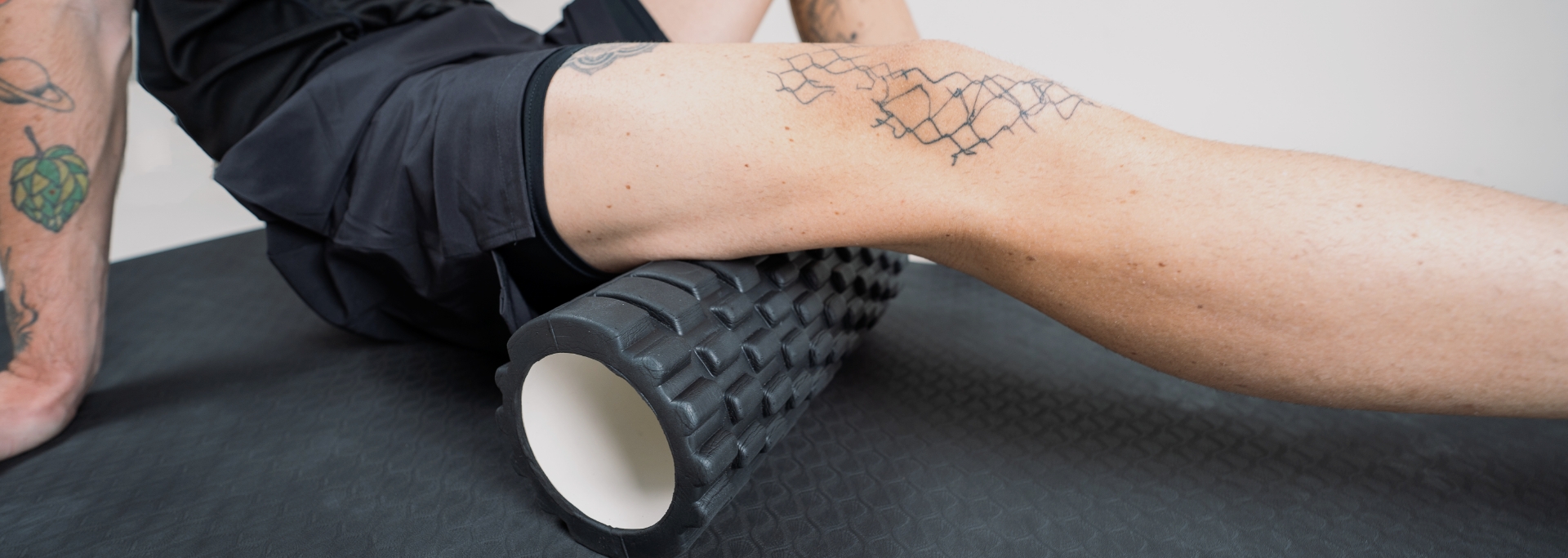
Days after a hard run, your muscles may feel hard, sore, and tight. It's normal. It's a natural part of rebuilding, and the discomfort typically disappears within 24 to 72 hours. Foam rollers and massage guns work on the same general principle: mechanical stimulation of the muscles, which can increase local blood flow, affect the nervous system, and reduce the sensation of soreness and stiffness. Research shows it reduces the sensation of soreness and stiffness and can help you move more normally in the days after hard sessions (Wiewelhove et al. 2019).
The massage-like effect can also influence the nervous system towards relaxation. Many feel a calmer body and better sleep after a session.
Realistic time frame: 10 to 15 minutes per muscle group is plenty. Focus on the major muscle groups most stressed by running: thighs, glutes, calves.
Cold and Compression: Do Ice Baths and Compression Socks Work?
Ice baths and cold therapy are common among runners, with supporting evidence. But it's not as clear-cut as often portrayed. Research shows cold therapy (10 to 15 degrees for 10 to 15 minutes) can reduce muscle soreness and speed up subjective recovery. It helps with acute fatigue. However, caution: using cold after strength training may dampen adaptive signals driving muscle growth (Roberts et al. 2015). For endurance runners, the picture is more nuanced. If you find a cold bath helps you recover faster and feel better the next day, it's a valid reason to use it. Recovery is also subjective, and what works for you counts.
and tights support blood circulation in the legs and can reduce swelling and fatigue, especially during and after long runs. Many runners use them both during and after. Studies suggest compression may speed up the removal of waste products in muscles and reduce the feeling of heavy legs the day after a hard run (Hill et al. 2013). The caveat is that the effect varies greatly from person to person, and compression is not a shortcut around recovery. Legs and feet still need rest. Compression supports the process but doesn't replace it. If you feel compression makes a difference for you, it's a good reason to use it.
The short version: cold and compression are useful tools during high-load periods, but they can't replace sleep, nutrition, and sensible programming.
How to Prioritize Your Recovery as a Runner
Recovery isn't one thing. It's the sum of decisions you make all day: when you go to bed, what you eat post-training, and whether you take the easy run instead of pushing your body further.
The most effective thing you can do is get the basics right: good sleep, enough protein, sufficient carbs, and proper hydration. Everything else is optimization on top.
Recovery isn't the opposite of training. It's part of training.
Find the Recovery That Suits You
Once the foundation is in place, you can supplement with things like foam rolling, cold, and compression during high-load periods. Choose products that make sense for your body, your running, and your training.
See our selection of products for , if you want to make it easier to give your body the best conditions post-training. If you need shoes for easy miles, you can also see our selection of for daily training. If you want to become a stronger and more robust runner, you can also read our article on .
Sources
- Barnett A. (2006). Recovery modalities between training sessions. Sports Medicine.
- Fullagar HH et al. (2015). Sleep loss and exercise performance. Sports Medicine.
- Beelen M. et al. (2010). Nutrition strategies for post-exercise recovery. International Journal of Sport Nutrition and Exercise - Metabolism.
- Halson SL & Juliff LE. (2017). Sleep, sport and the brain. Progress in Brain Research.
- Hill J et al. (2013). Compression garments and exercise recovery. British Journal of Sports Medicine.
- Morton RW et al. (2018). Protein supplementation, muscle mass and strength. British Journal of Sports Medicine.
- Roberts LA et al. (2015). Cold water immersion and muscle adaptations. Journal of Physiology.
- Thomas DT et al. (2016). Nutrition and athletic performance. Medicine & Science in Sports & Exercise.
- Vitale KC et al. (2019). Sleep hygiene and recovery in athletes. International Journal of Sports Medicine.
-Wiewelhove T et al. (2019). Foam rolling, performance and recovery. Frontiers in Physiology.