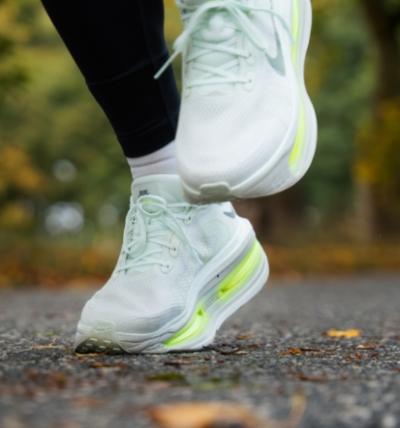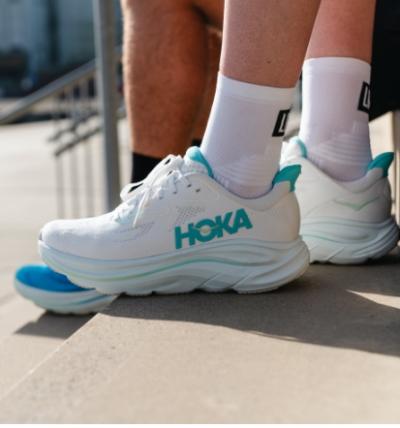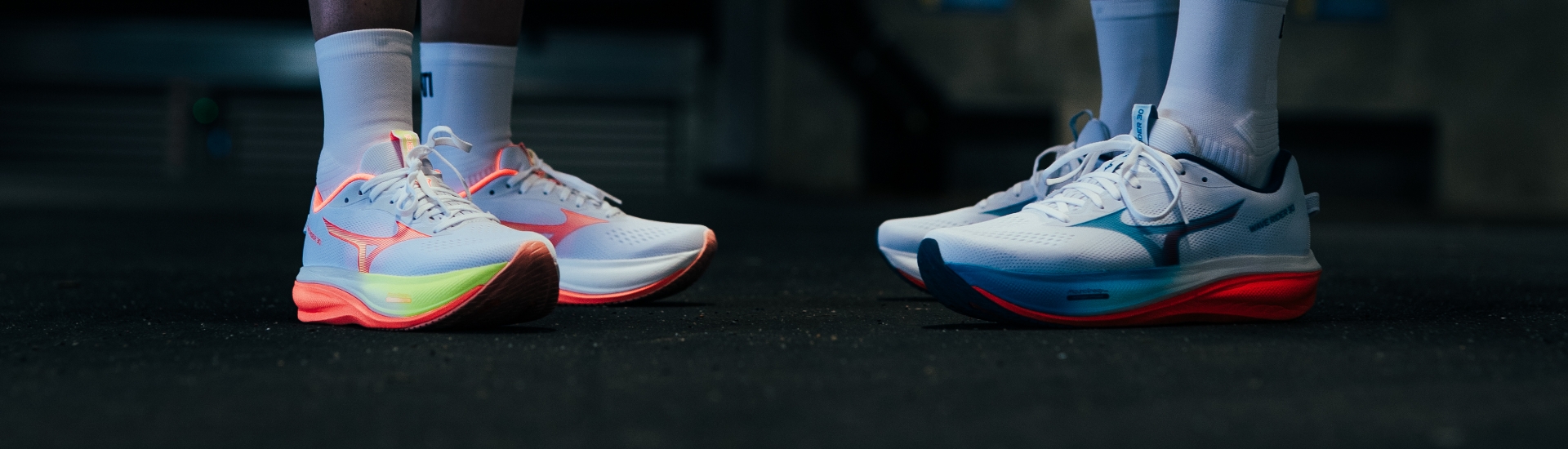

is a running shoe you won't complain about, as it does everything a regular running shoe should. No more. However, it does it all really well.
The shoe is soft.
The shoe is stable.
The shoe is light.
The shoe hasn't changed much over the years, but this year is an exception. The midsole has received a significant update. Yet, this shoe feels just as reliable as its predecessors.
Mizuno Wave Rider 30
| Specification | Wave Rider 30 |
|---|---|
| Type | Neutral, Volume Training |
| Drop | 8 mm |
| Weight | 266 g (men US 9) / 220 g (women US 7.5) |
| Midsole | Enerzy NXT / Enerzy NXT (Nitrogen-infused) |
| Upper | Engineered mesh |
Specifications are based on standard size and may vary slightly between colors/models.
Mizuno Wave Rider 30 - The Solid Foundation
is a brand that has made and continues to make its mark on the running shoe market. With innovation, a constant presence over decades, and a unique continuity that few brands can boast, Mizuno has proven that technologies with many years behind them are still relevant.
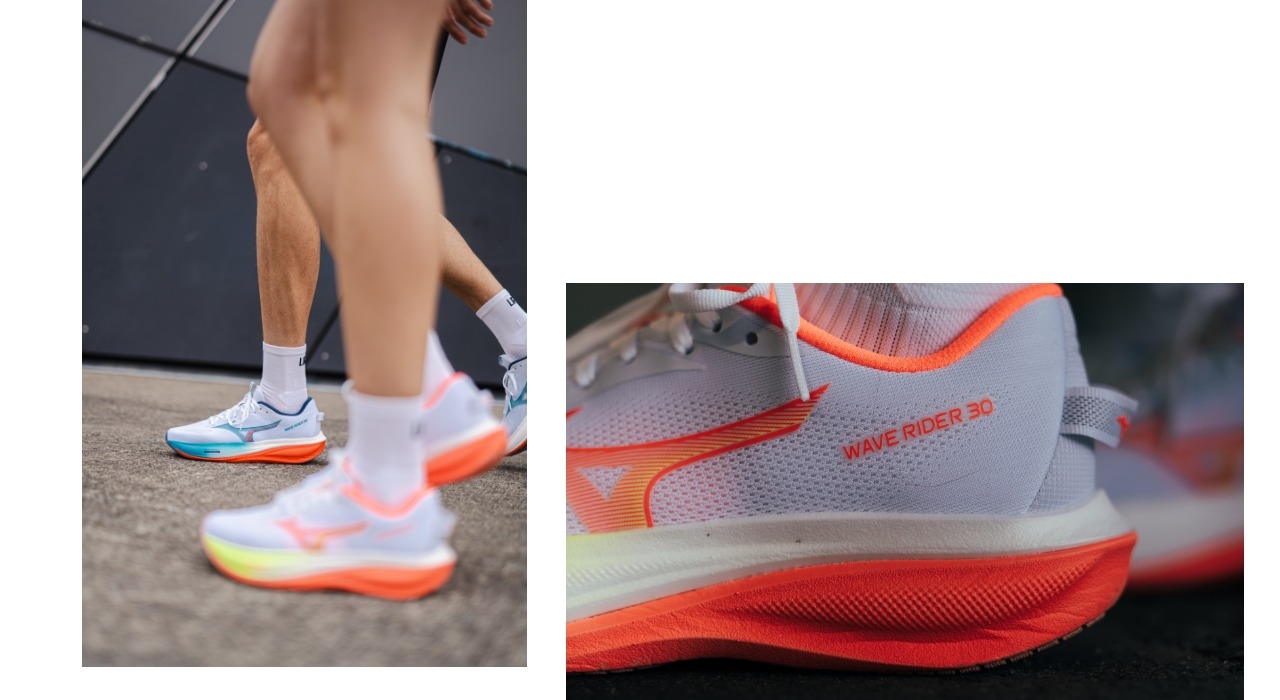
This approach has led to a long line of running shoes that today appear incredibly sharp and refined. Diamonds might be too wild a comparison, but we're at a point where comparing them to gemstones is fitting. For the shoes don't go out of style. The focus is far from trends and "what's in." The focus is on what works.
Therefore, you also find the shoe's most precious feature, the midsole, wrapped in something no one questions: an outsole of X10 rubber.
An excellent outsole ensures that what protects your foot is protected over countless miles. The protection isn't very flexible, so it's divided into panels that ensure your foot can move naturally while running.
For the same reason, you also find a groove under the rear part of your foot. This way, the outside of the foot can move more independently of the inside – very relevant in a push-off.
The groove also reveals what the midsole hides. It hides a plate. But maybe not for the reason you think. Read on to find out its function.
Mizuno Wave Rider 30 - Softer with age, yet still with backbone
The foam you find in Wave Rider 30 is Mizuno Enerzy NXT. It comes in two versions, and here you actually get both. On top, there's one infused with nitrogen. It's inflated, you could say. This is a widely used technology, and there's a reason for that.
The foam becomes lighter and softer with the addition of nitrogen. Beneath it, there's a firmer type of foam that makes the shoe resistant to wear.
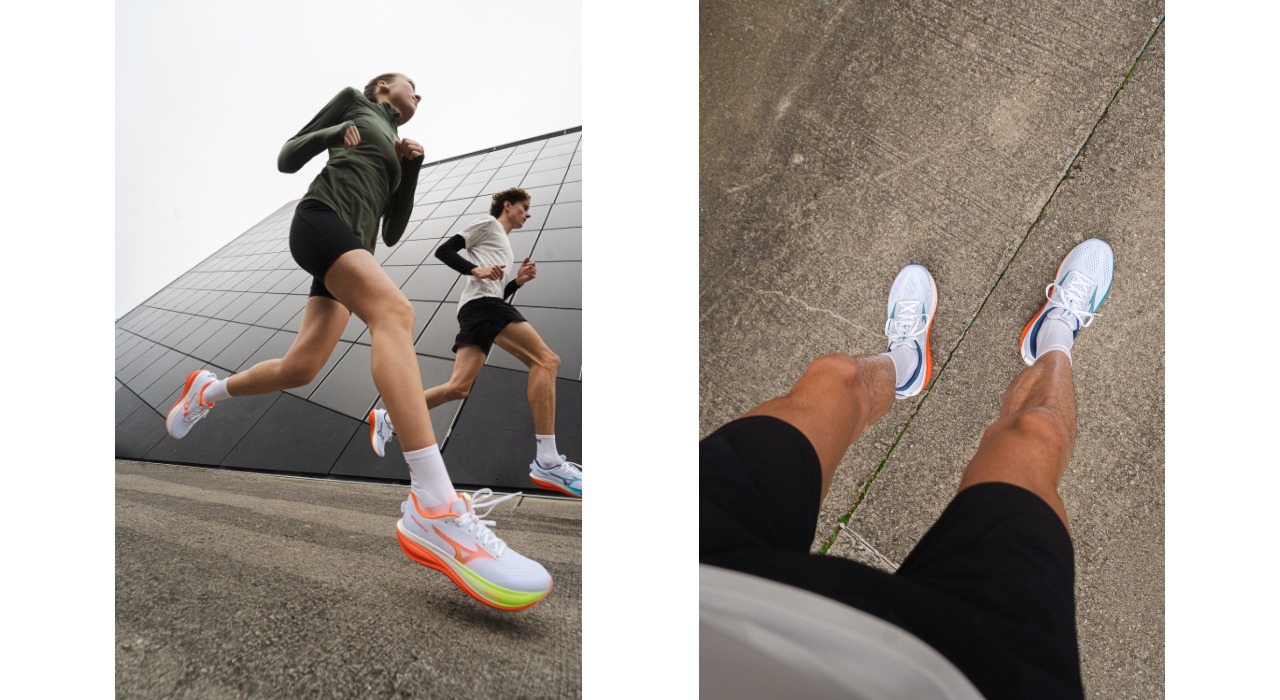
The shoe has also become lighter according to our measurements, if we compare it to last year's model. 266 grams in a men's size US 9 is quite an average weight, and the shoe feels balanced. By that, I mean the shoe doesn't feel heavy. If the upper had been much heavier, it wouldn't have harmonized with the midsole's lightness.
The midsole material allows it to be incredibly light, despite the midsole being higher than ever.
These are two things I greatly appreciate in a shoe: a light foam material, and that there's no skimping on it.
And in fact, it has historically been a complaint I've had with the Rider series. The shoes have always been balanced and comfortable, but lacked a modern midsole like the one you find here and
It was in Rider 29 that Mizuno first used the nitrogen-infused Enerzy NXT foam, and it was a step in the right direction. But there was still a way to go to what you get this year. Here you have a truly modern midsole.
And despite that, the feel isn't far from what you associate with Mizuno: comfort and a classic shoe. No frills. Mizuno's Wave Rider series may have a new 8 mm drop and a higher midsole, but the feel is the same.
Perhaps it relates to the fact that the shoe again this year has a Wave plate in the midsole. This year it's full-length. Mizuno used the stiffening plate in the midsole long before the idea was linked with racing shoes.
Wave Rider was released in 1998. Poul Nyrup Rasmussen was Prime Minister. The Great Belt Bridge was inaugurated, and I wasn't born yet. That's how long the Japanese brand has combined a soft midsole with a stiff plate to deliver stability.
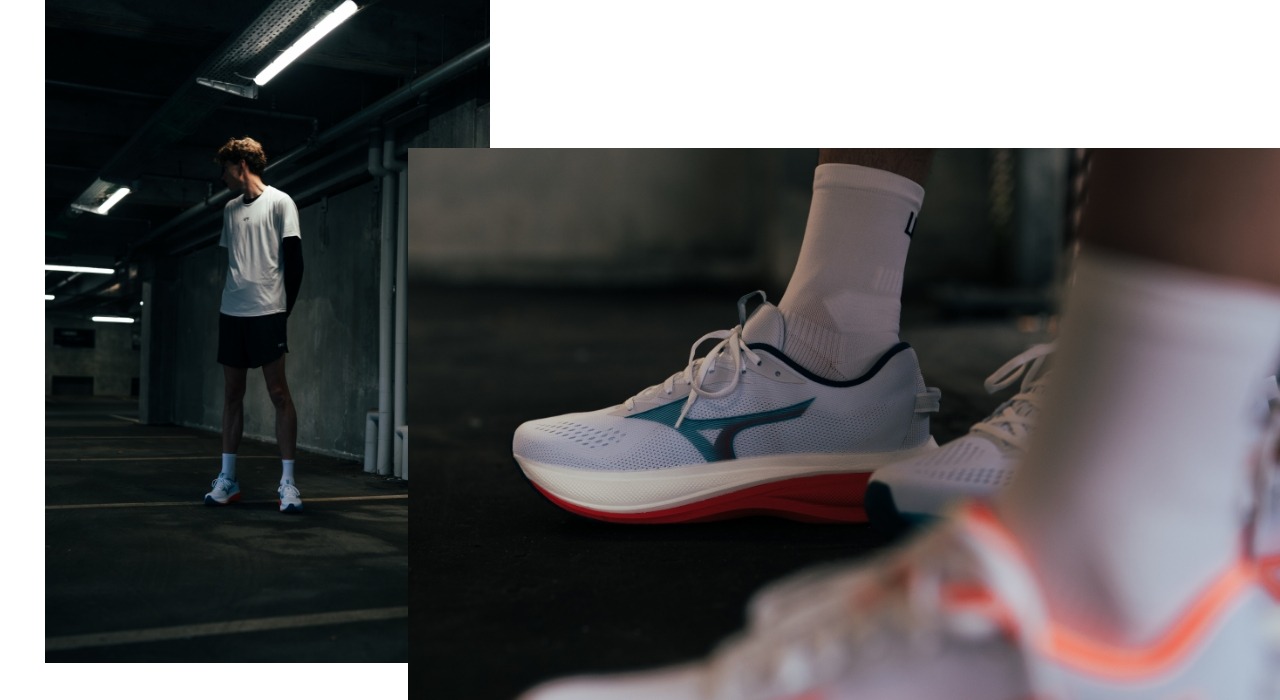
It's no coincidence that the technology still holds today.
The plate keeps you in place and ensures your step and push-off. You generally just have a secure experience in Wave Rider 30. Something that is often compromised by an increase in the midsole. But not here. Mizuno has significantly improved its midsole this year without compromising the series' values.
Mizuno Wave Rider 30 - It's become more spacious
The type of upper is an engineered mesh. What does that mean for you? Not much. The upper type is likely the one you know from your current shoes. It's characterized by balancing comfort through a soft heel cap and tongue with breathability, as mesh material is perforated.
When the upper is soft, you can better tighten the shoe and ensure you're locked in, as the soft elements come between your foot and the laces.
The heel cap remains firm despite the soft foam. It ensures your foot has a stable frame for its movement.
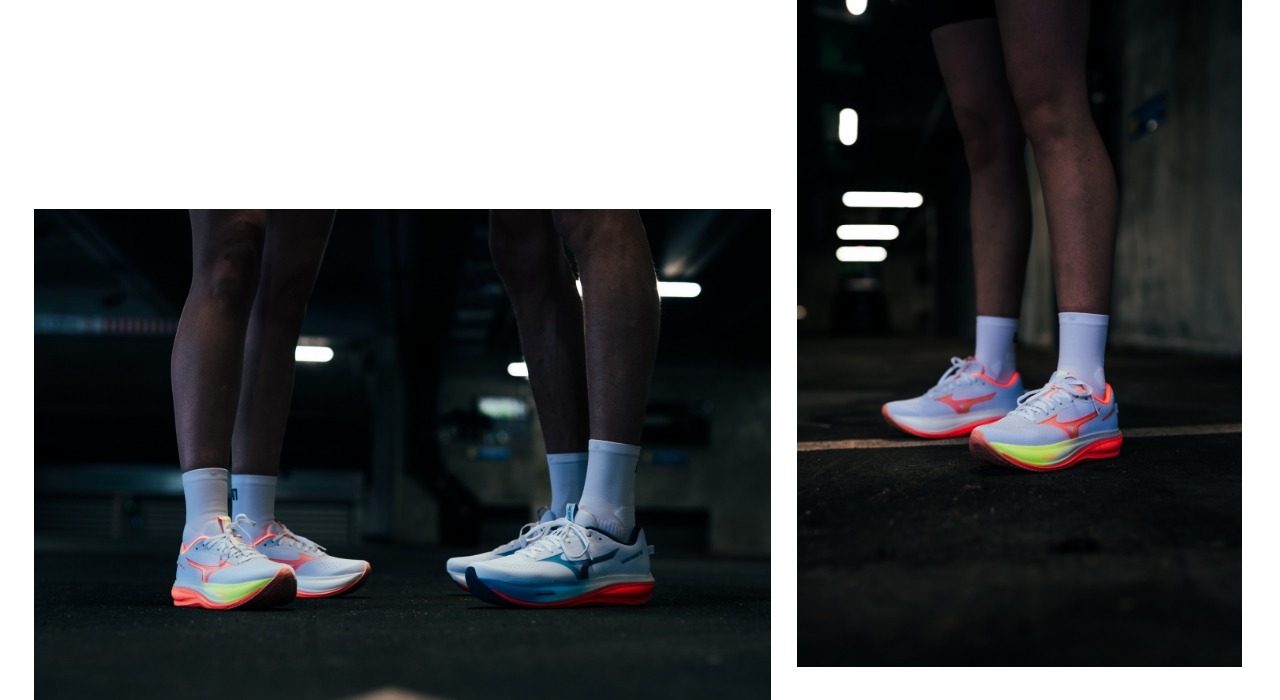
I found the upper more spacious than before. Better width clearly improved comfort. My foot isn't wide, and I found the width very suitable.
Who is Mizuno Wave Rider 30 made for?
Considering a new shoe for your daily training, the Wave Rider is the obvious choice. The shoe assists you in many ways.
The shoe is a safe choice for those who want a shoe that neither cuts corners nor tries to be something it's not.
Wave Rider 30 is the running shoe that bridges the gap between traditional and modern running shoes. Most runners will have an excellent experience in the shoe.