
In recent years, there has been an increasing focus on recovery. For runners looking to improve their performance, it is also one of the most critical areas to focus on. You can train as hard as you want, but if you don't have control over recovery, you will not improve. Therefore, in this article, we will give you our best tips for getting back into shape when training.
Prioritize your sleep
Bad news for all night owls and weekend warriors: You will not get a good return on your weekly long run with friends on Sunday morning when you have been dancing until 5:00 and only got a few hours of sleep before meeting up. You may have already figured that out. But it may be less clear to you that you need at least 7-8 hours of sleep if you are in a period with intense workouts. And if you want to give yourself the best chance of recovering as much as possible, you should aim for even more sleep - preferably every day!
Fill up the tanks
You have just powered through a beefy and intense interval pass. It was so hard that you had to lie down for a few minutes afterwards just to be able to stand up again. Now you are home. And even though you have burned 1000 calories, you are not hungry. You think that means your body doesn't need anything right now, so you take a glass of water and skip a meal.
That may not be optimal.
If you want to recover as best/fast as possible, it is essential that you quickly fill your body with lots of energy. It is entirely okay to eat white bread or a pasta dish. And yes, you may even drink a soda or another sugary drink if you have powered through for a long time. Your muscles are crying out for energy, and the faster you give them enough, the quicker they can start building themselves stronger. So eat! And drink something, so you stay hydrated. If you have trouble getting something down or are on the go, it may be a good idea to eat a bar or have a recovery drink to get some nutrients in your body.
If it has to be more specific, it is recommended to consume 1-1.25 grams of carbohydrates per kilogram of body weight and 0.25 grams of protein per kilogram of body weight so that there are the best possible conditions for the body to recover as soon as possible.
Give your muscles some love
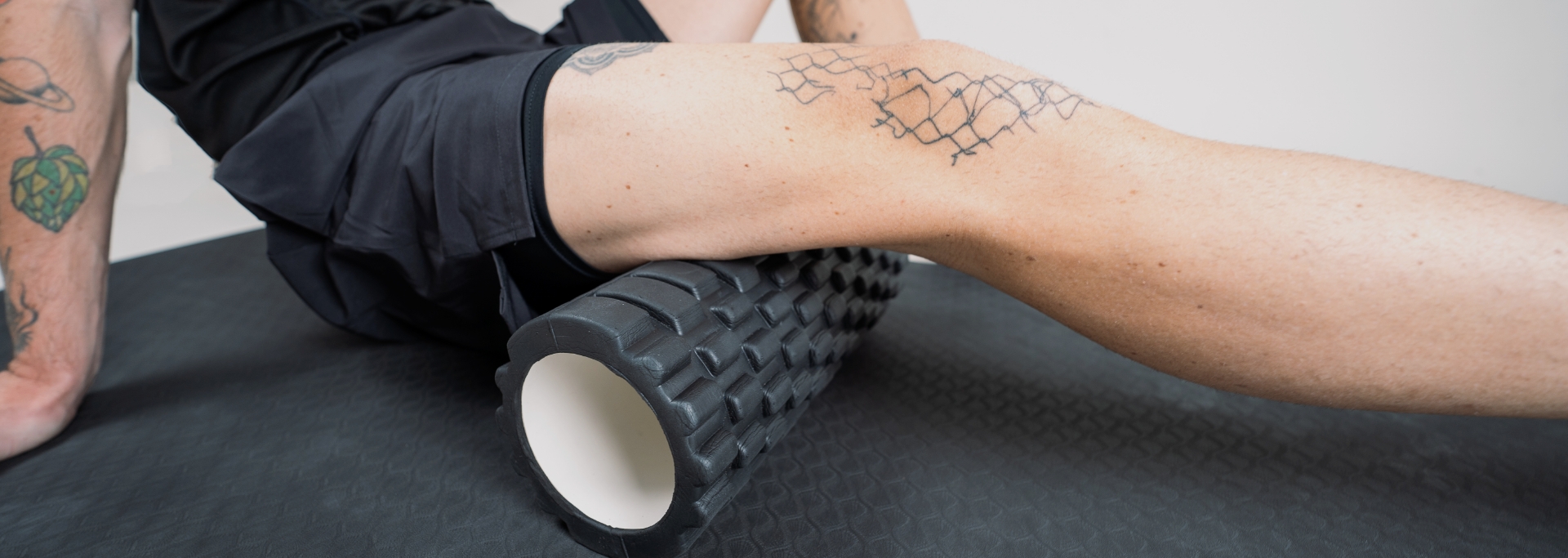
The day after you have crushed your beast of an interval pass, your muscles may feel tight and stiff. You may even experience that you are not as flexible as usual and that your range of motion is less than normal. It isn't very pleasant. But there is a solution. You must start using the foam roller, massage gun or another product so your muscles can move as normally as possible again as quickly as possible.
The massage machines ensure an increased blood flow to the area that is massaged, which can help remove waste products and thus give you a feeling of freshness, so you are quickly ready to perform again.
Run GENTLY
Yes, it's not entirely realistic recovery advice, but it almost is. To get you ready to run fast again as quickly as possible, it's a good idea if you go for a gentle run or walk. You can't train intervals every day, so it's a good idea, when you run your easy sessions, to run slow enough so that you don't unnecessarily drain your carbohydrate deposits. One of the main focus areas for the recovery plan is filling your carbohydrate deposits up before the next hard training. But you can still train the aerobic systems with low-intensity workouts - in the fat-burning zone. By doing this, you can still work out while recovering. All in moderation, of course.
Remember that getting better requires a good balance of recovery and training - you have to give your body the opportunity for supercompensation.