


To be successful as a runner its important to learn how to use your strength and power in the right way - both in training and competition. For a trail runner who often runs in hilly terrrain, on small winding trail in dense forests with a poor GPS-connection, it is, however, not quite as easy as deciding to run at a certain pace. You can´t, just like a marathon runner, make a rigorous plan at home and keep to it. You need other tools. We´ll advice you how to ensure that you will reach your potential when you leave the asphalt and enter the trail.
1. Be realistic
The most important piece of advice I can give, is to be realistic. An area where most people get it wrong.
I am yet to experience a trail run where you didn´t see a few nutcases, taking off like crazy straight from the start.
Its very obvious when you look at those runners that there´s is no way they will be able to keep it up. They can´t maintain the pace, their running style looks quite strenuous and they are breathing very heavily. They can possibly keep up the pace until halfway through the race but when they hit the wall, they really hit the wall.
Baically all world records are set with an ”even split” – i. e. with the same intensity from start to finish. Or close to it anyway. If you run too fast in the beginning and hit the wall along the way, you won´t get a great result. And the race will also turn into a bad experience for you.
Within the world of ultra running, its often said that if it feels easy in the beginning, then slow down. I would rather start too slow any day and then have more energy in the end than the opposite. So slow down in the beginning and be patient.
2. Ignore the watch - on most occasions
When you do road running you often have the sense that you should run at a certain pace all the way. You can make a plan, write down the split times on your hand and then stick to that plan. However, for trail running its not as easy.
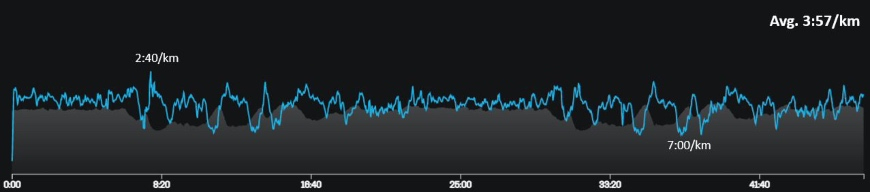
Unless its a route you have done many times before, its almost impossible to know in advance what your pace should be, as hilly terrain and the nature of the trail makes it very difficult to figure out before the start.
At the same time, the pace doesn´t contribute a lot of useful knowledge during a trail run.
If you were to try to keep up the same pace all the way, you would end up running with too high an intensity during your climbs and too low an intensity on your descents.
The pace should fluctuate enormously during trail running, and your GPS-watch doesn´t contribute much to determine whether you´re successful or not.
3. Keep the intensity as even as possible
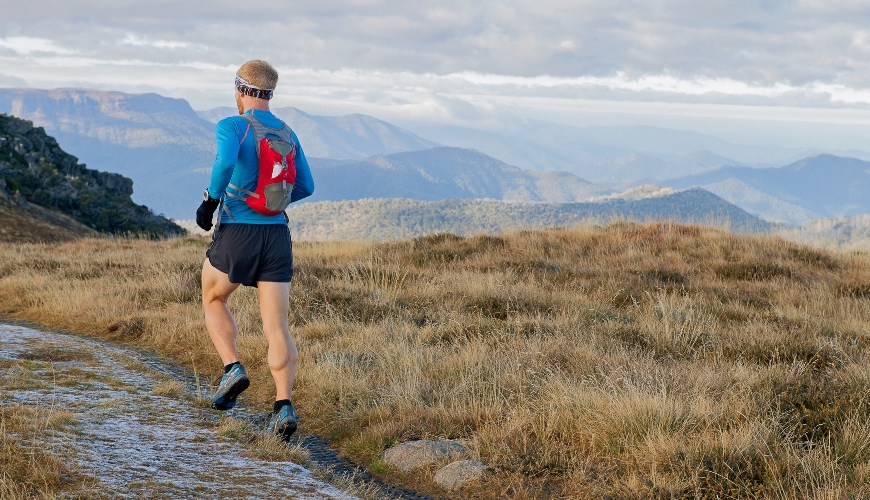
As mentioned above, one shouldn´t aim to keep the same pace all the way as this would result in an excessively fluctuating intensity.
When you look at the whole race from a macro perspective, one would like to keep roughly the same average intensity throughout.
If, on the other hand, we change focus, and zoom in on a smaller part of the race, you should also strive to maintain as even an intensity as possible on the individual stretches on the route.
Too many people end up with a heart rate curve that fluctuates all the time. They run too fast going uphill and too slow going downhill. And this is a very tiring and inappropriate way to run.
Therefore many people would benefit from slowing down going uphill and then release your brakes a little more going downhill. This would give a more even intensity.
4. Get familar with heart rate training
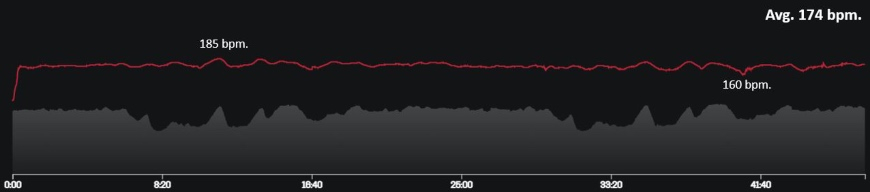
If you should keep an eye on one objective parameter of measurement on your run, your heart rate is the most relevant.
Your heart rate is used to determine how hard your central circuit works. Mostly this assumption works quite well, but you should be aware that that heart rate data can be affected by a number of factors like body temperature, hydration status, caffeine, stress, medicine and a lot of other things which can affect the heart frequency.
You may often see at the end of long runs that the heart rate goes up even if the pace is the same. This happens among other things because you are dehydrated and you have a higher body temperature.
However, this doesn´t indicate that the intensity is higher. Its more an expression of the fact that the degree of the filling of the heart decreases as a result of a lower blood volume, and that the heart must therefore pump more frequently to deliver the same amount of oxygen for the muscles.
Despite theses uncertainties, heart rate data is in my belief the best objective measure one has for the intensity and many trail runners would benefit from getting used to it.
It should be mentioned in this context that wrist heart rate measurement is subject to some uncertainty. Much too often, I get messages from clients making strange claims about their heart rate in connection with workouts. Almost all the time, its due to incorrect measurements from the integrated heart rate monitor of the watch. If you are going to use heart rate measurement for training and competition, you need a chest strap.
5. Learn to feel how your body is doing

Above, we have dealt mostly with the objective measures of intensity - what our watch can tell us. However, I think the most important tool is our mind.
The brain receives an endless amount of information about all body systems every second. No electronic gadget matches this level of information.
There is no singles objective parameter of measurement which can provide us with all the data we need. Its simply not possible to turn off your brain in trail running and then run purely on the data provided by technology. We have to learn to feel how we are doing.
When I plan workouts for my trail running clients, its not ususual that I define a pace like ”race-pace” without further instructions. They have to solve the equation themselves.
If you want to be able to find the right intensity from the beginning in an important race where the adrenaline is pumping, and you feel like running too fast, you first have to learn to do it during practise.
So let go off your dependance on data and learn to feel what your body tells you when you are running.
6. Also when you are working out
Much of the advice I have provided so far, has been related to being successful in competitions. However, its equally important to master your daily training.
When the road runner does intervals, he has a completely clear notion of the pace he needs to keep to train the right elements at the right time. For trail runners this is again more difficult.
To work at the right intensity is crucial for whether you work out too hard, too soft or hit the right amount of intensity for developing your potential. And just like in competition, the trail runner is dependant on all the advice above.
I generally recommend that ambitious trail runners also do intervals on small trails. Its absolutely the best way to work on technique, strength and form while you also exercise your ability to use your strength and power in the right way.
If you quickly want to become a good trail runner, you need to practise fast trail running.
More inspiration?
Find further articles in our universe of inspiration right here: