

In short
- Time: 1:00:42, new Danish record in half marathon
- Race: Valencia Sunday, October 25, 2026, 15th place
- Improvement: 4 seconds faster than the record from the World Championships in Copenhagen in September
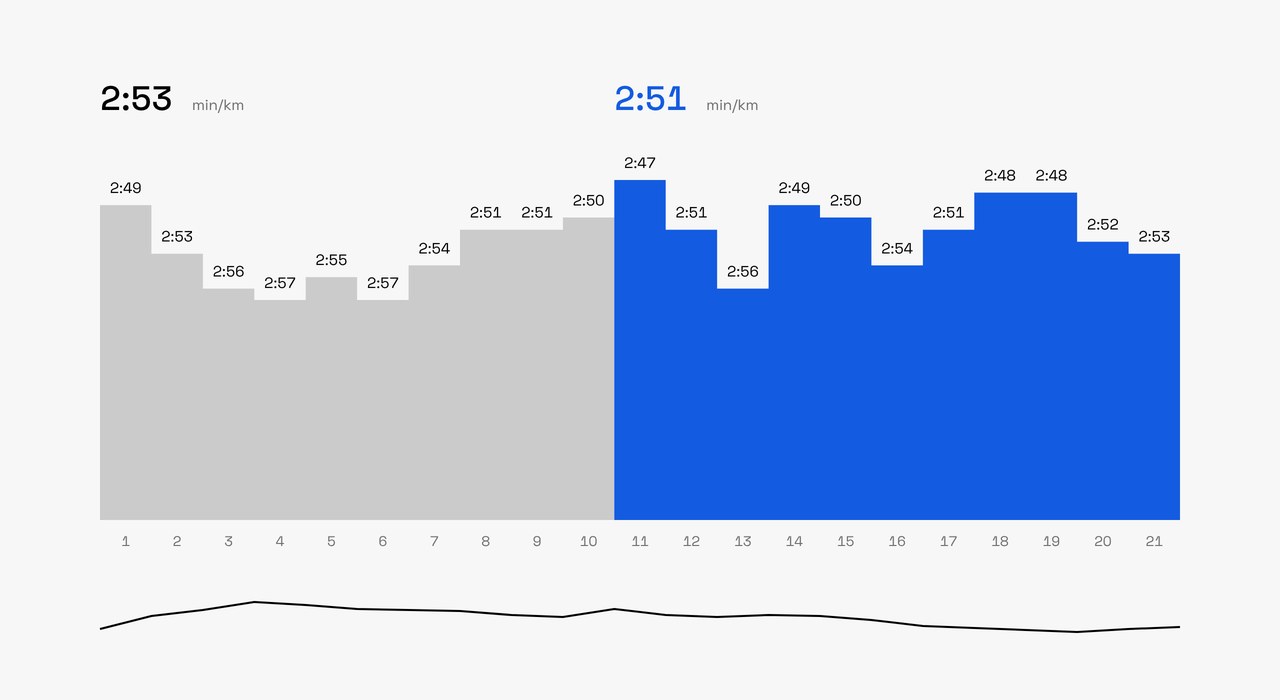
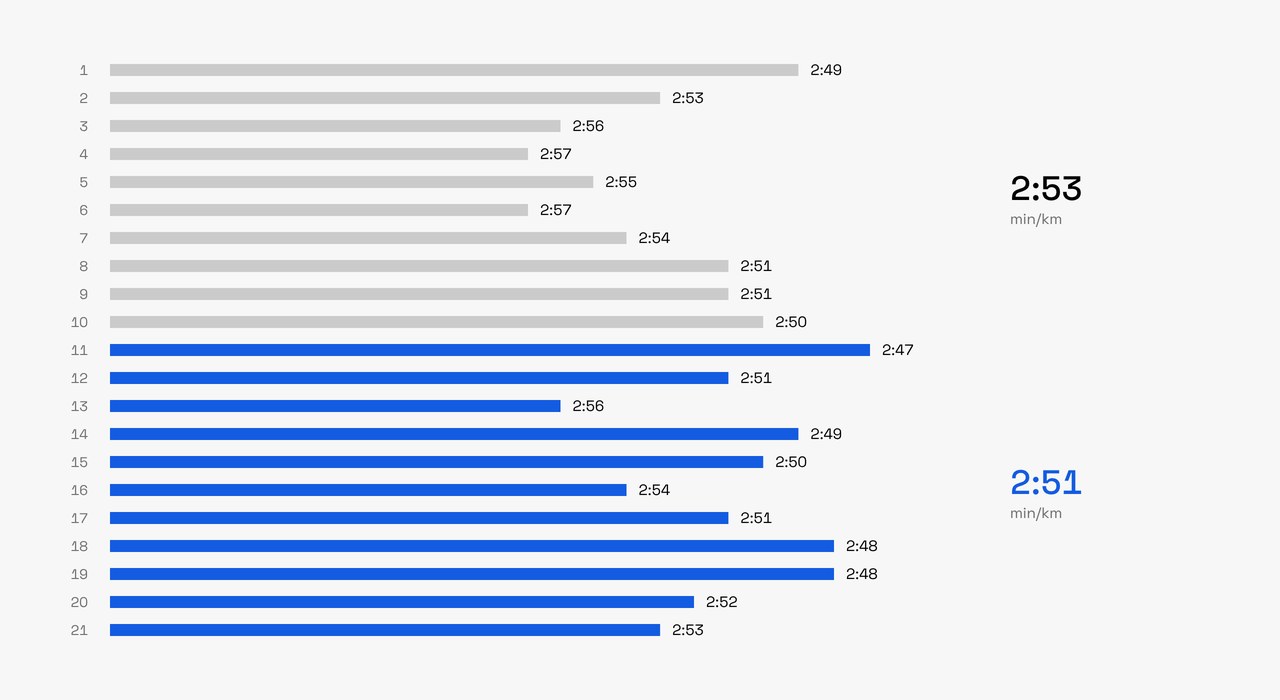
- Pace: 2:52 min/km average, 2:53 min/km first 10 km, 2:51 min/km last 11 km
- Gear: Nike Alphafly 4, speedsuit from Nike, Maurten Drink Mix 320 and Gel 100 CAF
By Jacob Simonsen, Danish half marathon record holder
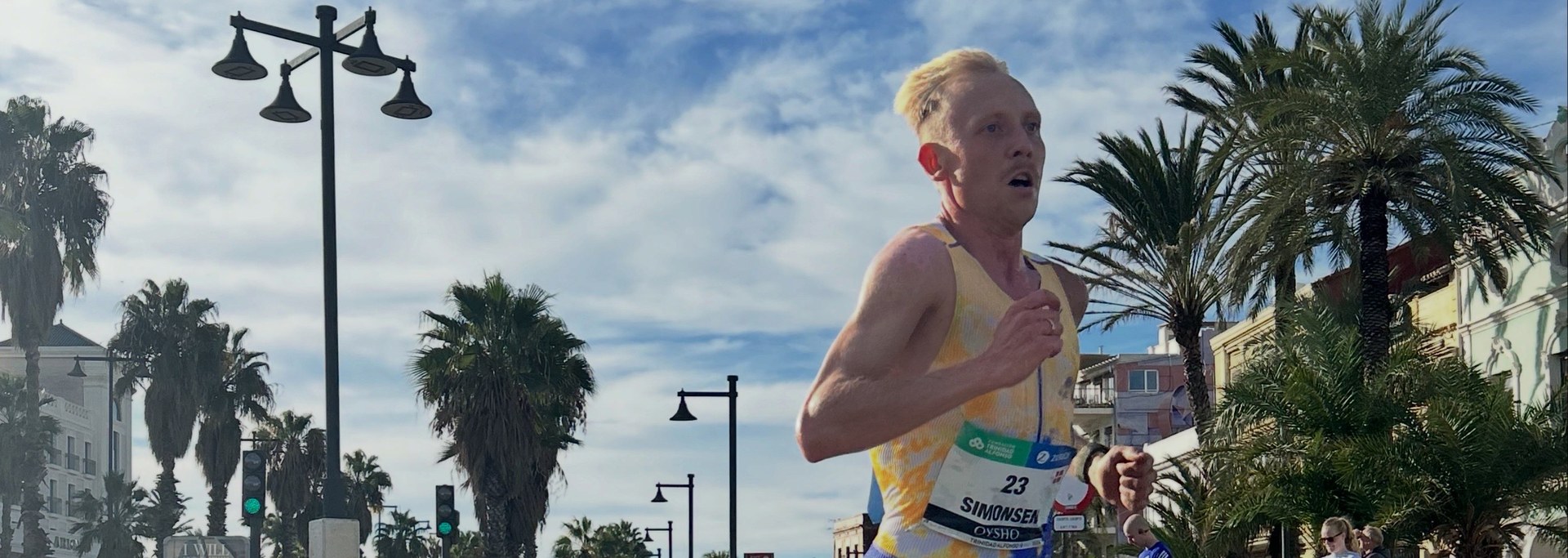
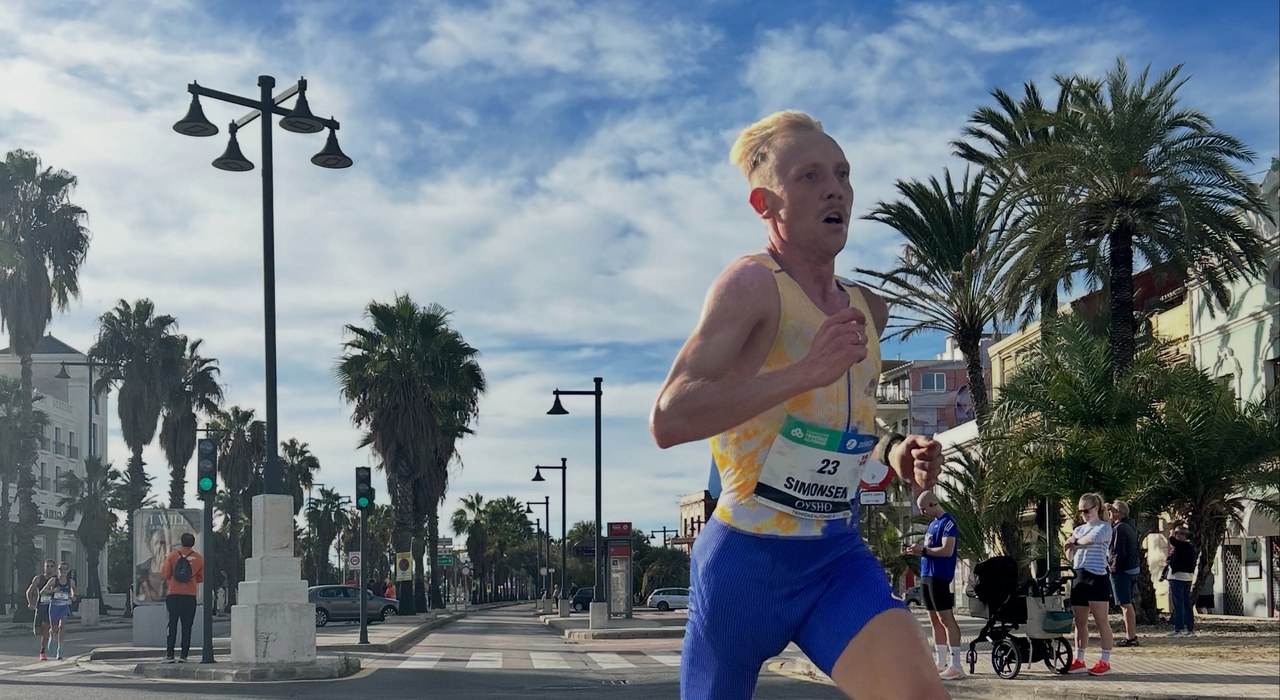
I ran 1:00:42 in the half marathon in Valencia, and although I'm pleased with the result, I also feel there was more potential. I'm currently in the middle of a marathon training block, so preparations weren't specifically targeted at the half marathon like they were for the World Championships in Copenhagen. Still, it was a fast time, a good test of my setup, and confirmation that I'm on the right track.
From half marathon focus to marathon training
After the World Championships in Copenhagen, I've shifted focus to a marathon block. This means I'm currently in heavy training with more volume, longer intervals at a slower pace, and less specific half marathon training.
Leading up to the World Championships, it was different. The half marathon was the main focus, especially in the last 3-4 weeks, with more specific sessions and a proper taper. I haven't had that this time. I've only slightly reduced volume because I was a bit tired earlier in the week.
Valencia was also an opportunity to test my form while still working towards marathon readiness. I wanted to run fast, but I hadn't built my entire training around this race.
Consistency and adjustments make the difference
Looking back at my development this year, it's mainly the consistency and my day-to-day adjustments that have moved me forward.
I manage my own training program, allowing me to feel and adjust the training to the phase I'm in and the goal I'm working towards. For me, it's about the long-term perspective with Valencia Marathon and making the right decisions daily.
I believe it's important to have a plan but also be flexible enough to change it when your body tells you otherwise. It's not about completing a session at any cost but making continuity work over time.
Right now, the focus is on the marathon, and the training must reflect that. I can't train specifically for all distances at once, nor is it the intention. Instead, I try to trust the process and focus on what will make me better in the long run.
Alphafly 4 and speedsuit as a dress rehearsal
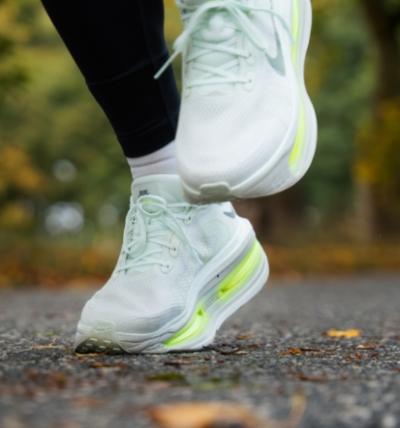
In Valencia, I ran in Nike Alphafly 4 and a speedsuit from Nike. I chose the setup with aerodynamics in mind and to test some things I want to have sorted before Valencia Marathon.
I saw the half marathon race as a kind of dress rehearsal, where I could try different things under race conditions. It's different to test gear in a training session than to use it in a race where the pace is high, and you can really feel if it works.
These are the details I want to have sorted before standing on the marathon start line. The more I can test in advance, the fewer unknowns I'll have on race day.
My fueling before the race
I mostly followed my usual routine with simple carbs the day before and an early breakfast on race day. Additionally, I used products from Maurten: Drink Mix 320 and a Gel 100 CAF before the start.
However, I don't focus as much on carb-loading for a half marathon as I do for a marathon. The distance and physiological load are entirely different, so I adjust preparations accordingly.
I generally try to keep things simple and use routines I know. There's no need to complicate things if I already know what works for me.
I ended up pacing the group and got frustrated
The hardest part of the race came in the last few kilometers. Along the way, I ended up pacing a group, but I didn't really get any help from the other runners. It started to frustrate me, especially since there's an advantage to being behind someone when running close to 21 km/h.
With 6 kilometers left, I decided to push hard to break free from the runners who were just hanging on without contributing to the pace work.
It obviously took effort, and around 18 kilometers, I started to struggle. but I fortunately had the capacity to push the pace all the way to the finish.
On the other hand, I found something positive in how I handled the race. When I control the pace, I have a good sense of what I can sustain. I ran within my own capacity and could therefore continue progressively all the way to the finish.
It wasn't necessarily the most optimal way to run a half marathon if the sole goal was to get the fastest possible time. But it gave me a good sense of what I can achieve, even when conditions aren't perfect.
Sub 60 is definitely a goal
As a runner, you're always chasing times and placements, and sub 60 in the half marathon is definitely a goal for me. Right now, my primary focus is the marathon, which will be most significant for me in the coming years.
Looking back at the race in Valencia, I actually think I could have run under an hour if I had a group or pacer to follow. If I had also been out of marathon training and had a more specific half marathon block with a proper taper, I think it would have been even more realistic.
But you can always speculate on what could have been done differently. At some point, I'll find a race where I specifically aim for it, and then let the legs do the talking.
It will likely be in 2027. Until then, the marathon has my full attention.
What you can take from my preparation
If I were to point out one thing that the average half marathon runner can take from my approach, it's to run a negative split.
I think it's a really good way to approach a half marathon, both because it can provide a better race experience and because it makes sense physiologically. The idea is simple: You run the second half faster than the first and gradually increase the pace towards the finish.
It requires, of course, that you know your own level and have a realistic idea of what pace you can maintain. But I believe many can benefit from holding back a bit at the start instead of getting carried away by the atmosphere and other runners.
My advice is to find your pace, stay slightly below it, and stick to in the first half. Then you can start to increase if your body is with you.
Now it's about the marathon
I leave Valencia with 1:00:42, a new Danish record, and a very good indicator that the arrow points in the right direction. The training works, and the plan I've set makes sense.
At the same time, I've tested my gear and routines while still in marathon training. That was an important part of the race's purpose.
Now I need to get back to the marathon work. I know what I'm chasing, and I know it requires consistency, patience, and the ability to make the right decisions every single day.
Sub 60 will have to wait a bit longer. But I'm sure I'll give it a try when the time is right.