

There isn't one kids' size 32. There's adidas 32, ASICS 32, and Skechers 32, each fitting different feet. If your child's foot measures 24 cm, one brand suggests size 37 and another 39⅓. So, the child's "size" isn't a fixed number across brands. It's confusing and often why new shoes get exchanged.
What is constant, however, is the child's foot length. You measure it yourself, and it can be used in most charts. How much growing room to add, if any, depends on the brand. Below, we go through each step before you reach the charts.
How to Measure Your Child's Foot
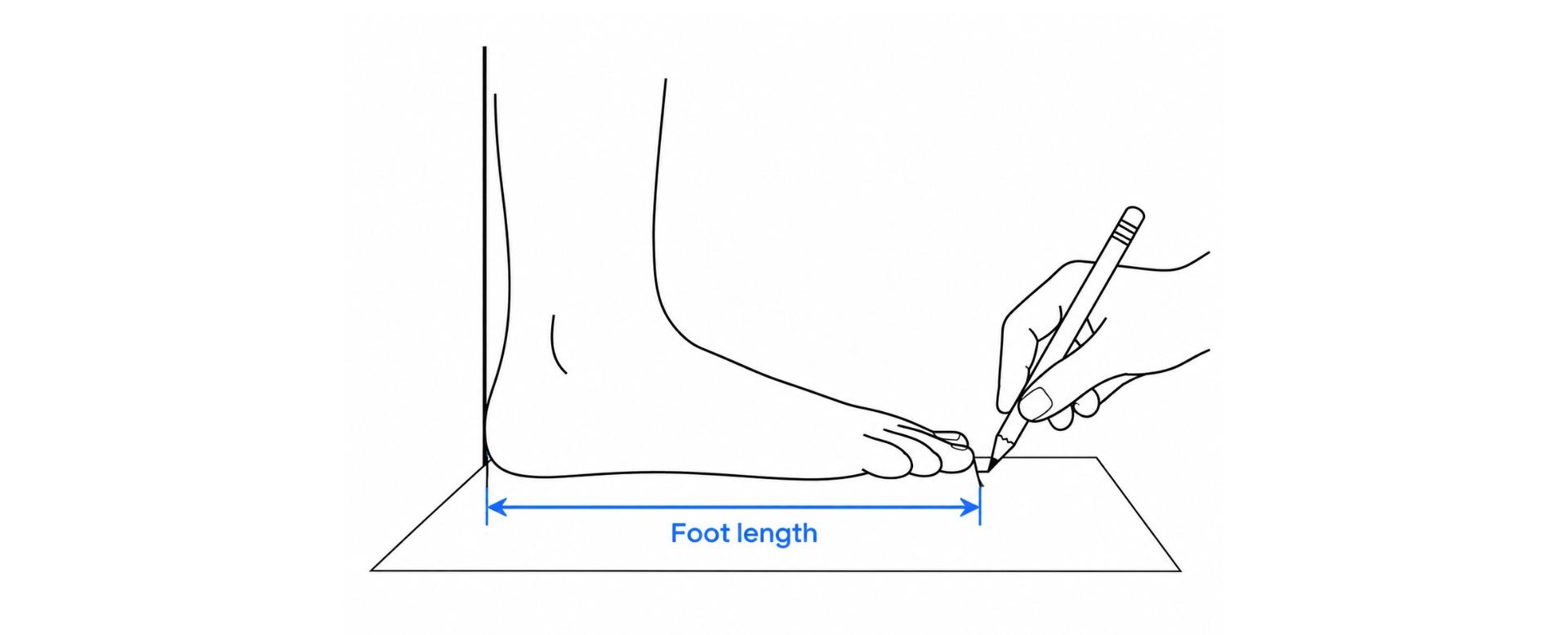
- Place a piece of paper on the floor against a wall.
- Have the child stand on the paper with heels against the wall and weight on both feet. A loaded foot is longer than one in the air.
- Mark the longest toe. It's not always the big toe.
- Measure the distance from the paper's edge to the mark in cm.
- Repeat with the other foot, and use the longest measure. Most kids have one foot slightly longer than the other.
Measure preferably in the afternoon or evening. Feet are slightly larger later in the day, this applies to kids' feet too.
Shoe Length, Foot Length, and Growth Allowance
The cm number in a size chart can mean three different things, depending on the brand:
| Three Types of Size Charts | |
|---|---|
| The Chart Shows | How to Use It |
| Child's foot length without growth allowance | Add growth room to the measurement before looking up the size. Applies to most brands in this guide. |
| Child's foot length with growth allowance included | Look up your measurement directly without adding. Otherwise, the shoe ends up two sizes too big. Applies to Skechers. |
| No foot length, only conversion between size systems | Can only be used if you know the child's size in the brand beforehand. Applies to PUMA. |
That's why at the top of each chart below, it states what the numbers mean for that brand. Read that line before looking up the size.
Size Charts for Kids' Shoes, Brand by Brand
Click on the brand to expand the chart. You can keep multiple charts open at once. The numbers come from the brands' own size guides. Read the line at the top of each chart for info.
ADIDAS
The numbers are the child's foot length without growth allowance. Add growth room before looking up the size.
| Foot Length (cm) | 16.6 | 17 | 17.4 | 17.8 | 18.3 | 18.7 | 19.1 | 19.5 | 20 | 20.4 | 20.8 | 21.2 | 21.6 | 22.1 | 22.5 | 22.9 | 23.3 | 23.8 | 24.2 | 24.6 | 25 |
|---|---|---|---|---|---|---|---|---|---|---|---|---|---|---|---|---|---|---|---|---|---|
| EU | 28 | 28.5 | 29 | 30 | 30.5 | 31 | 31.5 | 32 | 33 | 33.5 | 34 | 35 | 35.5 | 36 | 36 2/3 | 37 1/3 | 38 | 38 2/3 | 39 1/3 | 40 | 40 2/3 |
| UK | 10k | 10.5k | 11k | 11.5k | 12k | 12.5k | 13k | 13.5k | 1 | 1.5 | 2 | 2.5 | 3 | 3.5 | 4 | 4.5 | 5 | 5.5 | 6 | 6.5 | 7 |
| US | 10.5k | 11k | 11.5k | 12k | 12.5k | 13k | 13.5k | 1 | 1.5 | 2 | 2.5 | 3 | 3.5 | 4 | 4.5 | 5 | 5.5 | 6 | 6.5 | 7 | 7.5 |
Drag the table to see more sizes.
ASICS
The numbers are the child's foot length without growth allowance. Add growth room.
| Foot Length (cm) | 17 | 17.5 | 18.5 | 19.5 | 20 | 20.5 | 21 | 21.5 | 22 | 22.25 | 22.5 | 23 | 23.5 | 24 | 24.5 | 25 | 25.5 |
|---|---|---|---|---|---|---|---|---|---|---|---|---|---|---|---|---|---|
| EU | 27 | 28.5 | 30 | 31.5 | 32.5 | 33 | 33.5 | 34.5 | 35 | 35.5 | 36 | 37 | 37.5 | 38 | 39 | 39.5 | 40 |
| US | K10 | K11 | K12 | K13 | 1 | 1.5 | 2 | 2.5 | 3 | 3.5 | 4 | 4.5 | 5 | 5.5 | 6 | 6.5 | 7 |
Drag the table to see more sizes.
ECCO
The numbers are the child's foot length without growth allowance. Add growth room.
| Foot Length(cm) | 16.6 | 17.2 | 17.9 | 18.5 | 19.2 | 19.8 | 20.5 | 21.2 | 21.8 | 22.5 | 23.2 | 23.8 | 24.5 | 25.2 |
|---|---|---|---|---|---|---|---|---|---|---|---|---|---|---|
| EU | 27 | 28 | 29 | 30 | 31 | 32 | 33 | 34 | 35 | 36 | 37 | 38 | 39 | 40 |
| UK | 9.5 | 10–10.5 | 11–11.5 | 12 | 12.5–13 | 13.5–1 | 1.5 | 2 | 2.5–3 | 3.5 | 4–4.5 | 5 | 5.5–6 | 6.5–7 |
Swipe the table to see more sizes.
HOKA
The numbers are the child's foot length without growth allowance. Add growth space yourself.
| Foot length (cm) | 15.5 | 16 | 16.5 | 17 | 17.5 | 18 | 18.5 | 19 | 19.5 | 20 | 20.5 | 21 | 21.5 | 22 | 22.5 | 23 | 23.5 | 24 | 24.5 | 25 | 25.5 |
|---|---|---|---|---|---|---|---|---|---|---|---|---|---|---|---|---|---|---|---|---|---|
| EU | 27 1/3 | 28 | 28 2/3 | 29 1/3 | 30 | 30 2/3 | 31 1/3 | 32 | 32 2/3 | 33 1/3 | 34 | 34 2/3 | 35 1/3 | 36 | 36 2/3 | 37 1/3 | 38 | 38 2/3 | 39 1/3 | 40 | 40 2/3 |
| UK | 9K | 9.5K | 10K | 10.5K | 11K | 11.5K | 12K | 12.5K | 13K | 13.5K | 1K | 1.5K | 2Y | 2.5Y | 3Y | 3.5Y | 4Y | 4.5Y | 5Y | 5.5Y | 6Y |
| US | 10K | 10.5K | 11K | 11.5K | 12K | 12.5K | 13K | 13.5K | 1K | 1.5K | 2K | 2.5K | 3Y | 3.5Y | 4Y | 4.5Y | 5Y | 5.5Y | 6Y | 6.5Y | 7Y |
Swipe the table to see more sizes.
MERRELL
The numbers are the child's foot length without growth allowance. Add growth space yourself. Note that Merrell's scale is about one full size off from several European brands at the same foot length.
| Foot length (cm) | 16.5 | 17 | 17.5 | 18 | 18.5 | 19 | 19.5 | 20 | 20.5 | 21 | 21.5 | 22 | 22.5 | 23 | 23.5 | 24 | 24.5 | 25 | 25.5 | 26 |
|---|---|---|---|---|---|---|---|---|---|---|---|---|---|---|---|---|---|---|---|---|
| EU | 27 | 28 | 28.5 | 29 | 30 | 31 | 31.5 | 32 | 33 | 33.5 | 34 | 35 | 35.5 | 36 | 36.5 | 37 | 37.5 | 38 | 38.5 | 39 |
| UK | 9.5 | 10 | 10.5 | 11 | 11.5 | 12 | 12.5 | 13 | 13.5 | 1 | 1.5 | 2 | 2.5 | 3 | 3.5 | 4 | 4.5 | 5 | 5.5 | 6 |
| US | 10.5 | 11 | 11.5 | 12 | 12.5 | 13 | 13.5 | 1 | 1.5 | 2 | 2.5 | 3 | 3.5 | 4 | 4.5 | 5 | 5.5 | 6 | 6.5 | 7 |
Swipe the table to see more sizes.
MIZUNO
The numbers are the child's foot length without growth allowance. Add growth space yourself.
| Foot length (cm) | 20 | 21 | 22 | 23 | 24 | 25 |
|---|---|---|---|---|---|---|
| EU | 32.5 | 33.5 | 35 | 36.5 | 38 | 39 |
| UK | 1 | 2 | 3 | 4 | 5 | 6 |
| US | 2 | 3 | 4 | 5 | 6 | 7 |
Swipe the table to see more sizes.
NEW BALANCE
The numbers are the child's foot length without growth allowance. Add growth space yourself. New Balance recommends choosing the larger size if the child is between two, or if one foot is longer.
| Foot length (cm) | 16.5 | 17 | 17.5 | 17.5 | 18 | 18.5 | 19 | 19 | 19.5 | 20 | 20.5 | 21 | 21.5 | 22 | 22.5 | 23 | 23.5 | 24 | 24.5 | 25 |
|---|---|---|---|---|---|---|---|---|---|---|---|---|---|---|---|---|---|---|---|---|
| EU | 28 | 28.5 | 29 | 30 | 30.5 | 31 | 32 | 32.5 | 33 | 33.5 | 34.5 | 35 | 35.5 | 36 | 37 | 37.5 | 38 | 38.5 | 39 | 40 |
| UK | 10 | 10.5 | 11 | 11.5 | 12 | 12.5 | 13 | 13.5 | 1 | 1.5 | 2 | 2.5 | 3 | 3.5 | 4 | 4.5 | 5 | 5.5 | 6 | 6.5 |
| US | 10.5 | 11 | 11.5 | 12 | 12.5 | 13 | 13.5 | 1 | 1.5 | 2 | 2.5 | 3 | 3.5 | 4 | 4.5 | 5 | 5.5 | 6 | 6.5 | 7 |
Swipe the table to see more sizes.
NIKE
The numbers are the child's foot length without growth allowance. Add growth space yourself.
| Foot length (cm) | 16 | 16.5 | 17 | 17.5 | 18 | 18.5 | 19 | 19.5 | 20.1 | 20.5 | 20.9 | 21.4 | 21.8 | 22.2 | 22.4 | 22.7 | 23.2 | 23.5 | 23.8 | 24.3 | 24.6 |
|---|---|---|---|---|---|---|---|---|---|---|---|---|---|---|---|---|---|---|---|---|---|
| EU | 27 | 27.5 | 28 | 28.5 | 29.5 | 30 | 31 | 31.5 | 32 | 33 | 33.5 | 34 | 35 | 35.5 | 36 | 36.5 | 37.5 | 38 | 38.5 | 39 | 40 |
| UK | 9.5 | 10 | 10.5 | 11 | 11.5 | 12 | 12.5 | 13 | 13.5 | 1 | 1.5 | 2 | 2.5 | 3 | 3.5 | 4 | 4.5 | 5 | 5.5 | 6 | 6.5 |
| US | 10C | 10.5C | 11C | 11.5C | 12C | 12.5C | 13C | 13.5C | 1Y | 1.5Y | 2Y | 2.5Y | 3Y | 3.5Y | 4Y | 4.5Y | 5Y | 5.5Y | 6Y | 6.5Y | 7Y |
Swipe the table to see more sizes.
PUMA
PUMA does not provide foot length in their size guide. The chart can only be used to convert between size systems, not to go from a foot measurement to a size. If you don't know the child's PUMA size, measure the insole of a pair of shoes that fit today, or use another brand's chart as a guide.
| EU | 27 | 27.5 | 28 | 28.5 | 29 | 30 | 31 | 31.5 | 32 | 32.5 | 33 | 34 | 34.5 | 35 | 35.5 | 36 | 37 | 37.5 | 38 | 38.5 | 39 |
|---|---|---|---|---|---|---|---|---|---|---|---|---|---|---|---|---|---|---|---|---|---|
| UK | 9 | 9.5 | 10 | 10.5 | 11 | 11.5 | 12 | 12.5 | 13 | 13.5 | 1 | 1.5 | 2 | 2.5 | 3 | 3.5 | 4 | 4.5 | 5 | 5.5 | 6 |
| US | 10 | 10.5 | 11 | 11.5 | 12 | 12.5 | 13 | 13.5 | 1 | 1.5 | 2 | 2.5 | 3 | 3.5 | 4 | 4.5 | 5 | 5.5 | 6 | 6.5 | 7 |
Swipe the table to see more sizes.
SAUCONY
The numbers are the child's foot length without growth allowance. Add growth space yourself. Saucony recommends choosing the larger size if the child is between two.
| Foot length (cm) | 16.5 | 17 | 17.5 | 18 | 18.5 | 19 | 19.5 | 20 | 20.5 | 21 | 21.5 | 22 | 22.5 | 23 | 23.5 | 24 | 24.5 | 25 | 25.5 | 26 |
|---|---|---|---|---|---|---|---|---|---|---|---|---|---|---|---|---|---|---|---|---|
| EU | 27 | 28 | 28.5 | 29 | 30 | 31 | 31.5 | 32 | 33 | 33.5 | 34 | 35 | 35.5 | 36 | 36.5 | 37 | 37.5 | 38 | 38.5 | 39 |
| 9.5 | 10 | 10.5 | 11 | 11.5 | 12 | 12.5 | 13 | 13.5 | 1 | 1.5 | 2 | 2.5 | 3 | 3.5 | 4 | 4.5 | 5 | 5.5 | 6 | |
| US | 10.5 | 11 | 11.5 | 12 | 12.5 | 13 | 13.5 | 1 | 1.5 | 2 | 2.5 | 3 | 3.5 | 4 | 4.5 | 5 | 5.5 | 6 | 6.5 | 7 |
Swipe the table to see more sizes.
SKECHERS
Growth allowance is included in the numbers. Skechers states that the chart accounts for both growth allowance and movement space. Therefore, look up the child's foot length directly without adding yourself. The brand does not specify the size of the allowance.
| Foot length (cm) | 16.5 | 17 | 17.5 | 18 | 18.5 | 19 | 19.5 | 20 | 20.5 | 21 | 21.5 | 22 | 22.5 | 23 | 23.5 | 23.5 | 24 | 24 | 24.5 | 25 |
|---|---|---|---|---|---|---|---|---|---|---|---|---|---|---|---|---|---|---|---|---|
| EU | 27 | 27.5 | 28 | 28.5 | 29 | 30 | 31 | 32 | 33 | 33.5 | 34 | 35 | 35.5 | 36 | 36.5 | 37 | 37.5 | 38 | 39 | 40 |
Swipe the table to see more sizes.
THE NORTH FACE
Numbers are the child's foot length without growth allowance. Add growth space yourself. The North Face recommends going up a size if the child is between two.
| Foot length (cm) | 16.5 | 17 | 18 | 19 | 20 | 21 | 22 | 22.5 | 23.5 | 24.5 | 25 |
|---|---|---|---|---|---|---|---|---|---|---|---|
| EU | 27 | 28 | 29.5 | 31 | 32 | 33.5 | 35 | 36 | 37 | 38 | 39 |
| UK | 9 | 10 | 11 | 12 | 13 | 1 | 2 | 3 | 4 | 5 | 6 |
| US | 10 | 11 | 12 | 13 | 1 | 2 | 3 | 4 | 5 | 6 | 7 |
Swipe the table to see more sizes.
How much growth space should there be in children's shoes?
Children's feet grow, and the shoe should accommodate for a while. However, there is a limit. If the foot is too loose, it slides back and forth, causing blisters and discomfort.
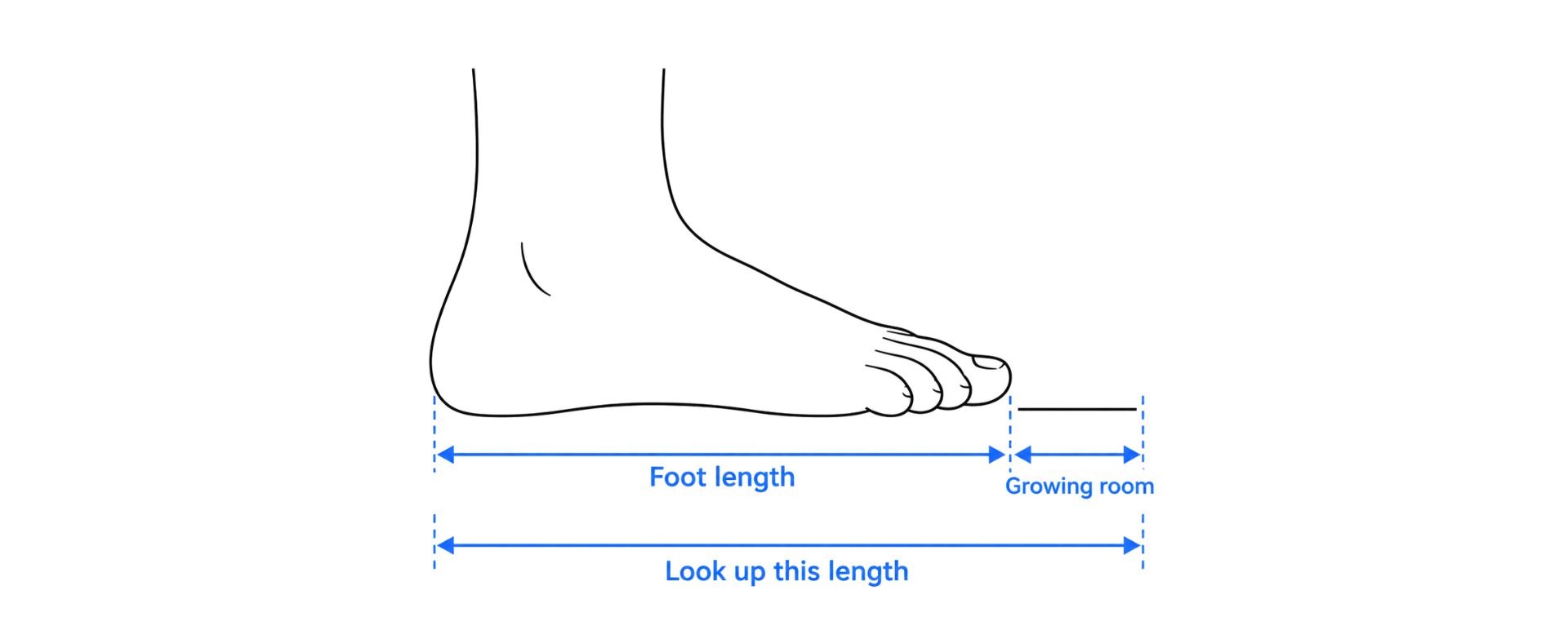
Our general recommendation:
| Shoe type | Recommended growth space |
|---|---|
| Running shoes and sports shoes | Approx. 1 cm. The foot should be secure in the heel when running |
| Casual shoes and sneakers | Approx. 1.5 cm. The shoe should last a bit longer |
Guideline. Judge based on your child. If feet grow fast now, add more. For competition, add less.
How often should I measure my child's feet?
Many parents notice only when the shoe is too small. The child doesn't always complain, and feet often grow in spurts rather than evenly. Shoes that fit in autumn may be too small by winter break. Here's a guide for how often to measure:
| How often should you measure? | |
|---|---|
| Age | Measure about |
| 1 to 3 years | Every 2 to 3 months |
| 3 to 6 years | Every 3 to 4 months |
| 6 to 10 years | Every 4 to 6 months |
| Over 10 years | About every half year |
Guideline. Growth comes in spurts, so better to check once too often than too little.
The practical rule is simple: always measure before buying new shoes, and don't just rely on the old size, even within the same brand.
What do K, C, and Y mean in US sizes?
Several brands list the US size in the shoe and on the box, and the US children's scale is unique: it runs from about 10K/10C up to 13.5, then starts over at 1 and counts up to 7. The letters stand for age group: K or C for younger children (Kids/Child), Y for older (Youth). A US child size 7Y corresponds to a large junior shoe around EU 40, while 7C is a small child shoe around EU 23.
Brands don't even switch from child to youth scale at the same point: most switch at 1, but for example, HOKA continues the child scale up to 2.5K. Another reason to stick to foot length in cm and EU size and let the US numbers be a reference.
When does my child switch to adult sizes?
The junior scale typically ends around EU 39 to 40, and from there, brands continue in their adult scale. The transition is gradual, not a leap: teenagers with feet from about 24 cm and up can practically choose between the largest junior models and the smallest adult sizes.
Junior models are typically cheaper and lighter. However, the selection is smaller, and they are rarely found in more specialized variants. If your child runs a lot, the range may be the limiting factor.
Adult models provide access to the full range, including stability shoes, trail shoes, and more cushioned models for long runs. However, they are heavier and more expensive, and a shoe built for an adult's body weight can feel unnecessarily stiff under a light teenager.
To find the size in the adult scale, you can use our .
Ready to find the shoes?
With the foot length measured, the hard part is over. Remember the order: measure the foot, see what that brand's chart shows, and add growth space if the brand hasn't already done so. About 1 cm for running shoes and sports shoes, about 1.5 cm for casual shoes.
Below you will find our , and if you need more, we also have as well as {{widgettype="TRIC\Widgets\Block\Category\Widget\InlineLink" anchor_text="running accessories and gear" title="See our selection of running accessories and gear for kids" template="category/widget/link/inline/link.phtml" id_path="category/1431"}}. If the size still doesn't fit, we will of course exchange it.