
Most know
from hiking. Backpacks that last decades, pockets where they should be, and quality you can feel throughout. I've had several Osprey backpacks over the years, and my Tempest is still ready in the closet, despite many trips.
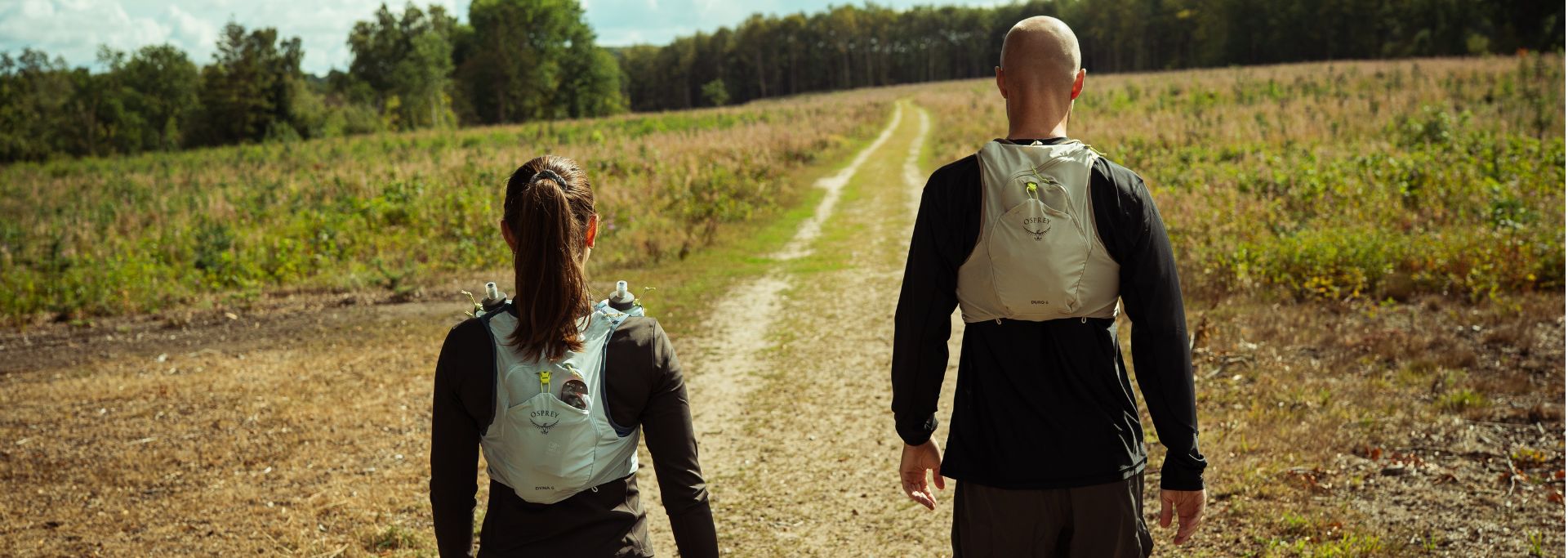
Osprey has also made running vests for a long time. Duro and Dyna have been on the market for about ten years and have been updated several times. The range covers vests in various sizes, running belts, and accessories like pole holders and hydration bladders. All developed with the same care: thoughtful pockets, good fit, and durable materials. In this article, I review the hydration vests. Others call them running vests. It's the same: a vest carrying water, energy, and gear.
What's the difference between Osprey Duro and Dyna?
In short: Duro is the men's model and Dyna is the women's model. But the vests differ not just in names and colors. The carrying system is shaped differently on the two.
It may sound like a small thing, but it means more than you'd think. A vest too long in the body shifts weight to the stomach instead of keeping it high between the shoulder blades. Then the vest starts to bounce and dance when you run.
Dyna
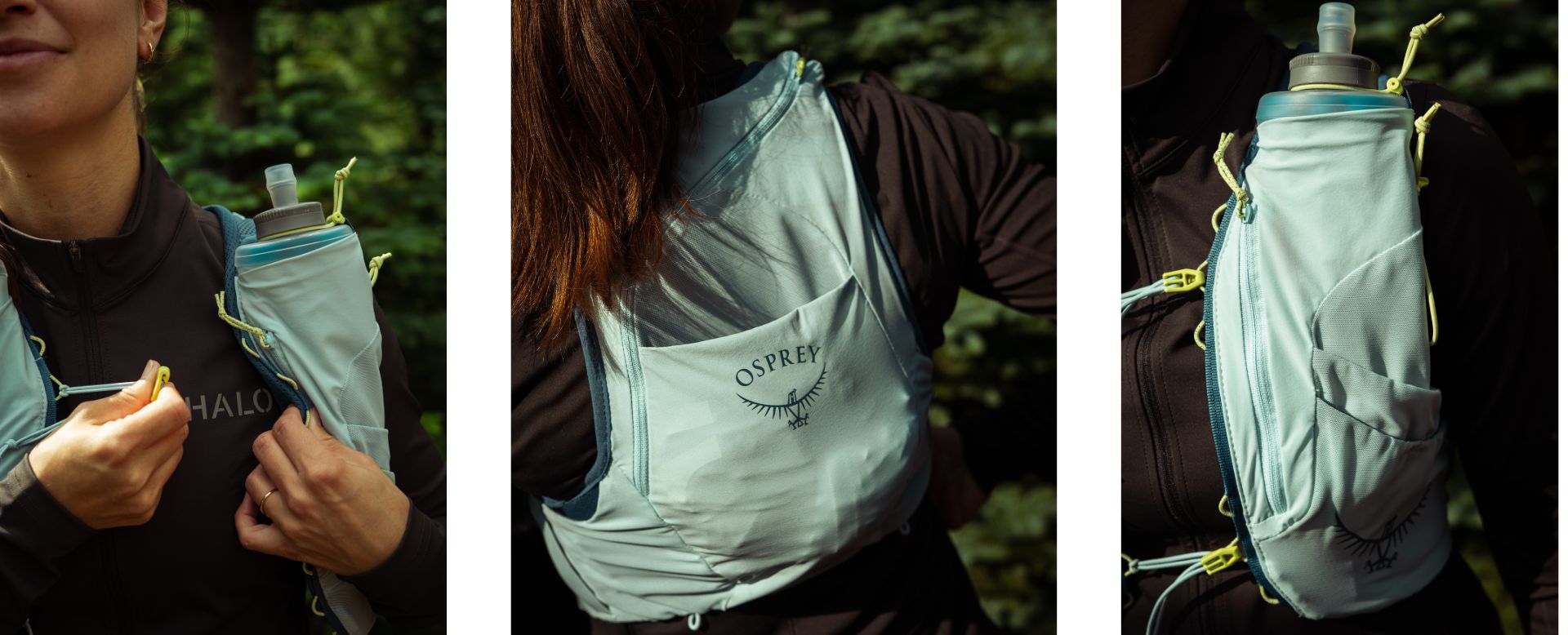
Dyna is shaped for shorter, narrower, and more curved body types. The straps are narrower, there's space over the chest, and the distance from shoulder to bottom attachment is shorter.
Duro
Duro has the same structure and pockets but is shaped for a longer torso and broader shoulders. The shoulder area is wider, and the vest's body is taller, so the weight remains between the shoulder blades on a larger upper body.
Most women fit a Dyna, and most men fit a Duro. That's the idea, and for most, it holds true. But ultimately, it's your body shape that decides. If you have narrow shoulders and a short torso, a Dyna might fit better. If you have broad shoulders and a long torso, the opposite applies.
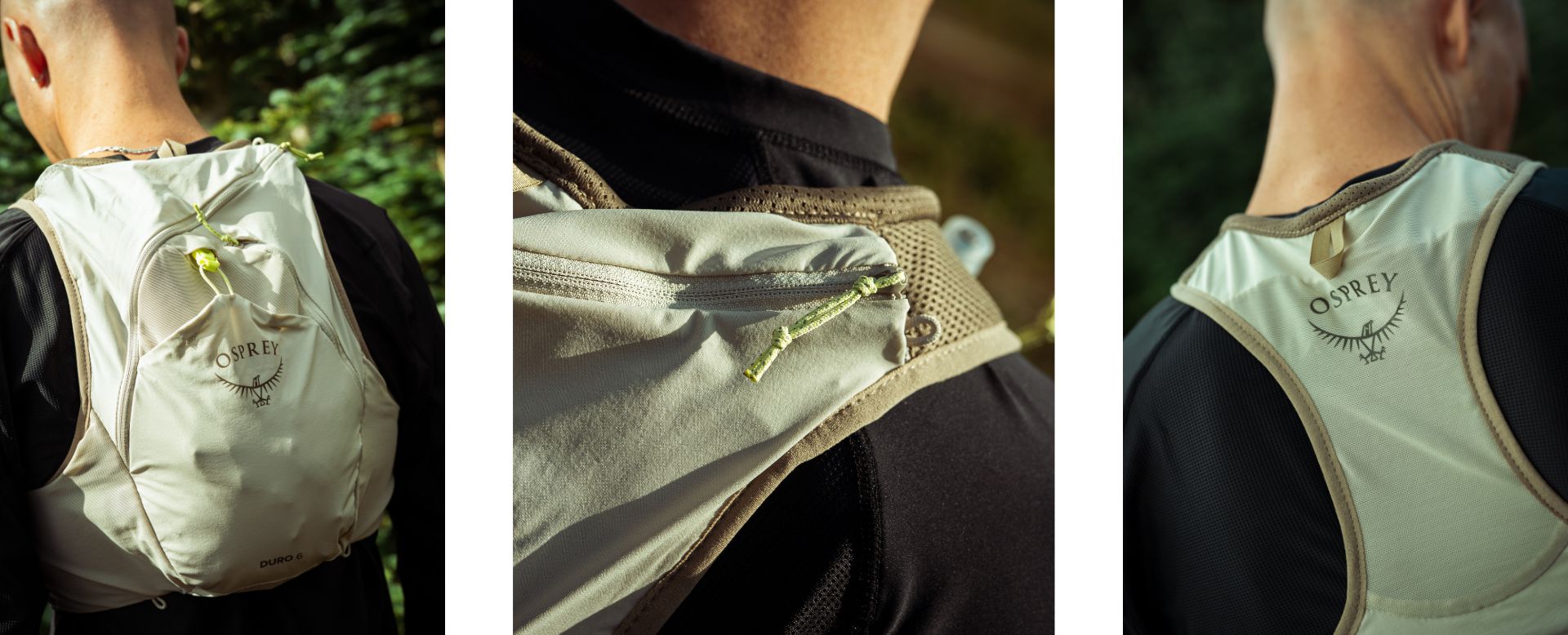
LT, 1.5 or 6: which vest suits your trips?
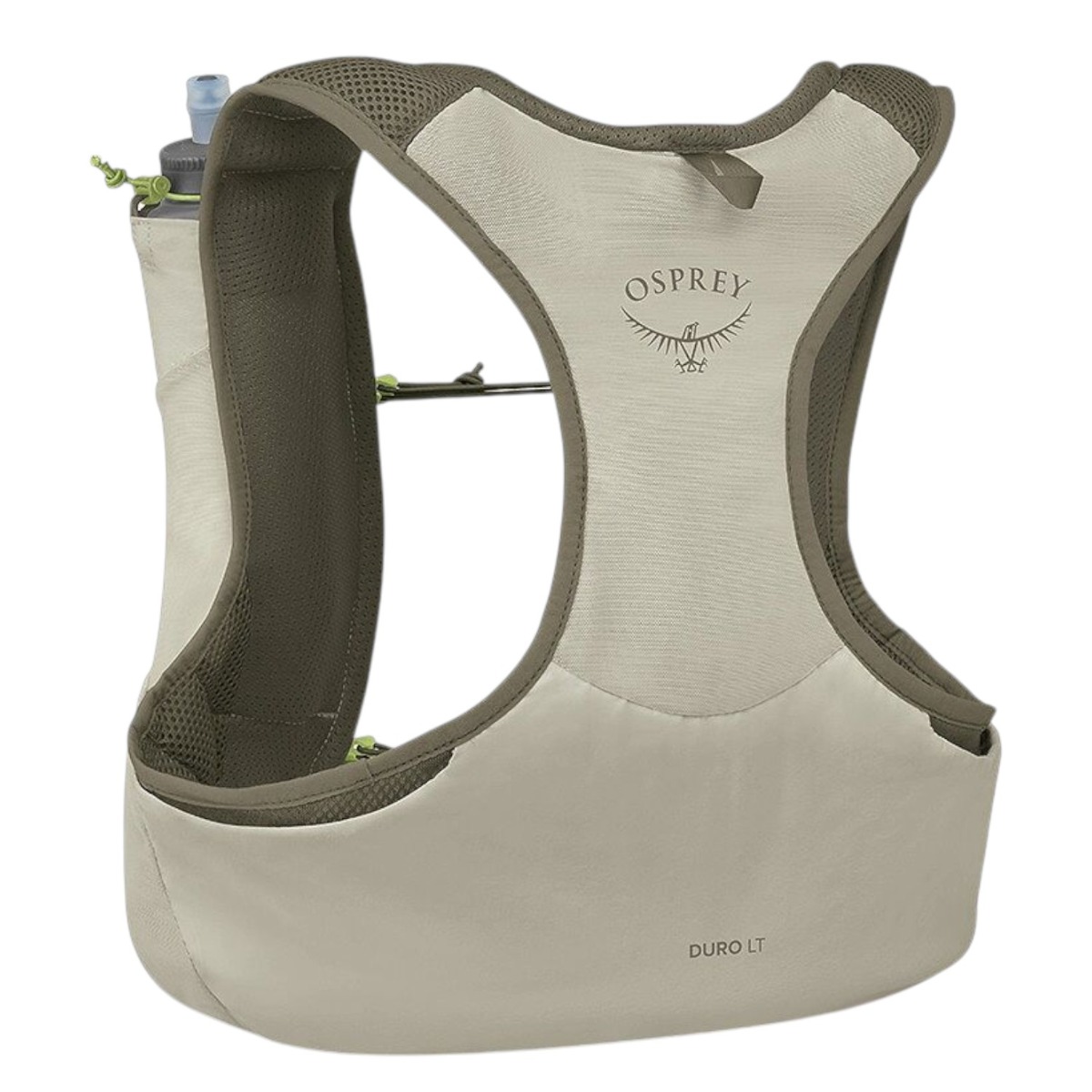
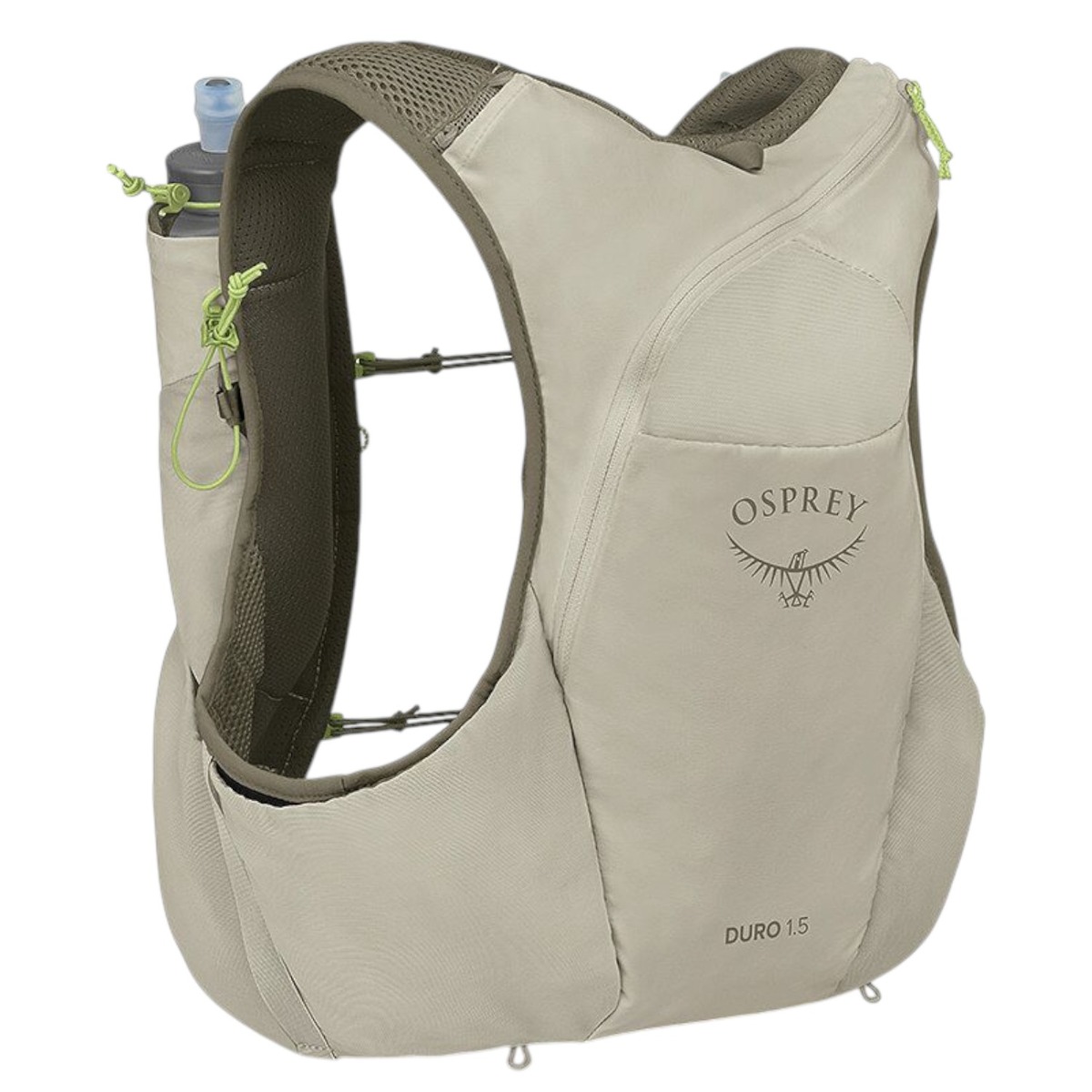
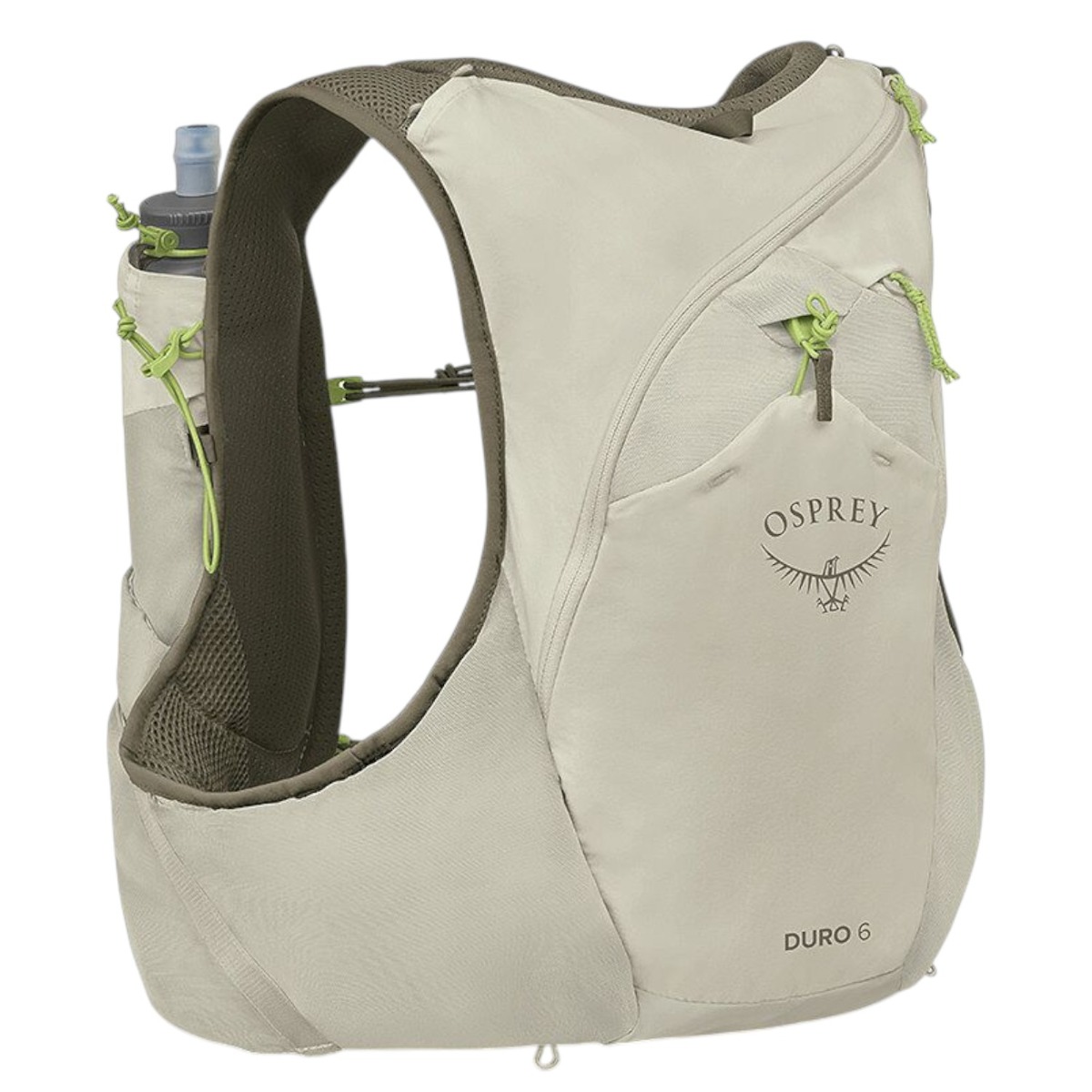
In hydration vests, the liter count often appears in the name, and it's the same here. 1.5 and 6 are the number of liters, while LT stands for lightweight. All six vests come with two 500 ml soft flasks for the front. The difference lies in how much more they can carry and a few details worth knowing before you choose.
Duro - Men's Edition
Open pocket
Open pocket with elastic
Dyna - Women's Edition
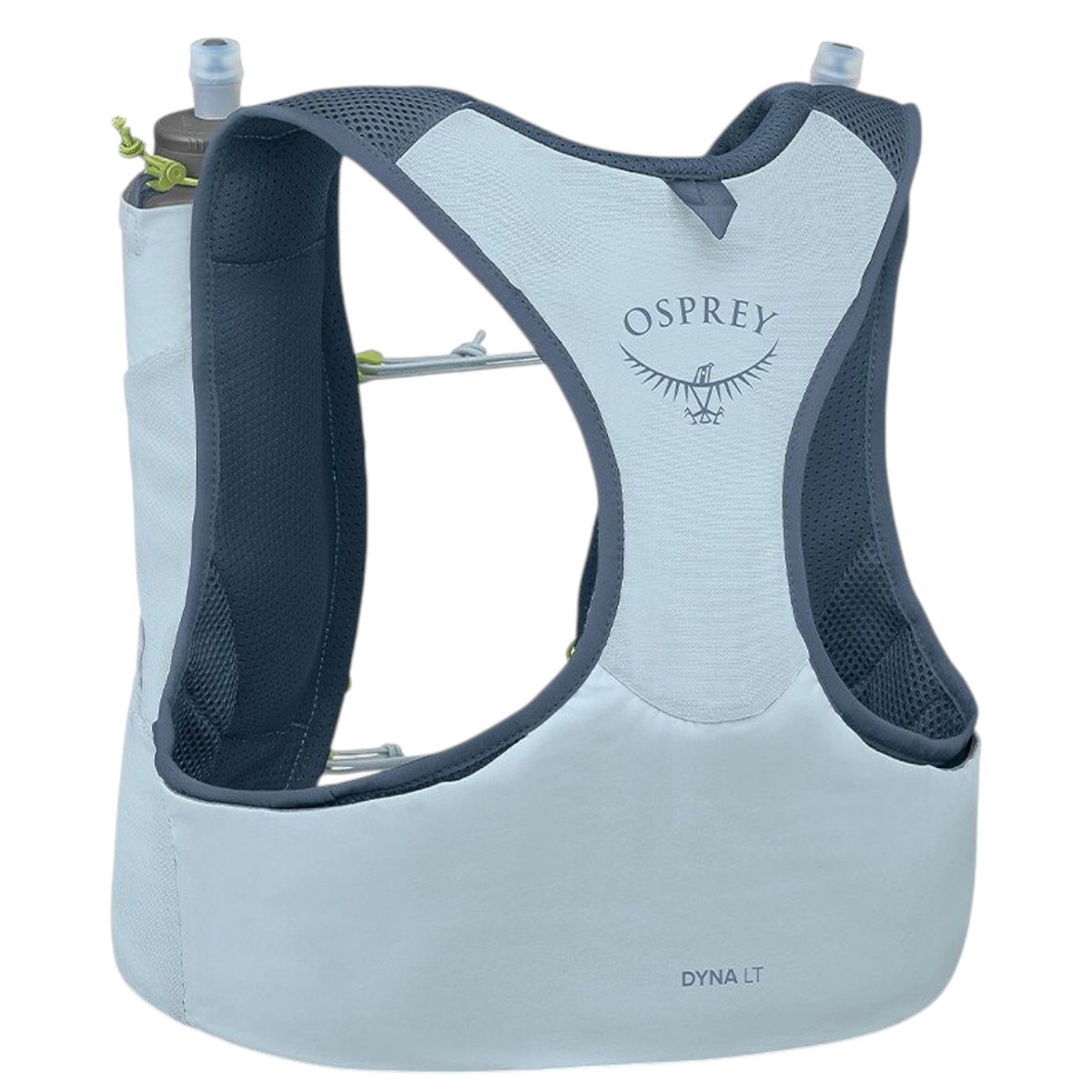
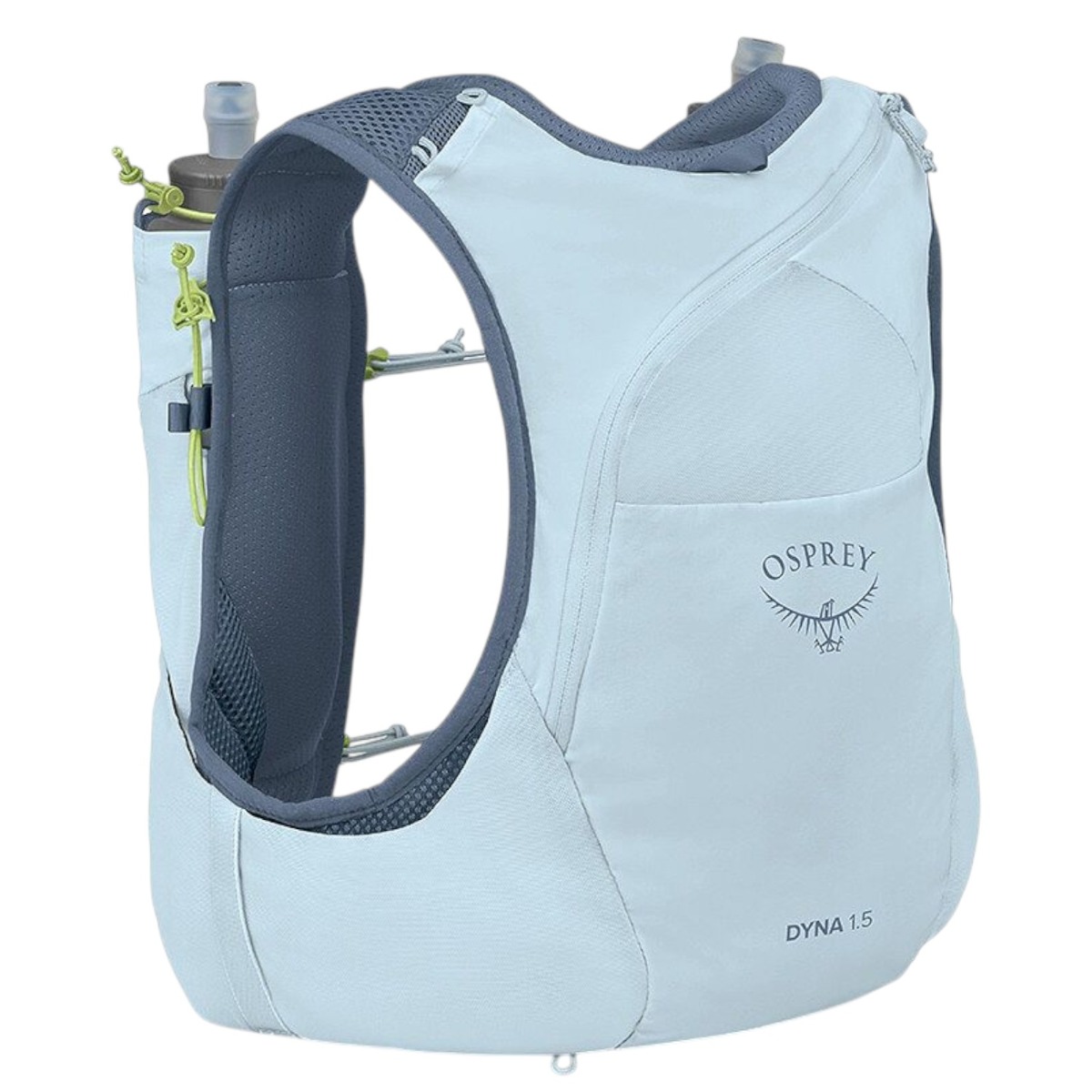
Open pocket
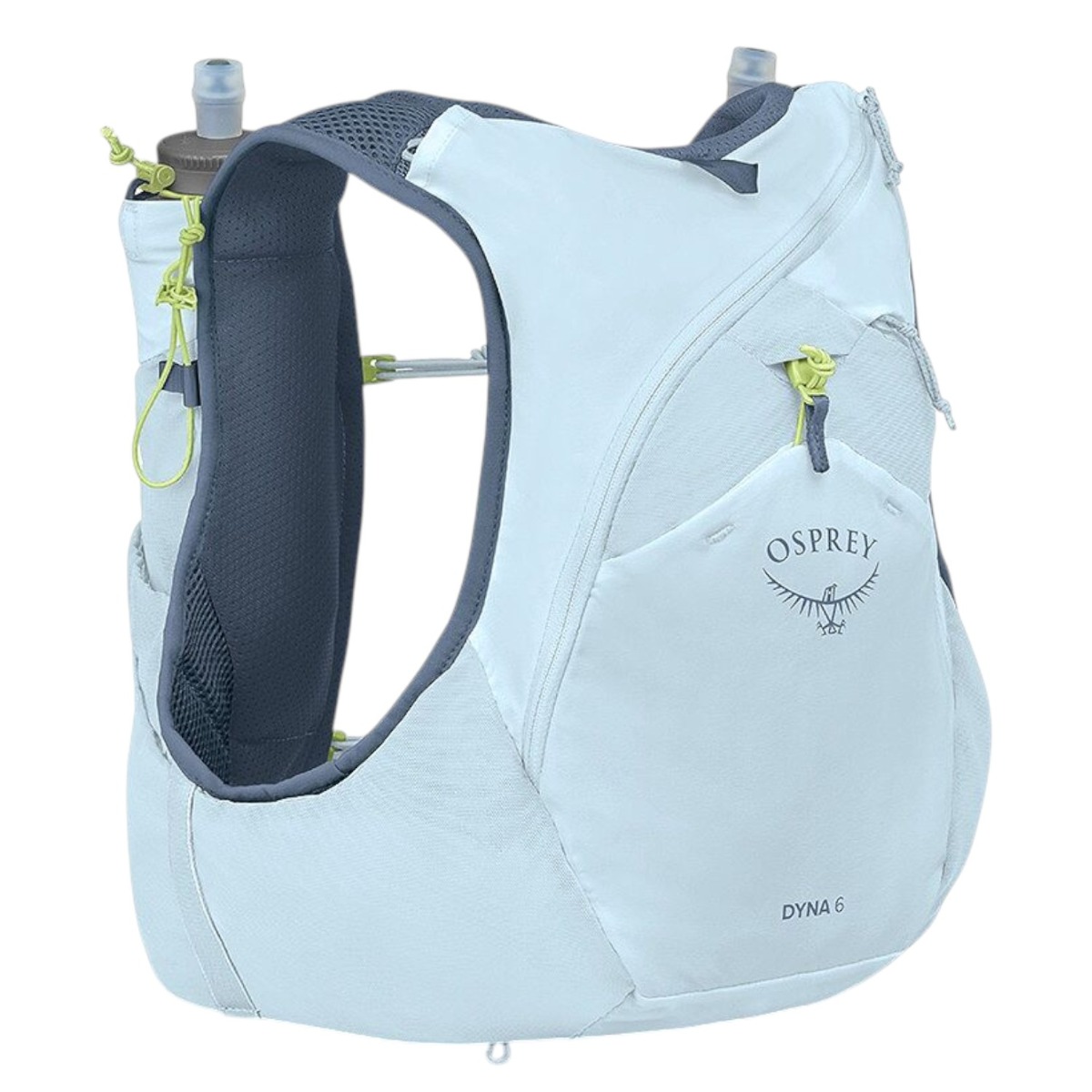
Open pocket with elastic
Duro LT and Dyna LT
LT is the smallest. Two bottles in front, two stretch pockets for energy, and a continuous pocket at the back for a light jacket or gloves. Weighing 130 to 170 grams depending on model and size, it's so light you'll quickly forget you're wearing it. Ideal for short trips, a hot summer day when you just want to carry water, and everyday outings where keys, phone, and a gel are needed. However, it can't be used with a hydration bladder and has no built-in pole carrying. If you want poles, Osprey makes a pole holder, Quiver, that can be mounted on all six vests, but it's sold separately.
Duro 1.5 and Dyna 1.5
1.5 is the everyday vest. Same bottles in front, five stretch pockets instead of two, a zip pocket at the back, and an open pocket outside for a jacket, with built-in space for poles on the front. It weighs about 50 grams more than LT. It's the vest for longer runs where you want to bring a shirt or windbreaker and more energy than a single gel. Still small enough not to feel too big on days when you only fill the front bottles and leave the back empty. For many runners, this size is a good sweet spot.
Duro 6 and Dyna 6
6 is for long days. Six stretch pockets, two zip pockets at the back, and an open pocket with elastic cord, where you can stuff a jacket without stopping. Osprey calls this type of pocket a shove-it. With 6 liters, there's room for the mandatory gear for most trail runs, and it's ideal for long runs where more is needed. For commuting, it can hold a thin microfiber towel and a clean t-shirt, but not much more. If you need shoes or a computer for work, it's too small.
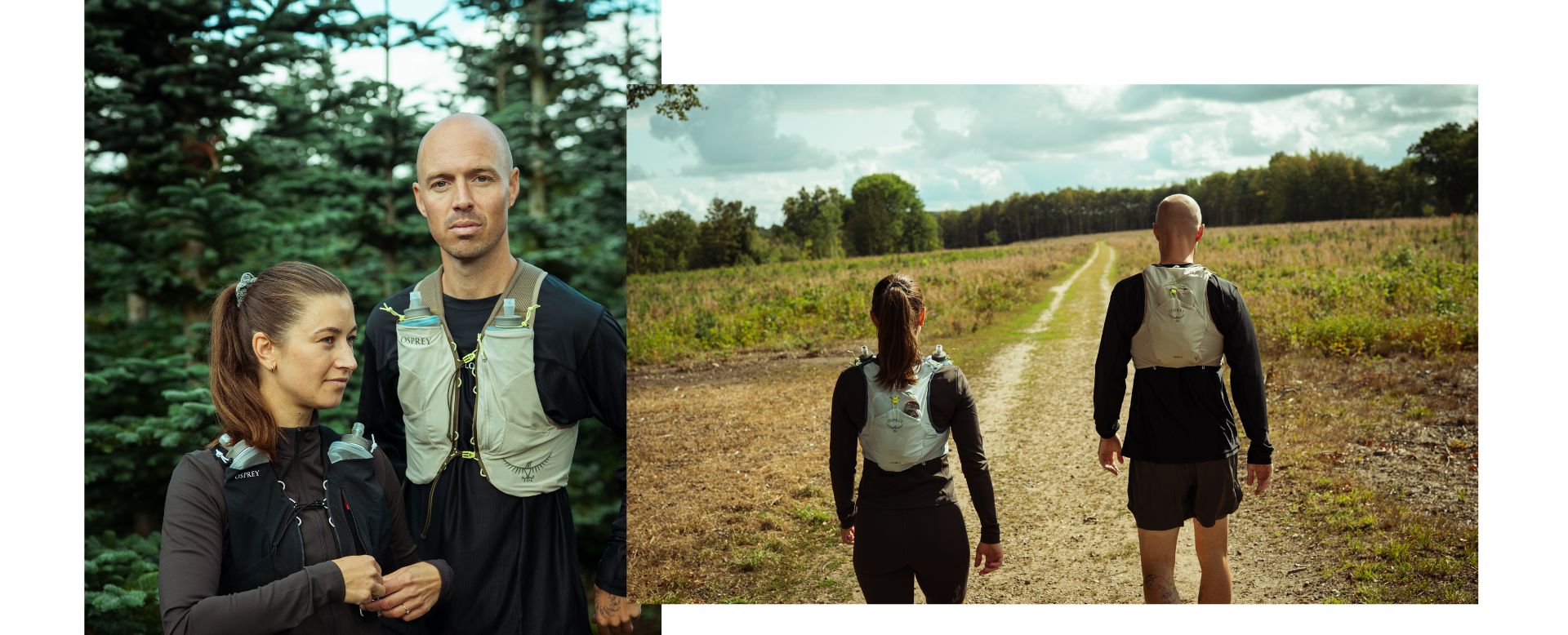
What's included with the vest?
All six vests come with two Hydraulics soft flasks of 500 ml. They weigh 40 grams each when empty, so you can run from day one without needing to buy anything extra. Inside each flask is a small insert, WingStay, that maintains the flask's shape. It helps prevent it from bouncing or working its way out of the pocket when it's nearly empty. The insert can be removed when the flask needs washing.
Hydration bladder not included. They must be purchased separately. On 1.5 and 6, there's a fastening strap inside the zip pocket at the back, where the bladder is hung, and the tube can be pulled out by the shoulder. Here's a detail: the two vests use different bladders. Duro and Dyna 1.5 fit Hydraulics LS 1.5 L, while Duro and Dyna 6 fit regular Hydraulics 1.5 L. They are not the same, so buy the one that fits your vest.
But do you even need a hydration bladder? The front bottles are quick to fill at a station, and you can see how much you have left. For most trips under four hours, two bottles are enough.
How to find your size in Duro and Dyna
The vests are available in S, M, and L. Size depends on your chest circumference, not your usual clothing size. Measure around the chest just below the armpits, in the clothes you run in. Two things to know before choosing. Duro and Dyna don't cover the same measurements: Dyna goes down to 80 cm, while Duro starts at 88. If your chest circumference is under 88 cm, Dyna is the only one available in your size. If you're between sizes, choose the smaller one. A hydration vest should fit tighter than most expect. If it's too loose, it will bounce around.
| Size | Duro | Dyna |
|---|---|---|
| S | 88-94 cm | 80-89 cm |
| M | 94-108 cm | 89-98 cm |
| L | 108-118 cm | 98-108 cm |
For women
Measure around the chest right under the armpits, higher than when measuring for clothes and bras.
How to prevent your hydration vest from bouncing
Many issues with your hydration vest can be solved with adjustments. Four things solve most:
- Fill the front first. Weight should be high and forward, as an empty front and full back create the pendulum motion you're trying to avoid.
- Wear the vest with filled bottles, not empty. Two filled 500 ml bottles weigh a kilo, and the vest fits differently with that weight in front. That's how you'll run with it.
- Use both chest straps. Duro and Dyna have two adjustable straps across the chest. The top one holds the vest up, and the bottom one keeps it close to the body. If you only tighten one, the vest slides.
- If you get chafing, note where. Marks near the armpit usually mean the vest is too big or needs tightening in the chest straps. Marks on the neck often mean the vest is too small, or the straps need to be moved lower to remove the pull towards the neck.
Frequently Asked Questions about Duro and Dyna
Which hydration bladder fits my vest? +
- Duro and Dyna 1.5: Hydraulics LS 1.5 L
- Duro and Dyna 6: Hydraulics 1.5 L
- Duro and Dyna LT cannot be used with a bladder
Can I run with poles with the LT? +
- Not without accessories, as LT has no built-in pole carrying
- Osprey makes the Quiver pole holder, which can be mounted on all six vests and is sold separately
- 1.5 and 6 have built-in pole carrying on the front
Can I wash the vest in a machine? +
- No. Osprey recommends hand washing in cold water
- Rinse by hand after a sweaty run and let it air dry
Does it come with a whistle? +
- Yes, on all six vests
- It is detachable in the front zip pocket
- Useful for runs requiring mandatory safety gear
How many liters do I need for a marathon? +
- Road marathon with stations: LT is enough if you want to run with a vest
- Trail marathon without stations: 1.5 at minimum
- Mandatory gear required: 6
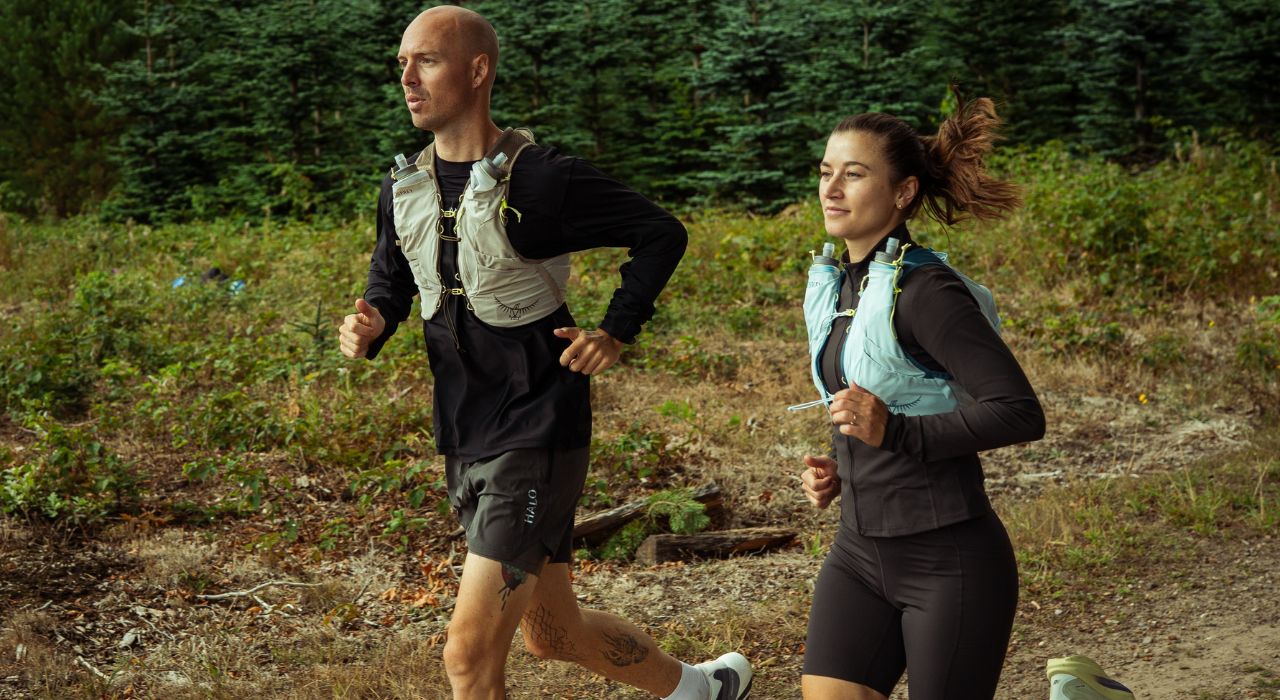
Osprey for every trip
In short: Start by choosing between Duro and Dyna based on your body shape. Then measure your chest circumference and choose the smallest size if you're between two. Finally, decide on the capacity, whether you need LT, 1.5, or 6.
If you're still unsure whether to choose a hydration vest, check out our . It covers the differences between soft flask, running belt, hydration vest, and running backpack, so you can find what suits your running style. Also, see our full range from , which includes running vests, belts, and backpacks for hiking and everyday use.