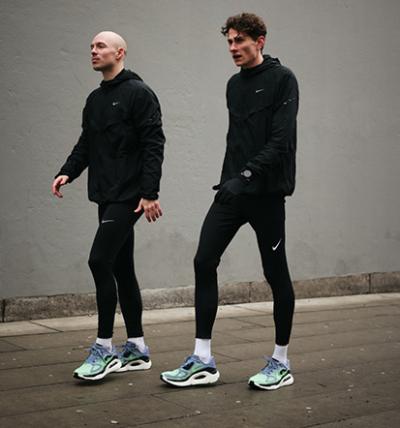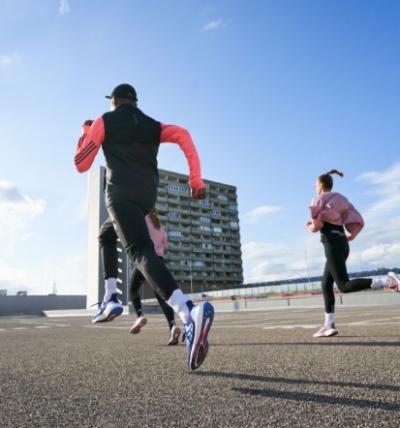



When the temperature drops, your choice of running gear becomes even more crucial. In this article, we focus on how to best keep your legs warm. In winter, your running tights have multiple tasks: retaining heat, blocking wind, and allowing sweat to escape. These tasks pull in different directions. The more a pair of tights blocks, the less they breathe. Therefore, most winter tights are made from multiple materials, each solving its part.
There can be many terms to keep track of when trying to understand a product: windproof, wind-resistant, thermal, fleece, winter. Several words can mean the same thing, and how does it all fit together?
This guide goes through terms and product types one by one, so you know what you're getting and what to wear at which temperature. If you need your entire wardrobe sorted and not just the bottom half, the overview is here:

Tights or loose running pants?
fit snugly against the skin. The thin layer of air between fabric and skin is warmed by the body and stays put because the fabric moves with the leg. Loose pants have more air between fabric and leg, and that air is replaced every time the leg swings forward. Therefore, tights insulate better than pants of the same weight, making them the obvious choice for most winter runs.
Pants, however, have a clear role as an outer layer. When it's both windy and raining persistently, or when temperatures drop well below freezing, a pair of windproof pants over tights can be a better solution than tights alone. The pants keep weather out, and the tights retain warmth.
It also depends on what you feel comfortable with. If you don't like the tight fit, loose running pants are a good solution. They come in both a thin, wind-resistant version for most runs and a lined version for the coldest days, so you don't have to compromise on warmth to avoid tights. If you want a bit of both, some choose to run in tights with shorts over them. This adds an extra layer over the hips and thighs, making tights feel more comfortable for some.
Thermal, brushed, and fleece
The most common winter tights are regular polyester and elastane tights with a brushed interior, giving them a soft, light fleece-like surface. The small fibers hold a layer of still air against the skin, helping to keep you warm.
Brands call it different things. Warm, thermal, brushed, microfleece, and winter all cover the same principle but don't indicate the degree. Two pairs with 'warm' in the name can vary significantly in warmth.
The advantage is that brushed tights weigh almost the same as regular tights and are often just as stretchy. The downside is they dry slower and become too warm when temperatures rise above eight to ten degrees.
In the warmer range, there are tights with thin synthetic insulation on the front, typically over the thighs and knees. They're often called padded or have Primaloft in the name, suitable for hard frost, slow pace, or runs where you stop along the way.
Windproof and wind-resistant
Wind cools more than temperature alone suggests, and you create wind when running. It hits the front of your legs, so the front of the thigh and shin cool first. The back is better off, partly because it's sheltered and partly because the large muscle groups on the back of the thigh generate heat during running. The back of the thigh and calves also need to stretch freely.
That's why the wind panel on most tights is a shield down the front rather than all around. The panel is either a denser woven fabric that slows the wind or a laminate with a membrane that blocks it completely. The first is called wind-resistant, the second windproof. The back is often the same soft stretch fabric as regular tights, allowing movement and heat release. Models with windblock or wind in the name typically have this construction.
The difference between windproof and wind-resistant is the same as with jackets, and it's thoroughly covered here:
Water-resistant and waterproof
A pair of water-resistant tights has a surface treatment, typically DWR, that makes rain bead off until the fabric is saturated. It handles showers and wet branches, which is what most can manage on their legs. The treatment wears off over time and can often be revived with heat in the dryer or with a reproofing. Check the care instructions for your specific model.
Waterproof models are almost exclusively running pants, and there are two reasons for this. Legs generate a lot of heat and moisture, and a membrane tight enough to keep water out struggles to let moisture out, so you get wet from the inside instead. Additionally, most waterproof membranes aren't very stretchy. They fit best in a looser cut and would tear or tighten in tights that need to follow the leg with each step.
Waterproof pants can be used as an outer layer for persistent rain and sleet, but rarely as the layer directly against the skin.
Understanding the technologies
The same three principles are called different things from brand to brand. Here are the most common words and what they cover.
Insulation +
| Warm, Thermal, Brushed, Fleece, Thermolite, Therma-FIT, Climawarm | Often with fleece interior |
| Cold.RDY, Winter, Vinter | Brand's winter line. Warmer than standard model |
| Padded, Primaloft | With padded insulation |
Wind and water +
| Windblock, Wind, Wind.RDY, Windstopper | With wind panels |
| DWR, Water Repellent, Repel | Water-repellent surface |
| GORE-TEX, Storm-FIT, WP, Weather, RAIN.RDY | Waterproof membrane |
Visibility +
| Reflective, Lumen, Hi-Vis | Increased visibility. With reflectors |
What about pockets?
In winter, some of what you usually keep in your jacket pocket moves to your tights. The phone keeps its battery better close to the body, and gloves need to be stowed away when you warm up.
A good thigh pocket keeps the phone stable, preventing it from swinging. A small waistband pocket is enough for keys and cards. Open mesh pockets at the back are handy for gels but become unstable if overfilled.
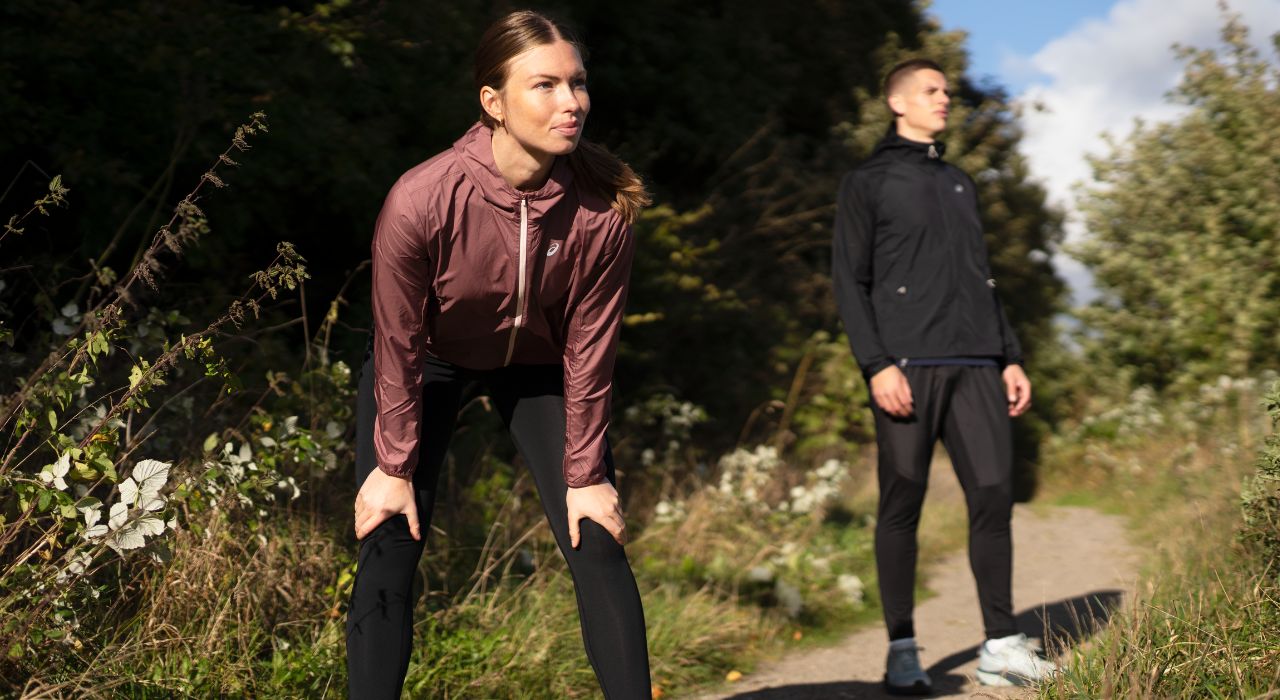
Remember visibility
Besides the amount of reflectors, placement matters too. A driver recognizes a person faster from something moving in sync than from a static field. Therefore, reflectors on the ankle and shin work better than a logo on the back.
Reflectors need a light source to reflect back, so they only work where there are car headlights or streetlights. If you run on dark paths or roads, a light on yourself is still necessary. Look for and .
Choose tights by temperature
The chart applies to a calm to moderate pace. If you run intervals, go one category down. If you run slowly or stop along the way, go one category up.
Dry weather +
| 10 to 5 degrees | Regular long tights. Expect to be cold the first minutes |
| 5 to 0 degrees | Tights with brushed inside. Wind panel if windy |
| 0 to minus 5 degrees | Thermal tights with wind panel front. Check ankle fit |
| Below minus 5 degrees | Thermal or padded tights, preferably with windproof pants over |
Rain, sleet, and wind +
| Showers | Thermal tights with water-repellent surface. Change immediately after run |
| Continuous rain | Water-repellent pants over thin tights. One less layer underneath |
The numbers are starting points. How much you feel cold depends on pace, wind, and your cold tolerance.
How to know you've chosen the right tights
A good guideline is that your legs should feel comfortable after 10 to 15 minutes of running. If they're still cold, the tights are too thin for the weather. If you're clammy inside the thighs, they're too tight for your intensity.
It's better to start slightly cool than too warm. The first kilometers are the coldest, and the last are the warmest.
Need more for running in the cold?
Legs are covered, but the rest of the body needs attention too. Fingers and ears freeze first, and a pair of thin
and a
take up no space in the pocket if you get too warm. Handle the upper body with a
and a
.
If you want to manage your entire wardrobe or are unsure about the outer layer, read more here: