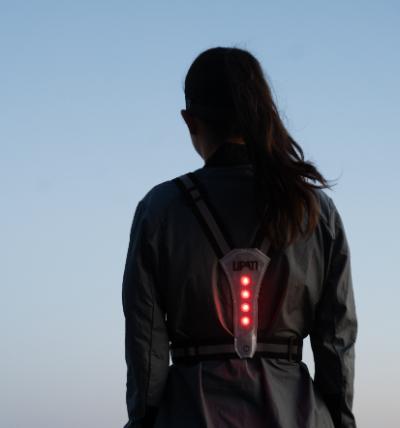
Can Running Cause Lower Back Pain?
Yes, but you can also get lower back pain from sitting still, carrying shopping bags, or tying your shoes. The body is unpredictable, and pain is not always a signal of injury.
The interesting question is not whether running can cause lower back pain, but whether running increases the risk of it. And the answer is clear: no. Research shows no statistical link between running and lower back pain, and one study even suggests runners have fewer lower back issues than the general population (Maselli et al., 2020).
However, this should be taken with caution, as healthy and active people naturally run more than those already in pain, affecting the numbers. But the overall conclusion holds: running is not a risk factor for lower back pain.
The Most Important: Movement in Any Form
Here's something that surprises many: Research shows that almost all forms of movement help with lower back pain and that no single type of exercise is clearly better than others.
Walking:
A simple walk has a surprisingly strong effect on chronic lower back pain. Studies show that the effect can match structured and advanced training programs (Pocovi NC et al. 2021). This doesn't mean you should drop your other training, but it's an important reminder that the practical works. The key is to find a form of movement you enjoy and can maintain over time.
Strength Training:
While strength training isn't the only way out of lower back pain, there are particularly good reasons for runners to prioritize it. It provides specific benefits that walking alone can't:
- Injury Prevention: It strengthens the body and better prepares it to withstand the stress of running.
- Improved Running Economy: You become more efficient and can run faster with the same energy use.
- A Stronger and More Stable Running Style: Strong glutes, hamstrings, and back muscles help maintain form when tired.
Looking specifically at chronic lower back pain, recent research suggests that training the "posterior chain" (covering glutes, hamstrings, and back) can be particularly effective (Tataryn N et al. 2021). Not because it's magical, but likely because these muscles are often weak in many sedentary people and are central to much movement.
Acute or Chronic? Understand Your Pain – and When to React
Before diving into exercises, it's important to know what type of pain you're dealing with. The strategy differs depending on whether the pain is new or has persisted.
The Acute Phase: When Pain is New
If your pain has recently started (e.g., after a heavy lift or a hard run), it's called acute.
Prognosis: Most acute lower back pain is "self-limiting". It means it resolves on its own within a few weeks.
Strategy: The best thing you can do is stay active as much as the pain allows. Avoid lying in bed all day; movement (even small walks in the living room) promotes recovery.
The Chronic Phase: When Pain Persists
If the pain has lasted more than 3 months, we call it chronic or long-lasting. Here the picture changes:
The Body Protects You: In chronic pain, the tissue is often healed, but your nervous system has become "hypersensitive" and sounds the alarm even when there's no injury.
The Whole Person: Research shows that long-term pain often relates to more than just the physical. Stress, poor sleep, worries about the future, and fear of movement ("catastrophizing") play a big role.
Strategy: Gradual loading and varied movement are your strongest tools to retrain the nervous system's tolerance.
In Short: For acute pain, be patient and stay active. For chronic pain, work purposefully with movement and consider factors in your life that may stress your nervous system.
| Seek Medical Attention if You Experience: |
|---|
| You have sensory disturbances |
| You experience sudden and significant weakness in the legs |
| Pain occurred after a severe trauma (fall or accident) |
| You have difficulty controlling bladder or bowel. |
| You have constant pain that doesn't change with movement |
I Have Pain, But Want to Run?
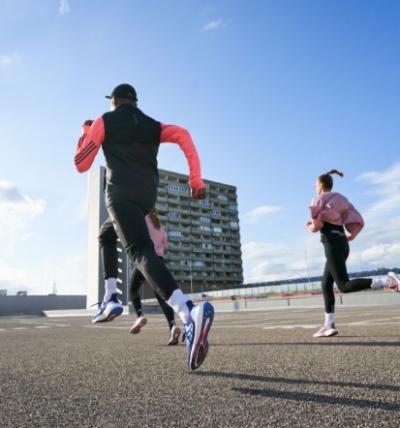
The question of whether you can run with back pain is significant for most runners. As a rule of thumb, running is actually okay, even if you have lower back pain, as long as the pain doesn't become significantly worse during or right after your run. You don't need to worry about a slight increase in discomfort during the run, as it's not automatically a warning sign.
If you find it hurts more than usual, the solution is rarely to stop completely, but rather to reduce the load for a period. You can do this by running shorter distances, slowing down, or choosing flat terrain over hilly. The key is to monitor the pattern of your pain over time rather than focusing on a single session that might have felt harder. If the pain is persistent, increasing, or accompanied by radiation to the legs or other symptoms from the table above, it's time to contact a professional.
Examples of Good Strength Exercises
The exercises below are not "the cure for lower back pain". They are chosen because they are good for runners. They strengthen the muscles you use most, prevent injuries, and support the back. Many of them activate the "posterior chain" we mentioned earlier. Find the ones you like. Do them regularly. That's the most important.
Exercises with Suspension Trainer
The suspension trainer is a versatile training tool. You can do many exercises with it, and it can be set up in various places, whether indoors or out in nature.
Single-leg Squat
The single-leg squat is a leg exercise. When you do it with a suspension trainer, it's easier to go deep, which in practice means you activate most muscles in the legs on both the front and back, as well as the glutes.

Knee Tucks
Here you train several muscles on the front - especially your abs and hip flexors. Both abs and hip flexors are very active when you run, so it makes sense to ensure youalso has good strength in this area.

Hamstring curls
Hamstring curls are a great exercise to strengthen multiple muscles on the backside. Especially your hamstrings work hard, but the rest of the back is also active to maintain the position.

Exercises with slam ball
When training with a medicine ball or a slam ball, you can work more specifically on power development and explosiveness. Strength is good, but explosiveness and power development are just as important for runners, as it simply provides a better running performance.
Overhead press jumps
This exercise focuses on "vertical power development" - the ability to generate upward force, so you can "push off the ground" faster after landing.

Floor slams
This is the counterpart for training the front - including hip flexors and abs. The idea is that it's not the arms doing all the work to slam the ball into the ground, but rather the abs and hip flexors, by bending at the hip and curling the back using the abs, thus slamming the ball down.

Hamstring curls
Just like in the sling trainer, this is a great hamstring exercise. If it's too easy, you can do it with 1 leg instead of 2.

Exercises with Kettlebell
The exercises below can be done with both kettlebell and dumbbell - some prefer one over the other. The outcome is the same!
Goblet squat
Goblet squat is a good exercise if you want to work with leg muscles through the full range of motion, or full "ROM", as they say ("Range Of Motion"). The weight you hold in your hands acts as a counterbalance, making it easier to go deep, similar to the sling trainer.
If it's too easy, you can naturally find a heavier weight, but the exercise can also be done on 1 leg.

Hip lift with leg change
This is a good exercise for the backside - both hamstrings, glutes, and lower back work to stabilize the body while you alternately have one leg and then the other on the ground. As a variation, the exercise can also be done by moving the hip up and down instead of changing legs.

1-leg deadlift
Deadlift is a classic in strength training, and rightly so. You train the entire backside - both in legs and upper body. A 1-leg deadlift has the obvious advantage that you don't need to lift as many kg, which can also be seen as a disadvantage, depending on what you're training for. If you want to train heavy, I recommend getting a barbell and some weight plates. However, if you do it on 1 leg, as shown here, many can get a good outcome with just a kettlebell.

Are you ready to hit the road (again)?
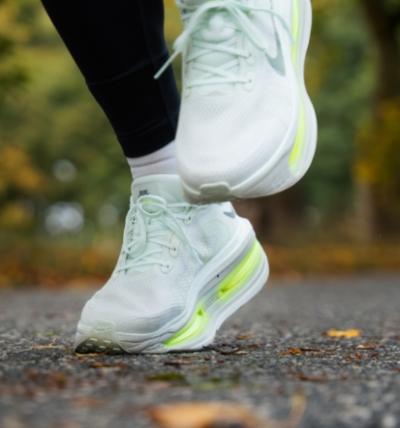
We hope you feel encouraged to keep your body moving and enjoy the joy of movement again. When you're ready to lace up your shoes and feel the asphalt under your feet, we're here to help you find the right gear so you can run with comfort and confidence.
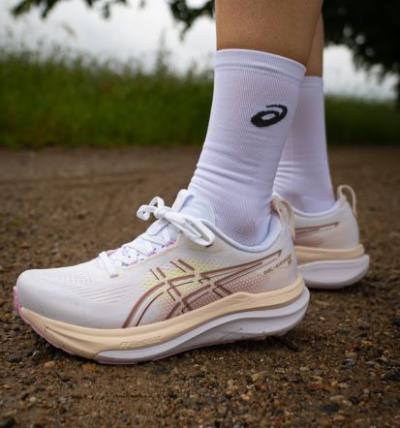
If you need the perfect foundation for your next run, explore our wide selection of running shoes for
and
. And if you want the best experience in all weather, find plenty of inspiration in our running apparel for
and
.
Curious about how to build an even stronger and more resilient body? Dive into our extensive article on , where we delve into optimizing your performance and preventing future injuries.
See you out there!
References
-
Pocovi NC, de Campos TF, Christine Lin CW, Merom D, Tiedemann A, Hancock MJ., Walking, Cycling, and Swimming for Nonspecific Low Back Pain: A Systematic Review With Meta-analysis (2021)
-
Maselli F, Storari L, Barbari V, Colombi A, Turolla A, Gianola S, Rossettini G, Testa M., Prevalence and incidence of low back pain among runners: a systematic review. (2020)
-
Meucci RD, Fassa AG, Faria NM. Prevalence of chronic low back pain: systematic review (2015)
-
Tataryn N, Simas V, Catterall T, Furness J, Keogh JWL. Posterior-Chain Resistance Training Compared to General Exercise and Walking Programmes for the Treatment of Chronic Low Back Pain in the General Population: A Systematic Review and Meta-Analysis. (2021)