


The North Face makes trail shoes. No road models, no hybrids, just shoes for gravel, forest, and mountains. Yet, navigating the lineup can be tricky: Vectiv appears in half the names, Altamesa in the other, and the numbers require some understanding. In this article, we guide you through the names so you can choose the right model for your adventures.
Here are three technologies that set The North Face trail shoes apart, followed by models sorted by the terrain they are designed for.
Three things that differentiate the models
Vectiv is a geometry, not a plate
The name covers a rocker, a curved midsole that rolls the foot forward. Most Vectiv models also have a plate underfoot, but the plate is not the same as Vectiv, and the Altamesa series has none. The plate's material determines how the shoe feels: carbon is stiffest and is in the Summit Vectiv Pro 3, TPU is more forgiving and is in Enduris 4.
The foam is called DREAM or DREAMBOUND
Both are nitrogen-infused TPU, similar to the supercritical foams you know from road shoes: more bounce and less weight than classic EVA. Offtrail TR is the only model here still using regular EVA, making it correspondingly firmer.
SURFACE CTRL is the rubber underneath
SC2 is the latest blend, lighter and grips better in the soft. The number to look at is lug depth: 4 mm for gravel and forest paths, 5 mm for mud and wet grass.
Waterproof or not?
Some models come in a waterproof version. For a full explanation of waterproof, water-resistant, DWR, and breathability, see .
A membrane keeps water out but also traps moisture inside, and the shoe dries slower once water gets over the edge. In summer, a shoe without a membrane is often the best choice. The membrane makes more sense when it's cold, as wet feet in two-degree weather become cold feet.
Gravel and firm surfaces
Altamesa 300 V2 - best for gravel and mixed surfaces
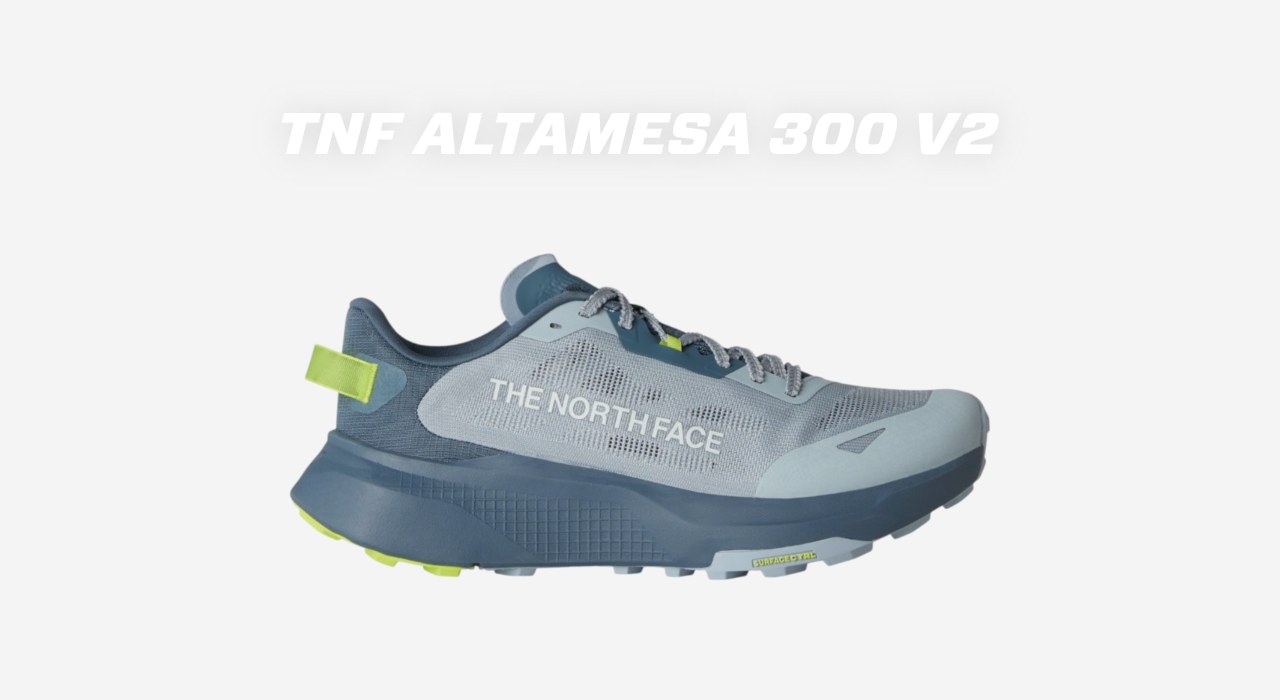 The North Face Altamesa 300 V2
is the lightest shoe in the lineup and the most obvious choice if your run starts on pavement and turns to trail after a few kilometers. It weighs 267 g in men's US 9, has 31 mm foam in the heel, 25 mm in the forefoot, and a 6 mm heel drop.
It has no plate. Instead, it features a clean, seamless upper with reinforcements where wear occurs, and a SURFACE CTRL SC2 outsole with 4 mm lugs. The lug depth is low enough that the shoe doesn't feel clunky on pavement, yet high enough for gravel and dry forest floor.
Choose Altamesa 300 V2 if you want one shoe for everyday runs and don't run in technical terrain.
Altamesa 500 V2 - best for daily training
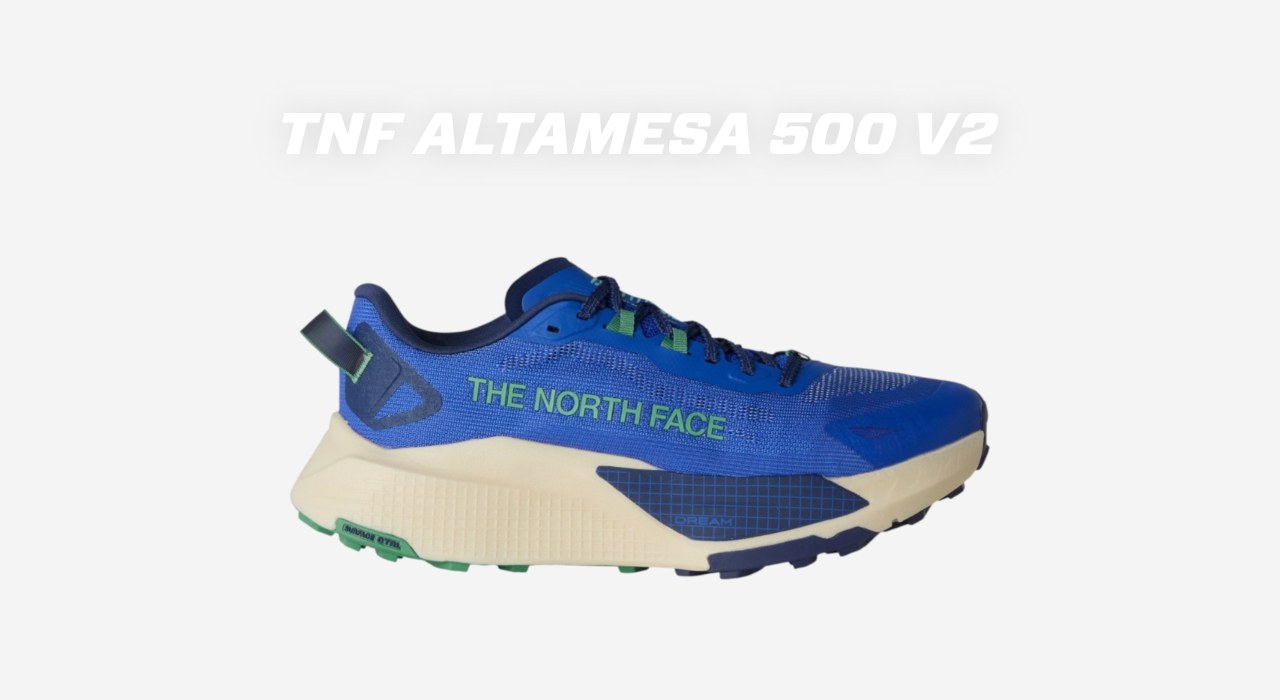 The North Face Altamesa 500 V2
is the big brother and the most cushioned shoe in the lineup. Stack height is 36 mm in the heel and 30 mm in the forefoot with the same 6 mm heel drop, and the midsole is DREAMBOUND, a nitrogen-infused TPU foam. The weight is 277 g in men's US 9, which is low for so much foam.
The platform is wider than on the 300 model, making the shoe stable without being a support shoe. The forefoot rocker is pronounced, so the shoe rolls forward on its own when the pace is steady. The lugs are 4 mm, enough for gravel, forest paths, and wet grass, but too little for real mud.
Choose Altamesa 500 V2 if you run many kilometers on moderate trails and prefer comfort over ground feel. The shoe also comes in a GORE-TEX version with a waterproof upper, weighing 26 g more per shoe and otherwise built identically. It's worth considering if you run all winter.
Soft and muddy
Offtrail TR GORE-TEX - best for mud and technical terrain
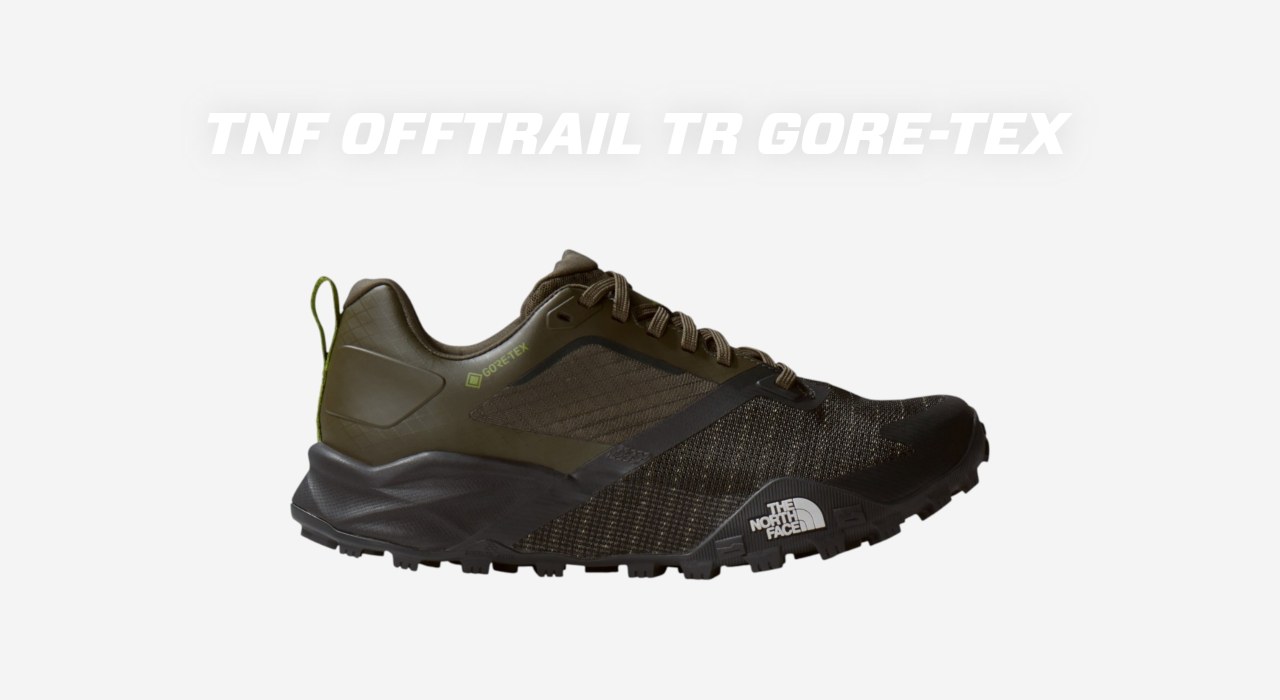 The North Face Offtrail TR GORE-TEX
is the lineup's grip shoe. SURFACE CTRL rubber has 5 mm lugs with full coverage and a rubber edge over the forefoot, and this combination bites into wet grass, mud, and wet rock in a way no 4 mm sole can match.
The shoe is firmer and lower than the rest: 24 mm foam in the heel and 18 mm in the forefoot, 30 mm total stack height including outsole, and 6 mm heel drop. The midsole is regular EVA, not DREAM foam. It weighs 354 g in men's US 9 and 310 g in women's US 8, making it the heaviest shoe here. The upper is Matryx reinforced with Kevlar, ripstop in the heel, and a reinforced toe cap, built to withstand tearing.
The low stack height means it's not the obvious shoe for four hours in the forest. For shorter runs in bad conditions and fast hiking on uneven ground, it's hard to beat.
Technical trails and long distances
Vectiv Enduris 4 - best if you only want one trail shoe
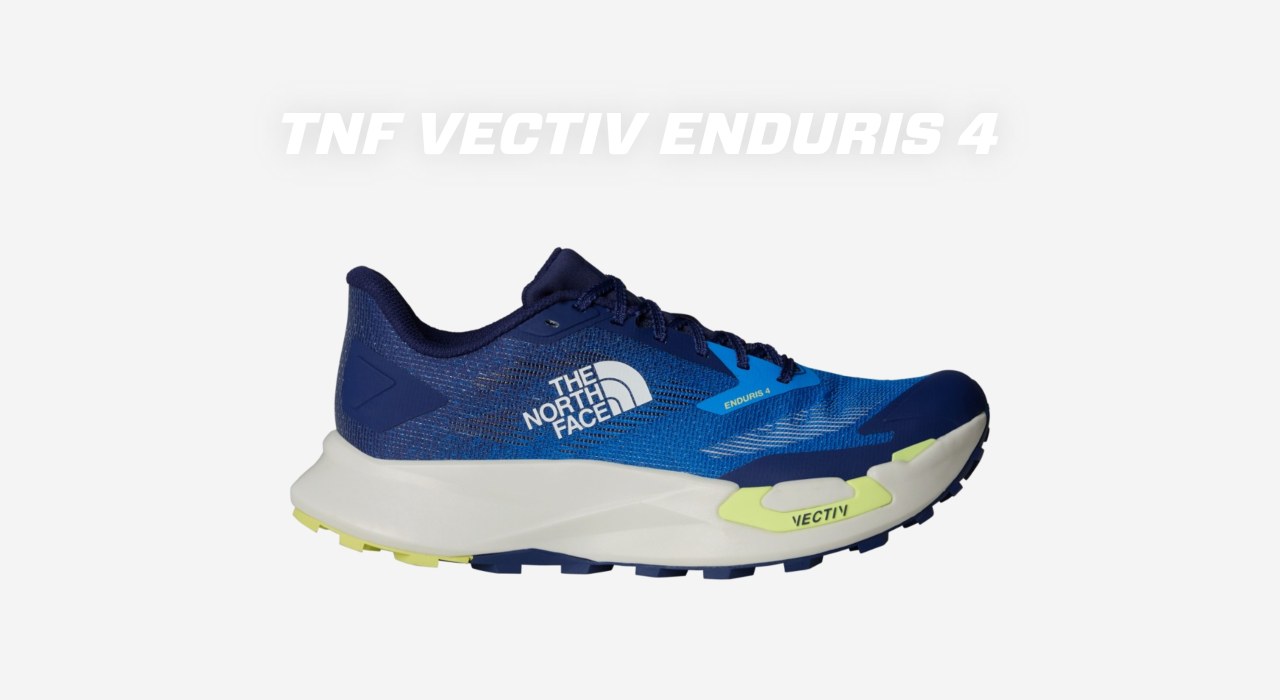 The North Face Vectiv Enduris 4
is The North Face's flagship for training, and the shoe that several international test panels have named the best all-round trail shoe this year. The midsole is DREAM nitrogen-TPU with a Vectiv 3.0 plate in TPU, which only extends to the midfoot. This provides propulsion without making the entire shoe stiff.
Stack height is 32 mm in the heel and 26 mm in the forefoot with a 6 mm heel drop, and the weight is 287 g in men's US 9 and 254 g in women's US 8.5. The platform is wide, and there are so-called 3D wings in the forefoot that keep the foot in place when the ground slopes. The outsole is SURFACE CTRL with 4 mm multi-directional lugs.
Choose Enduris 4 if you run everything from an hour's forest run to an ultra race and don't want three pairs of shoes standing around.
Competition and ultra running
Summit Vectiv Pro 3 - best on race day
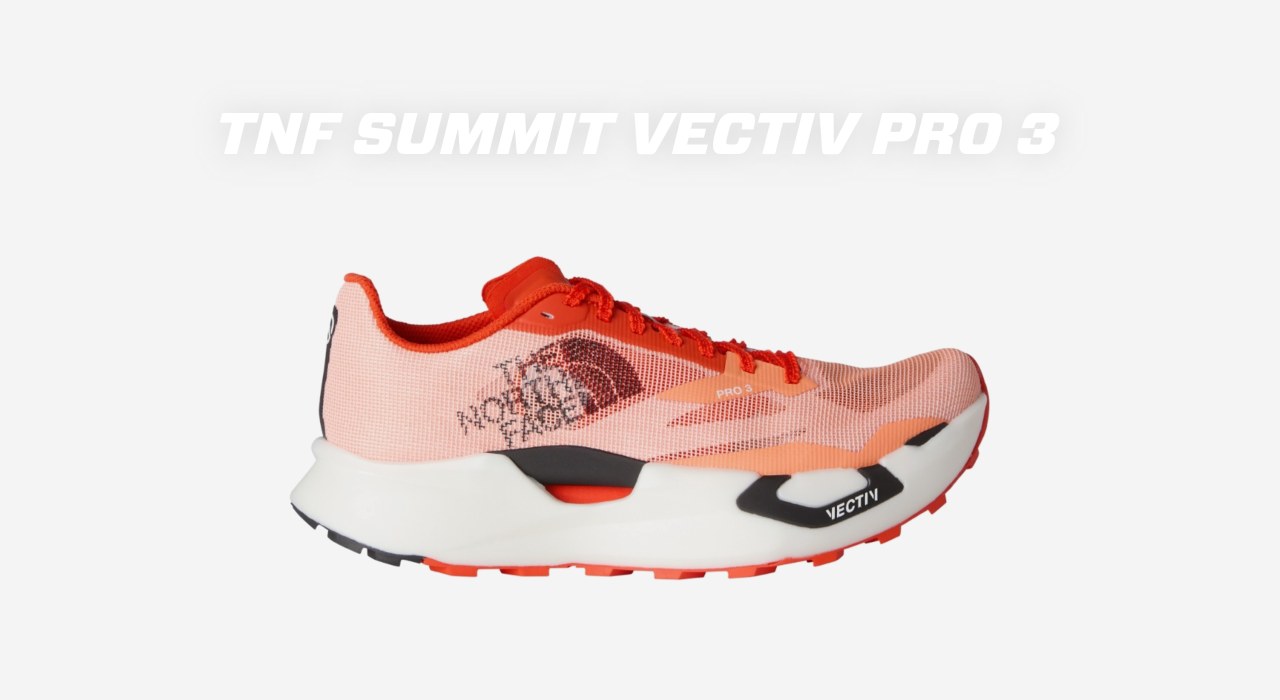 The North Face Summit Vectiv Pro 3
is the lineup's most expensive and fastest shoe. It features a dual-layer carbon plate system and DREAM foam, built for long trail races where time matters. The weight is 294 g, and the heel drop is 6 mm like the rest of the series.
Everything about the shoe is uncompromising: a pronounced rocker, a wide platform that keeps you upright when legs are tired, and an upper that locks the foot in place. This also makes it less comfortable for slow running, and the carbon plate offers the least to the runner who doesn't maintain a high pace.
Choose Summit Vectiv Pro 3 if you have a goal race on the calendar. For everyday kilometers, Enduris 4 is the better and cheaper solution. We tested an earlier generation of the shoe, and the test still holds for geometry and fit. You can find it .
Do you walk more than run?
The North Face also makes hiking shoes, designed differently: no plate, firmer heel, and thicker padding, appreciated after six hours with a backpack. Fastpack WP is ideal for fast hiking and fastpacking with light gear, while Hedgehog and Offtrail Hike are for longer trips.
Find all our footwear from The North Face:
.
What does Vectiv mean?
How deep lugs do I need?
What is the difference between DREAM and DREAMBOUND?
Can I use a trail shoe from The North Face for hiking?
Are the shoes true to size?
Going a different way?
If nothing fits here, find the entire range across brands in
. If you mostly run on asphalt, check out
. And if the rest of your wardrobe needs to keep up in wet weather, read
and see more in
.