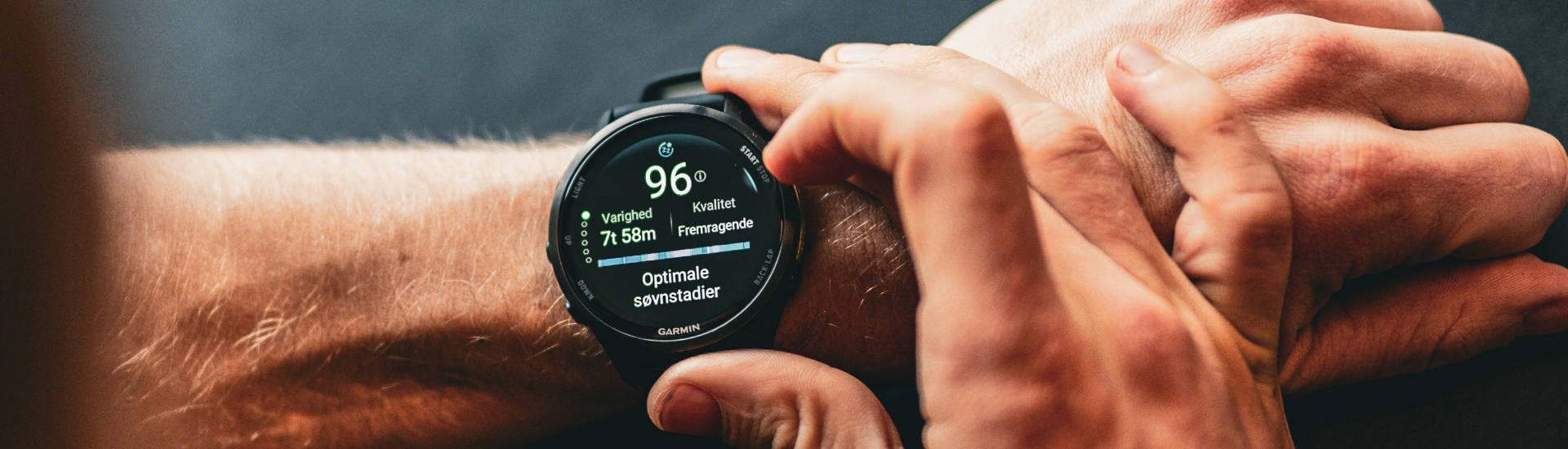

You wake up, check your running watch, and get a sleep score. Sleep tracking is now standard on most sports watches and smartwatches. But what does the watch actually measure at night, and how should you use the numbers as a runner? This article covers that.
What does my watch measure during sleep?
Sports watches typically use two sensors for sleep tracking:
- Accelerometer: Detects your movements and turns in sleep. The more still you lie, the deeper sleep the watch estimates.
- Optical heart rate monitor: Measures your heart rate and
(heart rate variability) throughout the night. HRV is the variation between your heartbeats and reflects the state of the nervous system – it allows watches to better distinguish between sleep phases than movement alone.
The combination provides a useful estimate. The gold standard is still polysomnography (PSG) in a sleep lab with electrodes on the skull. Sports watches typically have 70-80% accuracy at the phase level and are useful for spotting patterns over time.
Sleep phases: what do they mean for my recovery?
A normal night consists of 4-6 sleep cycles of about 90 minutes each. Each cycle includes:
- Light sleep (N1 and N2) makes up 50-60% of the night. It's the transition phase and the layer you wake up from most easily.
- Deep sleep (N3) is where the body works on rebuilding. Growth hormone is released, muscle tissue is repaired, and the immune system is strengthened. Deep sleep is concentrated in the first half of the night – if you sleep too little, it's primarily the deep sleep you lose.
- REM sleep dominates the second half of the night. Here, motor patterns and coordination are processed – this is why many runners find that new running techniques feel more natural in the legs the day after a good night's sleep.
As a runner, you should follow both: deep sleep reflects your physical recovery, REM your mental and coordination
What should I look for in my sleep data?
Trends rather than single measurements.
A bad sleep score one night says almost nothing. Two weeks of declining deep sleep and rising night pulse says a lot.
Night pulse and HRV.
If your night pulse suddenly rises 5-8 beats without an obvious explanation – illness, alcohol, warm weather – it may indicate that the body is under stress. Persistent HRV decline points in the same direction.
Sleep quality over sleep length.
7 hours with good deep sleep and few awakenings is better recovery than 9 fragmented hours.
Overtraining affects your sleep
Sleep disturbances can be one of the earliest signs of overload and typically appear before you feel it in your legs. React if you experience over 1-2 weeks:
- Difficulty falling asleep despite fatigue
- You wake up early and can't sleep again
- Decreasing proportion of deep sleep despite normal sleep length
- Elevated night pulse combined with heavy legs and lack of motivation
It may be the body's cortisol keeping the nervous system on alert even though you're tired. You can see this in your sleep data before you would otherwise notice it.
Sleep before competition
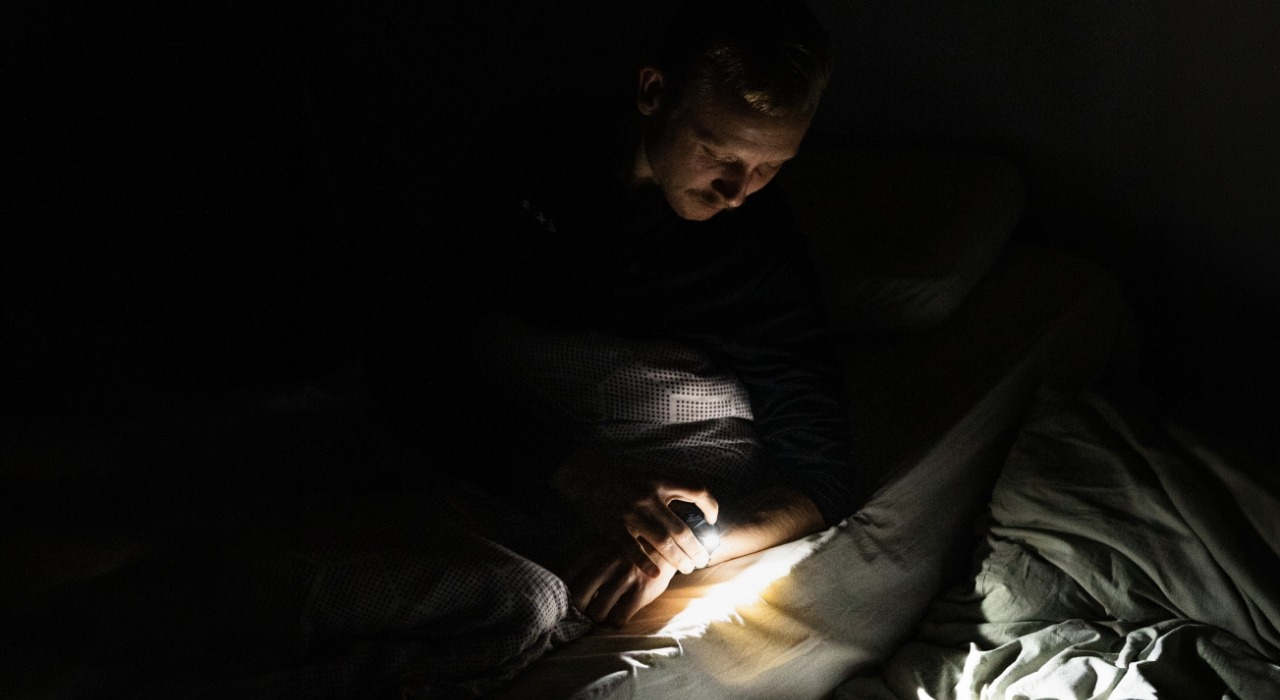
Almost all runners know it: the night before a race, you lie awake. It's normal and rarely a real problem for your performance. Research shows that one bad night's sleep doesn't seriously affect physical performance (Fullagar et al. 2015).
What counts are the 2-3 nights leading up to the competition. Many experienced runners use the week leading up to an A-race to consciously prioritize sleep: fixed bedtimes, calm evening routine, and extra attention to sleep hygiene. Sleeping an extra hour per night for 1-2 weeks before competition is associated with better reaction time and higher energy levels on race day (Mah et al. 2011).
What features should I look for regarding sleep?
Most new sports watches from
and
track sleep phases, night pulse, and HRV and integrate sleep data with your training load. This way, you can see the connection directly. Garmin uses a Sleep Score combined with Body Battery, showing your overall readiness state. COROS combines it into a Recovery Status, which is easy to act on.
offers phased sleep tracking with the TruSleep function, developed in collaboration with sleep researchers. Some watches also measure breathing rate and blood oxygenation during sleep. combines sleep phases with a PAI score (Personal Activity Intelligence), which combines sleep and activity data into one index.
Sleep tracking without a watch on the wrist
Not everyone is comfortable with a watch on the wrist throughout the night.
offers a dedicated sleep monitor worn on the upper arm, while
has a solution that lies under the mattress. Both measure sleep without you having to wear a watch on your wrist. It's a real alternative if you want sleep data separate from your training watch.
Is my sleep score reliable?
Use the numbers as guidance for patterns over time, but not as something you need to perform on nightly. Too much focus on the sleep score can paradoxically make it harder to sleep, a phenomenon called orthosomnia. It refers to becoming so focused on optimizing your sleep data that worrying about the numbers themselves disrupts sleep.
Always combine the watch's data with your own feeling: if you feel rested but the score is low, the score is likely wrong. If you consistently feel drained despite seemingly good sleep, it's worth looking closer at night pulse and HRV over time.
Sleep tracking is best when it gives you a concrete reason to act: an extra recovery day, earlier bedtime in competition week, or the early overtraining sign you wouldn't have caught otherwise.
Got sleep under control – what's next?
Sleep tracking is a good place to start, but it's only one part of the recovery picture. Sleep is closely linked with your
and
. If you want to read more generally about recovery for runners, you can read our complete
.
Ready to track your sleep, you can see our selection of sports watches from , , and or go directly to our complete selection of sports watches. If you want to supplement with active recovery, find our selection of recovery products here.
Sources:
- Fullagar HH et al. (2015). Sleep and athletic performance. Sports Medicine.
- Halson SL & Juliff LE. (2017). Sleep, sport and the brain. Progress in Brain Research.
- Mah CD et al. (2011). Sleep extension and athletic performance. Sleep.
- Vitale KC et al. (2019). Sleep hygiene for optimizing recovery in athletes. International Journal of Sports Medicine.